
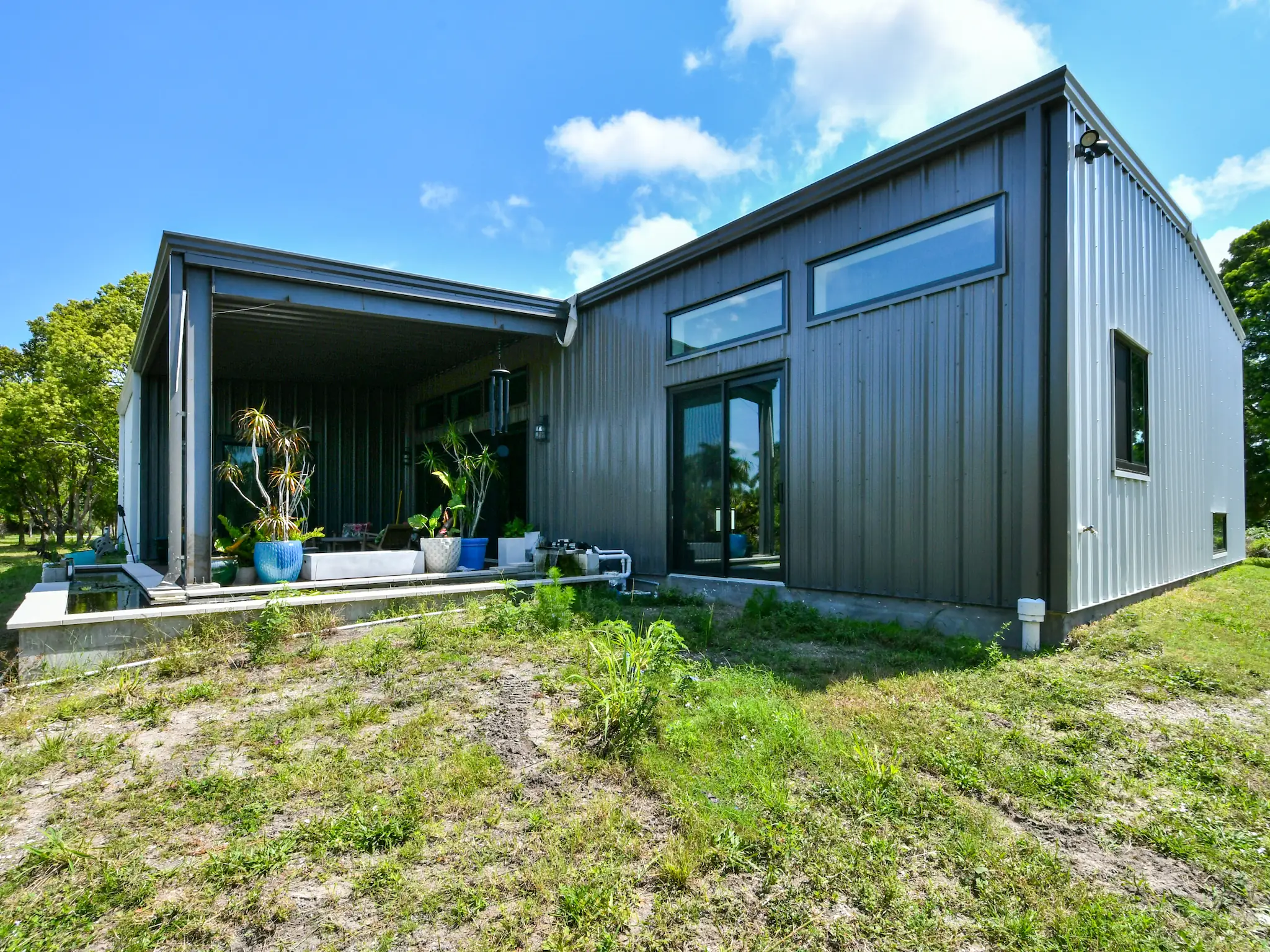
TL;DR: A barndominium is a steel building configured for living space, with the same engineering envelope as a commercial agricultural or storage building and a residential interior. Done right, it’s faster, lower-cost, and more durable than stick-built. Done wrong, it gets stuck in permitting.
A barndominium is a pre-engineered metal building that combines living space with workshop, garage, or agricultural use under a single roof and clear-span structure. The structural engineering is identical to a commercial steel building.
The category has grown from a rural hobby-farm crowd into a serious option for commercial-residential hybrid use: agritourism operators with on-site lodging, ranchers wanting living quarters next to equipment storage, small business owners with shop space and residence on the same parcel.
The complications are in the residential side: code compliance, layout, insulation, and how the building gets classified for permits and financing. This guide walks through the decisions that matter before a barndominium kit shows up on a flatbed, so the project moves through county review without surprises.
A barndominium uses the same primary frame, secondary framing, and panel system as a pre-engineered commercial steel building. The frame is engineered for the local wind, snow, and seismic loads. The shell is metal panels on rigid frame, with insulation, vapor barrier, and interior finishes installed during the build-out phase.
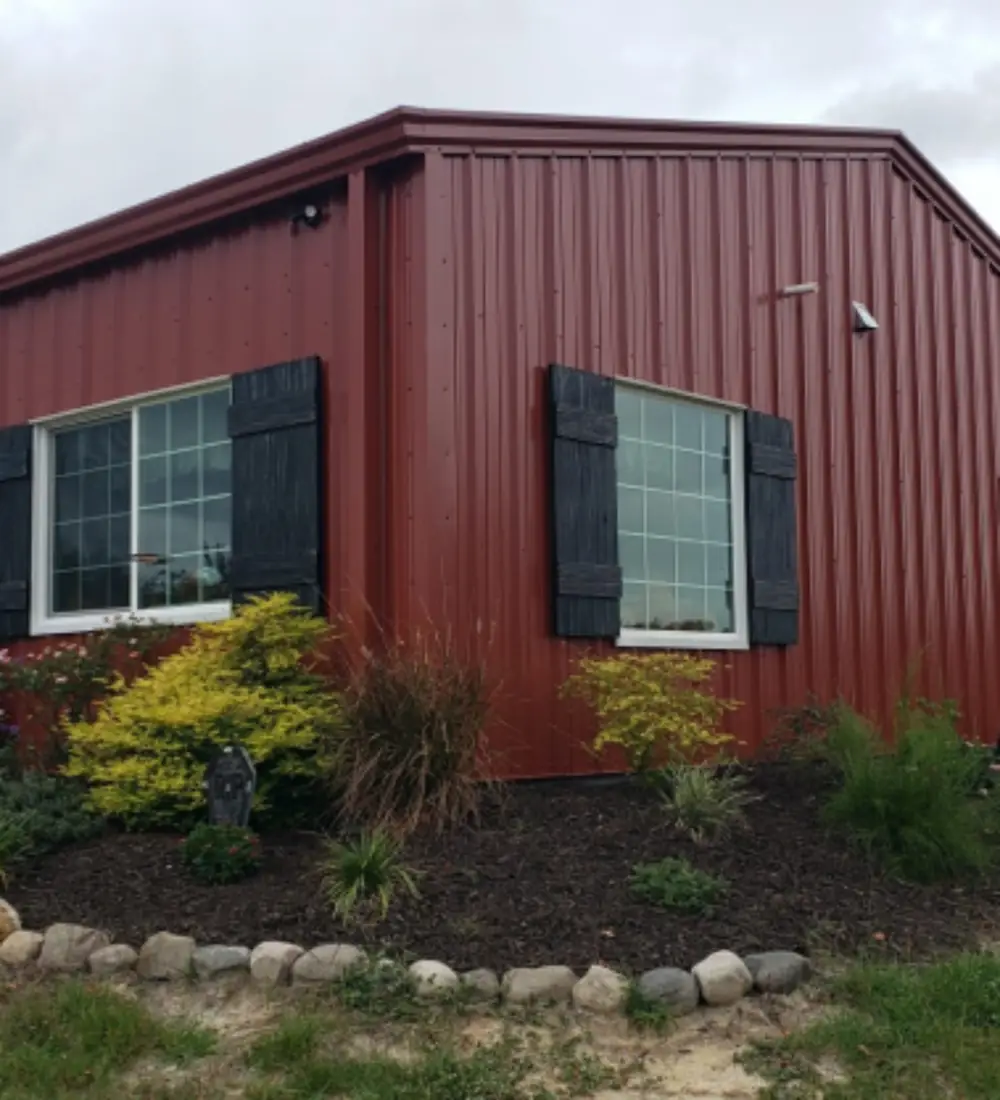
From the outside, many barndos look like agricultural buildings. The difference is what’s behind the wall panel.
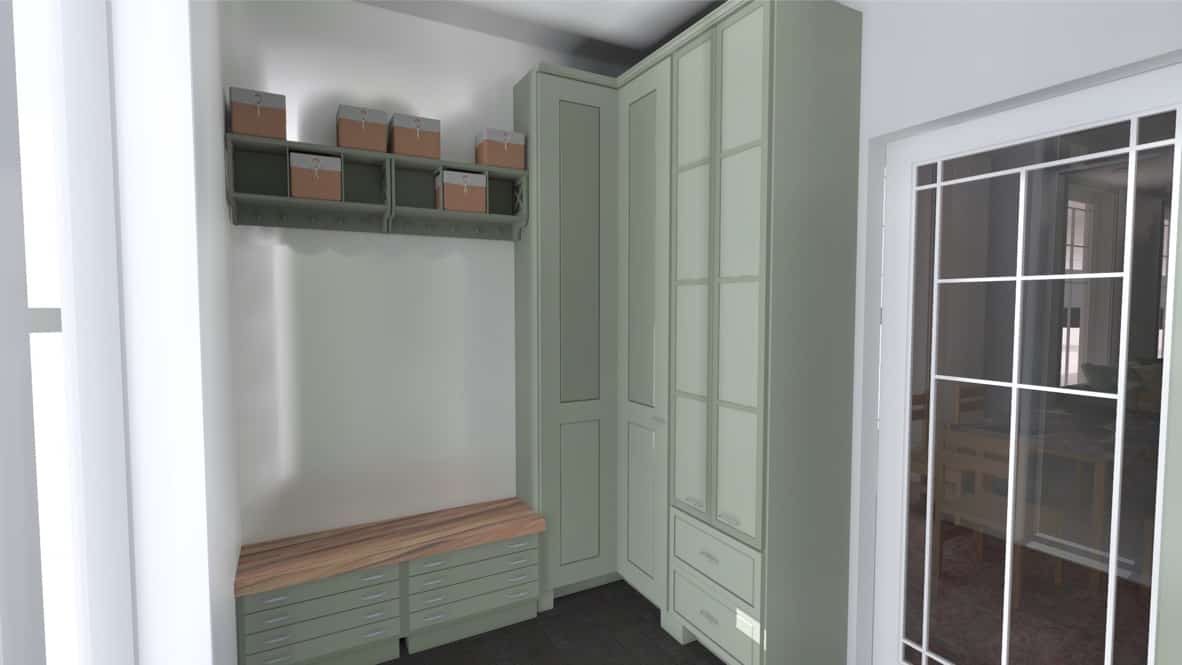
The residential portion is a conventional build-out: framed interior walls, drywall or wood paneling, plumbing, electrical, HVAC, finished flooring. Two common layouts:
The hybrid layout drives most of the commercial-residential demand. Builders use the shop side for income-producing activity (small business, agricultural equipment, vehicle maintenance, hobby income) and the residential side for a primary or secondary home. The single roof and single foundation make the total cost meaningfully lower than building two separate structures.
Lock the layout before the frame is engineered. The frame’s clear-span and column placement depend on whether you want one open volume or a split building. Moving columns after engineering means change orders. Common ratios:
The wider the clear-span, the more design flexibility. Most barndo projects land between 40 and 60 feet wide with 60 to 100 feet of length.
A concrete slab-on-grade is the most common foundation and works well for full-residential layouts. The slab serves as the finished floor in the shop area and the substrate for finished flooring in the living area. Perimeter footings with a separately framed floor are an option in the living wing if you want a crawl space for utilities or a basement.
Slab thickness depends on the shop side: vehicle and equipment storage usually needs a 5-inch slab minimum, often 6 inches in the shop bays. The living area can run the same slab thickness for simplicity.
The single largest comfort and operating-cost decision is the insulation package. A bare metal building is a thermal disaster as a residence. Three common approaches:
For HVAC sizing and energy use, continuous insulation or IMP is the better long-term decision. The upfront cost difference pays back in 5-10 years through lower HVAC load.
The single biggest project killer is discovering at permit submittal that the parcel is zoned for agricultural use but not residential occupancy, or that the county’s barndominium policy requires specific findings. Three things to confirm before ordering the building:
Pull the local code reference and have a conversation with the building department before you commit. The International Building Code residential provisions and any state amendments are the underlying ruleset most counties adopt by reference; the local building department interprets and applies them.
Hybrid use is where most projects get complicated. If the shop side hosts commercial metal building activity (auto service, small manufacturing, agritourism lodging for guests), the permit may be a mixed-use occupancy rather than pure residential. Mixed-use requirements include fire separation, additional egress, accessible parking, and possibly commercial bathroom requirements.
The smart move: have the architect or designer talk to the building department about the intended use before the building order goes in. Mixed-use permits are routine when planned for; they’re expensive surprises when discovered mid-project.
A typical metal barndominium kit covers the structural shell, exterior wall and roof panels, doors, windows, trim, and engineering. The interior build-out (framing, drywall, electrical, plumbing, HVAC, finishes) is separate, usually local trades. The kit is roughly 30-40% of total project cost. The build-out is the rest.
Buyers who shop on shell price alone miss the bigger picture. A $80,000 shell with $200,000 in build-out is the same total project as a $120,000 shell with $160,000 in build-out. Compare turn-key project budgets, not kit prices.
Foundation is 10-15% of project total. Site work (grading, driveway, utility connection) varies widely. Rural sites with no utility connection at the road can add $25,000 to $80,000 for well, septic, and electrical service.
The engineered shell, panels, doors, and trim ship as a complete package, with the engineered drawing set that satisfies the local building department’s structural review. The buyer or buyer’s contractor handles the build-out. For a tailored package, the get a price quote form is the input side; specifying the residential portion’s dimensions and intended use returns a quote that aligns with the buyer’s build-out plan.
The most common project killer. Talk to the building department before you order. Bring a sketch, the intended use, and a willingness to adjust.
Stock barndo plans on the internet are starting points, not final designs. Local setback, height, and aesthetic requirements often force changes. Engineer to your specific parcel and code zone.
Rural barndo projects often discover the electrical service drop is undersized for residential load, or that water flow at the well doesn’t support multiple bathrooms. Get utility specs early.
Mixed-use barndos with shop noise and shop fumes adjacent to bedrooms need real sound and air-sealing in the firewall. A standard 1-hour fire-rated wall is the code minimum; better acoustic and air separation costs little extra and dramatically improves livability.
Best fit for barndominiums:
Less good fit:
Turn-key barndominium projects (shell + foundation + build-out) typically run $130 to $220 per finished square foot, varying with insulation level, finish quality, and regional labor costs. The shell alone is roughly 30-40% of that number.
Yes, though some lenders treat barndos as non-traditional construction and require larger down payments or specific appraisal language. Construction-to-permanent loans through lenders familiar with metal building construction are the common path. Talk to the lender before ordering.
Shell delivery and erection typically take 6-12 weeks from order. The interior build-out usually takes another 4-8 months depending on size and finish complexity. Total project from order to move-in is roughly 8-14 months.
They can be very efficient when insulated correctly. Continuous insulation behind the panels, insulated metal panels, or a well-detailed stud wall with proper vapor barrier and air sealing all perform well. A poorly insulated metal building is the opposite. Uninsulated metal is a thermal disaster as a residence.
Yes. Mixed-use barndos with shop, agritourism lodging, or small business space are increasingly common. The permit gets more complex: fire separation, egress, and possibly commercial bathroom requirements apply. Plan for mixed-use permitting if any commercial activity is intended.