
The maintenance contract sat on Mike’s desk for three months before he signed it. “It’s just a metal building,” he’d told his partner. “What maintenance does steel need?”
He was mostly right. His metal building required a fraction of the upkeep his previous wood-frame facility demanded. No rot to repair, no termite damage, no painting, no replacing deteriorated materials. But eighteen months of ignoring the few simple tasks that metal buildings do need caught up with him when a preventable roof leak damaged $47,000 worth of inventory.
The insurance adjuster’s report noted “deferred maintenance” as a contributing factor. The irony? The problem started as a loose fastener, a $200 fix that nobody noticed because nobody looked. Mike had gone from one extreme (constant maintenance on his old building) to the other (assuming his metal building needed none).
Metal buildings require far less maintenance than traditional construction, but “less” doesn’t mean “zero.” The difference is that the maintenance that actually matters is straightforward, infrequent, and takes minimal time. Quality-engineered buildings make maintenance even simpler by addressing common issues through superior design and components. Smart maintenance protects your investment and prevents the rare problems that can develop when simple tasks get ignored.
Compared to wood or concrete buildings requiring constant painting, rot repair, foundation maintenance, and structural upkeep, metal buildings need attention in just a few specific areas. Well-engineered buildings minimize even these requirements through quality components, but periodic inspection keeps everything performing as designed.
Roof fasteners benefit from occasional verification. Walk the roof twice yearly to confirm everything remains secure. This fifteen-minute inspection provides peace of mind and catches the rare issue before it becomes a problem. Quality buildings use premium fasteners that maintain their grip for decades, making this truly just verification rather than constant repair. Check panel seams for any separation – well-installed panels rarely develop issues, but a quick look keeps minor observations from becoming repairs.
Gutters and downspouts handle enormous water volumes during heavy rain, and clogs create problems extending far beyond the drainage system. Overflowing gutters dump water directly against your foundation, potentially causing settlement or interior moisture problems. Clean gutters at least twice yearly, more often near trees. Properly engineered drainage directs water away from the building, so the main maintenance is simply keeping gutters clear to let the system work as designed.
Door and window seals eventually need replacement regardless of building type, but quality makes a significant difference in longevity. Buildings engineered with formed base trim and proper closure systems maintain weather-tight seals far longer than those using basic foam closures. Annual inspection identifies any seals showing wear before they fail completely. Replacing worn seals takes minimal time and keeps buildings weather-tight while reducing HVAC costs, a simple task with clear return on investment.
Panel security deserves an annual walk-around despite quality installation keeping panels secure for decades. Check for any loosened fasteners, particularly on the windward side where wind loads concentrate. Well-engineered buildings sized for local wind loads rarely develop panel issues, but verification takes minutes and identifies any concerns before weather events create problems.
Engineering quality and component selection create buildings that need less upkeep over their service life.
Premium lifetime fasteners that resist corrosion eliminate constant replacement. These fasteners maintain their grip and appearance for decades, turning frequent maintenance into occasional inspection. Proper sealing systems using formed base trim and engineered closures create weather-tight seals lasting years longer than foam closures, meaning less frequent replacement and better energy efficiency.
Panel warranties of 25-40 years against rust, fading, and chalking reflect actual long-term performance backed by decades of real-world results. Buildings with warranted panels require minimal corrosion maintenance compared to those using basic coatings needing attention within years.
Design engineered for your specific location’s wind and snow loads means structural components are sized appropriately from the start. This prevents the stress-related issues causing problems in under-designed buildings. When buildings meet or exceed code requirements rather than barely satisfying minimums, maintenance becomes verification rather than constant repair.
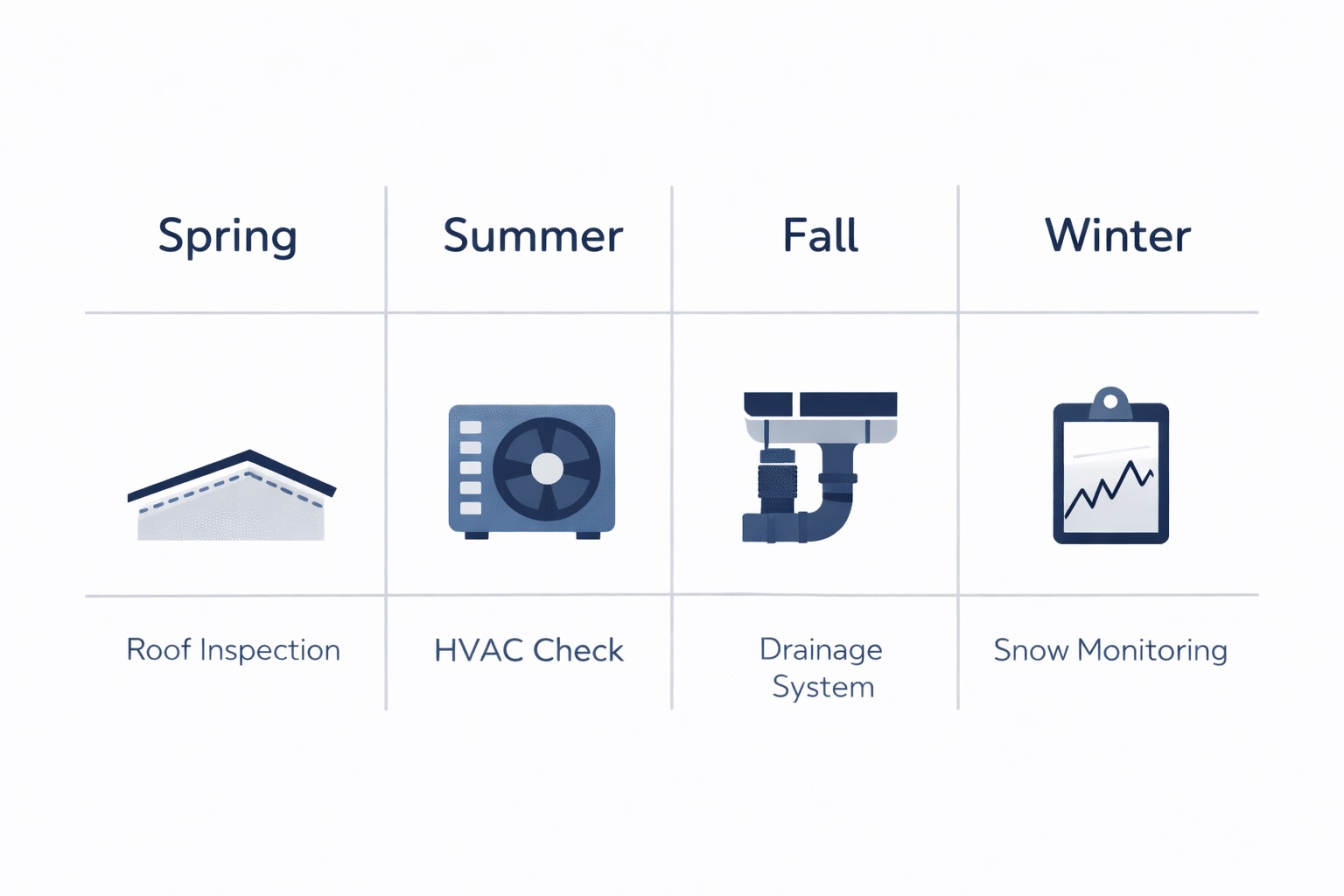
Breaking maintenance into seasonal tasks creates manageable routines rather than overwhelming annual projects.
Spring focuses on recovering from winter and preparing for summer. Inspect your roof after winter weather ends, checking fasteners that may have worked loose during freeze-thaw cycles. Clean gutters before spring storms arrive, as winter debris combined with spring rain creates the worst overflow situations. Check HVAC systems before cooling season, changing filters and ensuring proper operation. Walk the exterior looking for winter weather damage, particularly around doors and loading docks where ice and snow accumulate.
Summer centers on managing heat and preparing for severe weather. Inspect roof coatings and reflective surfaces that control building temperature. Verify overhead doors operate smoothly without binding, as heat exacerbates mechanical issues. Check that ventilation systems work properly, since summer reveals airflow problems. In regions with severe weather, verify all panels remain properly fastened.
Fall prepares buildings for winter while conditions remain comfortable. Clean gutters and downspouts before leaves accumulate. Inspect door seals and weather stripping before heating season, replacing anything that’s failed. Check your heating system, changing filters and verifying operation before cold weather arrives. Walk the roof looking for any issues that need correction before snow makes repairs difficult.
Winter emphasizes monitoring rather than active work. Watch for ice dams or excessive snow accumulation on your roof. After significant snow, verify gutters and downspouts haven’t been damaged. Monitor heating system performance and change filters more frequently during heavy-use months. Check for any signs of moisture infiltration or condensation.
Most catastrophic building failures start as minor issues that nobody addressed. Understanding how small problems escalate helps you intervene early when fixes remain cheap and simple.
Water intrusion causes more building damage than all other issues combined. A single loose roof fastener creates a leak that damages insulation, promotes rust, ruins inventory, and encourages mold growth. The initial fix costs almost nothing, but ignoring it for months or years creates problems that require extensive repairs costing thousands. Check for water stains on interior surfaces, musty odors, or any signs of moisture. These symptoms indicate active problems that need immediate attention before damage compounds.
Structural damage rarely happens suddenly. Metal buildings telegraph distress through visible signs long before failure occurs. Panels that buckle or show waviness indicate loading problems or fastener failure. Doors that suddenly bind or won’t close properly suggest foundation settlement or frame distortion. Strange noises during wind events point to loose components or structural movement. None of these issues resolve themselves; they only worsen until someone intervenes. Addressing structural concerns immediately prevents minor problems from becoming safety hazards.
Most metal building maintenance falls well within the capabilities of property owners or facility managers. The tasks don’t require specialized tools, technical expertise, or particular physical abilities. Walking the roof to check fasteners, cleaning gutters, inspecting seals, and tightening panels are straightforward work that anyone can handle with basic tools and reasonable caution.
However, certain situations demand professional expertise. Structural issues like panel buckling, frame distortion, or foundation problems require engineering assessment before repairs begin. Attempting structural fixes without understanding load paths and proper connection methods creates dangerous situations and can worsen existing problems. If you notice structural concerns, call a qualified professional immediately rather than attempting DIY solutions.
Roof leaks that you can’t locate or that reappear after repair need professional diagnosis. Sometimes water travels far from its entry point before becoming visible, making source identification difficult without experience and proper diagnostic techniques. A professional can find the actual problem rather than treating symptoms.
Electrical work around metal buildings requires licensed electricians familiar with proper grounding and bonding. Metal buildings conduct electricity, making incorrect electrical work particularly dangerous. HVAC repairs beyond simple filter changes and basic cleaning should involve qualified technicians who understand how these systems interact with metal building characteristics.
The financial case for maintenance is straightforward and compelling. Regular maintenance costs a few hundred dollars annually for most commercial metal buildings. Deferred maintenance that creates major problems costs thousands to tens of thousands when issues finally force action.
Consider roof maintenance as an example. Walking your roof twice yearly to check and tighten fasteners takes maybe two hours of labor and costs essentially nothing. Ignoring this simple task until leaks develop means replacing damaged insulation ($2,000-$5,000), repairing interior finishes ($3,000-$8,000), replacing ruined inventory (variable but potentially massive), and fixing the roof problem that caused everything ($1,000-$3,000). That’s $6,000-$16,000 plus inventory losses to avoid spending a few hours on preventive work.
The maintenance vs. neglect calculation always favors prevention. Problems discovered early cost less to fix, create less collateral damage, and cause less operational disruption. Regular maintenance also extends your building’s service life, protecting your capital investment and maintaining property value.
How often should I inspect my commercial metal building? Conduct basic visual inspections quarterly, walking the interior and exterior looking for obvious problems. Perform detailed roof inspections twice yearly, ideally in spring and fall. Clean gutters at least twice yearly, more often if trees are nearby. Check door and window seals annually and replace anything showing wear.
What maintenance does a metal building need that traditional buildings don’t? Metal buildings actually require less maintenance overall. The main difference is periodic roof inspection to verify fasteners remain secure, since metal experiences thermal expansion and contraction. It’s a quick check rather than intensive work. Traditional buildings don’t have this specific requirement but need extensive maintenance on rot, painting, and structural systems that metal buildings avoid entirely.
Can I walk on my metal roof safely? Yes, with proper precautions. Wear soft-soled shoes to avoid damaging panels, step on the panel ridges or purlins rather than the flat areas between them, and use appropriate fall protection on steep roofs or high buildings. If you’re uncomfortable with heights or roof access, hire professionals for roof inspections.
How do I know if a problem needs professional help? Call professionals for structural issues, persistent leaks you can’t locate, extensive corrosion, electrical work, or HVAC repairs beyond basic maintenance. Handle routine inspection, gutter cleaning, seal replacement, and fastener tightening yourself unless you lack time or ability.
Does metal building maintenance differ by climate? Yes, somewhat. Buildings in coastal areas need more frequent corrosion checks. Snow-country buildings require more attention to roof loads and ice management. Hot climates demand better seal maintenance since temperature extremes degrade materials faster. The core tasks remain the same; frequency and emphasis shift based on local conditions.
Commercial metal buildings deliver decades of reliable service with minimal maintenance compared to traditional construction. The key is doing that minimal maintenance consistently rather than ignoring your building until problems force attention.
Focus on the systems that matter: roof integrity, water management, seals, and fasteners. Address small issues immediately before they become expensive problems. Schedule seasonal maintenance rather than waiting for failures. The time and money investment is modest, and the protection it provides is substantial.
Ready to build a low-maintenance commercial facility? Contact MBMI to discuss metal building systems designed for long-term performance with minimal upkeep. Our buildings make maintenance simple by using quality components and proven designs that stand up to decades of use.
We build for the long term.