
The insurance quote came back 40% lower than the wood-framed building next door. Same size, same use, different material. When the business owner called to confirm the numbers, his agent had a simple explanation: “Steel doesn’t burn. Your premiums reflect that.”
Fire safety discussions often focus on sprinkler systems, exit signs, and alarm codes. Those matter, but the biggest fire safety decision happens much earlier, when you choose what to build with. Steel’s fire resistance isn’t an upgrade or add-on. It’s fundamental to the material itself, and it affects everything from occupant safety to insurance costs to long-term liability.
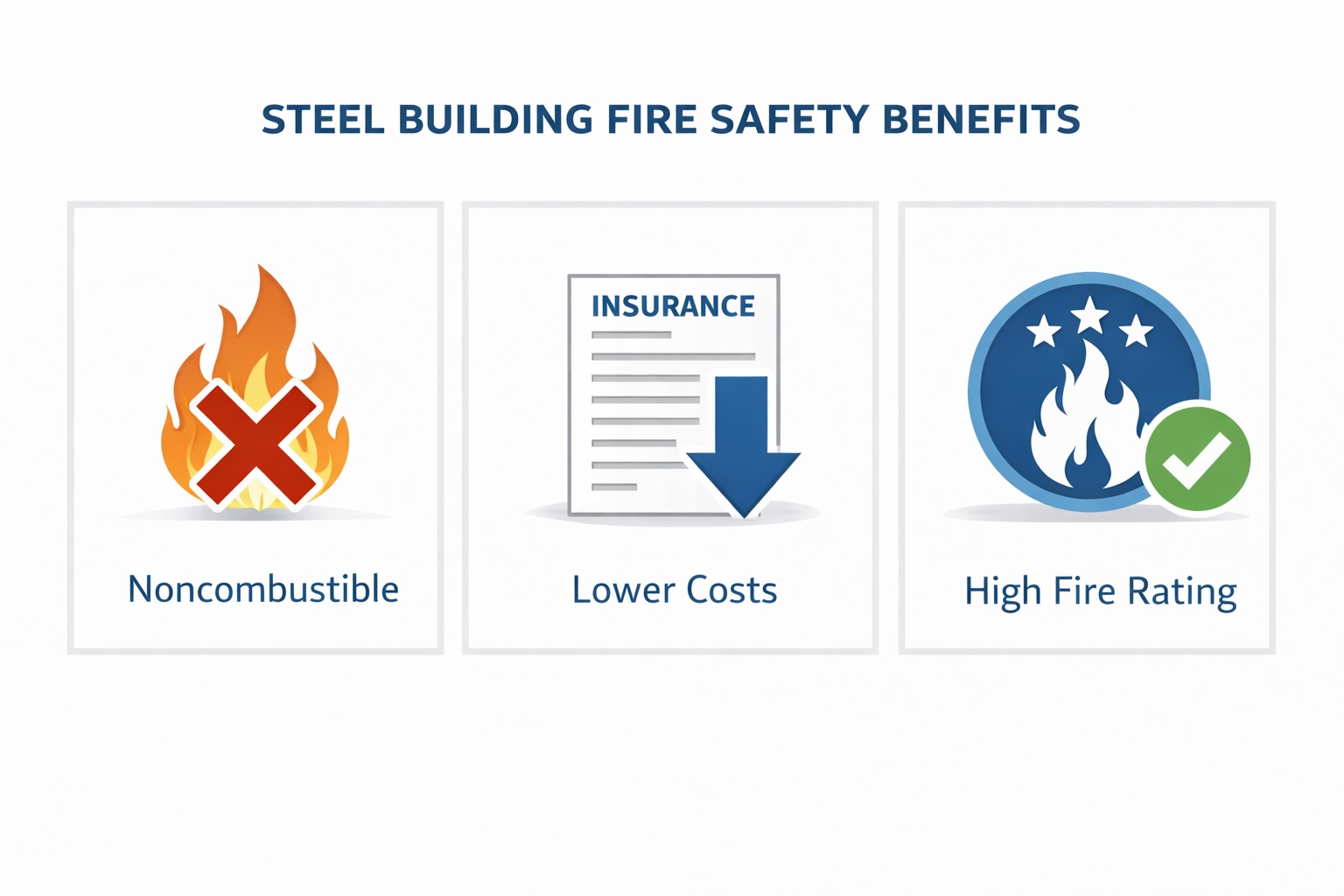
Steel is noncombustible, which means something specific and important: it doesn’t ignite, doesn’t contribute fuel to fires, and doesn’t release toxic smoke when exposed to flames. Wood construction presents the opposite profile. Lumber ranks as the number one source of first-ignited material in building fires, and wood framing actively fuels fires once they start, accelerating spread and increasing danger.
The difference matters most during the critical early minutes of a fire. While steel eventually weakens at extreme temperatures (typically above 1,000°F), it maintains structural integrity far longer than the time needed for occupants to evacuate safely and for firefighters to begin controlling the blaze. Wood structures contribute massive fuel loads that make fires harder to control and more dangerous to fight. Steel adds zero fuel, giving emergency responders a fundamentally different situation to manage.
This fire performance advantage is built into the material itself. There are no special treatments to maintain, no coatings to reapply, no inspection schedules to track. The steel framing that gives you clear-span space and design flexibility also provides fire resistance that never degrades over the building’s life.
Lower insurance premiums on steel buildings aren’t theoretical savings; they’re standard practice. Commercial property insurance rates directly reflect fire risk, and steel buildings typically see 15-30% lower premiums compared to similar wood-framed structures. For a building insured at $500,000, that translates to $3,000-$8,000 saved annually, year after year.
The savings compound impressively over time. Across a 30-year building life, lower insurance premiums can total $90,000-$240,000. That often covers the entire cost difference between steel and wood construction, making steel effectively free from an operating cost perspective. Beyond the premium savings, insurers offer broader coverage and higher limits on steel buildings due to reduced fire risk, giving you better protection at lower cost.
These aren’t projections or estimates, but actual premium differences you can verify before building. Ask your insurance agent for quotes on both materials during project planning. The premium difference often surprises business owners who assumed steel was simply more expensive without considering decades of operating cost advantages.
Building codes specify fire ratings based on how buildings are used, how many people occupy them, and how close they sit to property lines. Fire resistance ratings measure how long building elements can resist fire exposure, with common requirements including 1-hour, 2-hour, and 3-hour resistance depending on the specific application. Steel buildings meet these requirements through proper design and fire-resistant assemblies.
Fire-rated assemblies might include gypsum board over steel framing, spray-on fireproofing that insulates structural members, or intumescent coatings that expand when heated to protect the steel beneath. The specific approach depends on your building’s code requirements, but steel framing accommodates all these protection methods readily. In many cases, sprinkler systems reduce or eliminate fire rating requirements entirely, making code compliance simpler and more cost-effective.
Working with your building designer and local building department during early planning ensures you understand specific requirements for your application. Understanding established fire safety standards for commercial buildings helps you meet all requirements without overbuilding or paying for unnecessary protection levels.
Western states face increasing wildfire risk, with California, Colorado, and other regions implementing stricter building standards for fire-prone areas. Steel buildings provide critical advantages where wildfire threatens structures. The noncombustible exterior means steel panels don’t ignite from wind-blown embers, which is the primary way wildfires spread to buildings. Wood siding catches fire from these embers; steel doesn’t, giving structures meaningful protection during wildfire events.
Metal roofing achieves Class A fire ratings, the highest classification available, meaning embers landing on steel roofs won’t start fires. This protection matters enormously in wildfire country, where wind-driven embers can travel miles ahead of the main fire front. When combined with defensible space around the structure, noncombustible construction creates a genuinely fire-resistant building that can survive conditions that would destroy wood structures.
Many high-risk states now offer incentives and expedited permitting for fire-resistant construction. These programs recognize that noncombustible buildings reduce overall community fire risk and emergency response burdens. Check local programs during planning, as the combination of lower insurance costs, permitting advantages, and actual fire protection often makes steel the clear choice in fire-prone regions.
Beyond material advantages, thoughtful design improves fire safety outcomes. Compartmentalization uses fire-rated walls and doors to separate spaces, containing fires to specific areas and preventing spread throughout the facility. This approach gives occupants in other areas more time to evacuate and gives firefighters more options for controlling the blaze before it becomes catastrophic.
Proper exit planning ensures people can evacuate quickly when emergencies occur. Code-compliant exits, clear signage, unobstructed egress paths, and adequate exit capacity for your building’s occupant load all contribute to safety during fires and other emergencies. Steel buildings accommodate these requirements easily, with clear-span construction avoiding the interior obstacles that can complicate emergency egress in other building types.
Fire suppression systems including sprinklers, extinguishers, and alarm systems integrate readily into steel building design. The noncombustible construction actually makes these systems more effective since they’re protecting against fire spread rather than also fighting the building itself as a fuel source. Quality electrical installations prevent fires from starting in the first place, since many building fires originate from electrical faults, making proper installation and code-compliant systems important prevention measures.
Do steel buildings need fireproofing? It depends on building codes and specific fire rating requirements for your application. Many steel buildings don’t need additional fireproofing because the noncombustible construction meets code requirements without it. Buildings requiring specific fire ratings use spray-on fireproofing, intumescent paint, or gypsum board assemblies to achieve those ratings. Your building designer determines requirements during the planning phase based on building use and local codes.
How much do insurance savings offset steel building costs? Insurance savings of $3,000-$8,000 annually compound quickly. Over 20-30 years, lower premiums often equal or exceed any cost premium paid for steel over wood construction. The payback period typically runs 5-10 years, after which the savings continue for the building’s entire life. These aren’t optimistic projections, but actual premium differences you can verify with insurance quotes during project planning.
Are steel buildings safer in warehouse fires? Significantly safer. Warehouses storing combustible materials face inherently high fire risk, making the building’s fire performance crucial. Steel framing that doesn’t contribute fuel to fires provides protection that often means the difference between a contained fire and total loss. Many warehouse fires that completely destroy wood buildings leave steel structures damaged but repairable, preserving the business’s ability to recover quickly.
Does steel rust after fire exposure? Fire-damaged steel can rust if protective coatings burn off during the fire. However, this represents a repair issue rather than structural failure. The steel itself remains intact and can be cleaned, treated, and recoated to restore protection. Wood structures exposed to the same fire conditions burn completely, so there’s nothing left to repair, only total replacement costs.
Fire safety in steel buildings doesn’t require special features, expensive upgrades, or ongoing maintenance programs. The fire resistance is inherent to the material, providing protection from day one through the building’s entire service life. That built-in safety advantage translates directly to lower insurance premiums, reduced liability exposure, and better protection for people and property.
Ready to discuss your building project? Contact us today to explore steel building systems that deliver superior fire safety alongside lower operating costs. Our team helps you understand how material choice affects both immediate safety and decades of financial performance.
We build with fire safety built in.