
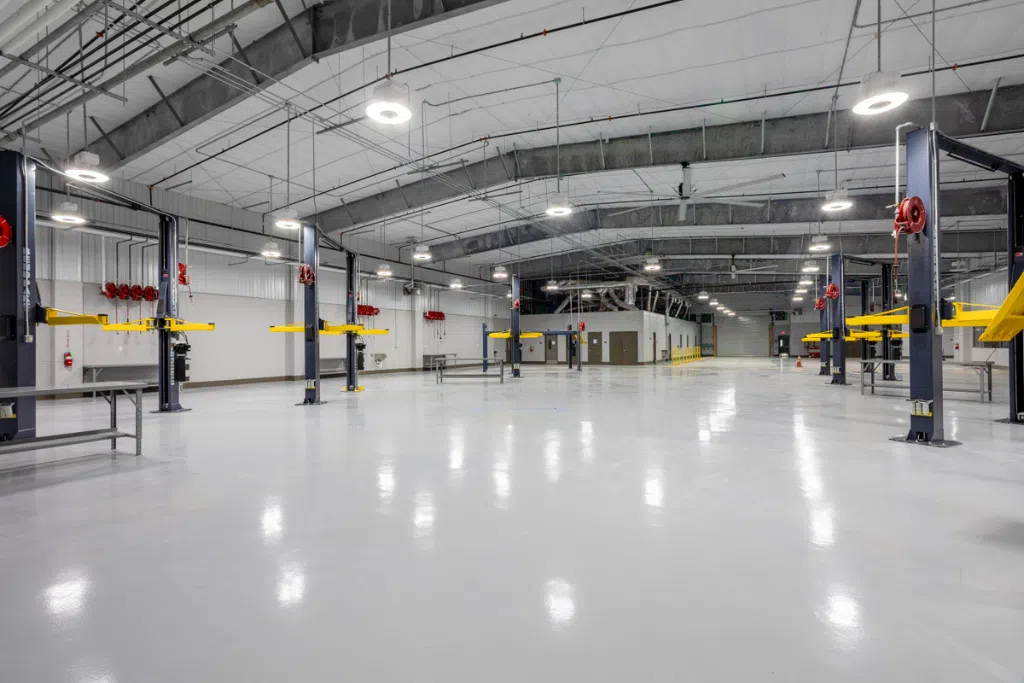
Mark walked into his 50×80 warehouse on a February morning and stopped dead. Water dripped from the ceiling onto his inventory below. The metal walls glistened with moisture. His “maintenance-free” steel building had turned into a rain forest overnight.
“I thought these buildings didn’t have moisture problems,” Mark told his contractor. The answer wasn’t what he expected: his building wasn’t defective. It was doing exactly what physics predicts when warm, humid air meets cold metal surfaces without proper moisture management.
Condensation in steel buildings frustrates owners because it seems to appear randomly, damages stored materials, creates rust concerns, and makes spaces uncomfortable to work in. The good news is that condensation follows predictable patterns. Once you understand what causes it, you can prevent it completely or fix existing problems with targeted solutions.
Condensation occurs when water vapor in the air contacts a surface cold enough to turn that vapor into liquid water. Think of a cold drink on a summer day; the glass “sweats” as humid air hits its chilled surface. Steel buildings experience the same phenomenon, but the consequences prove far more serious than a wet coaster.
Metal conducts temperature extremely efficiently. When outdoor temperatures drop, your building’s metal panels quickly cool to match exterior conditions. Meanwhile, interior air often remains warmer and contains moisture from various sources. This temperature differential creates the perfect conditions for condensation when that warm, moist air contacts cold metal surfaces.
The amount of moisture air can hold depends entirely on temperature. Warm air carries significantly more water vapor than cold air. When warm interior air touches cold metal panels, the air temperature drops instantly at the contact point. That temperature drop reduces the air’s moisture-carrying capacity, forcing it to release water as condensation on the metal surface.
This process intensifies in specific conditions. High humidity levels, significant temperature differences between inside and outside, and poor air circulation all increase condensation risk. Understanding these factors helps you identify why condensation occurs in your building and what solutions will actually work.
Winter creates the most obvious condensation problems. Heated buildings maintain comfortable interior temperatures while exterior metal panels drop to freezing or below. This extreme temperature differential guarantees condensation unless proper moisture management systems exist.
The problem compounds when activities inside the building generate moisture. Concrete curing in new buildings, vehicle exhaust in parking facilities, or manufacturing processes involving water all pump humidity into the interior air. That moisture-laden air rises naturally, contacting the cold roof panels where it condenses and drips back down.
Some operations face particularly severe winter condensation. Indoor livestock facilities generate enormous moisture through animal respiration and waste. Indoor swimming pools or hot tub facilities create constant high-humidity environments. These applications absolutely require comprehensive moisture management from initial design.
Summer condensation surprises building owners because it seems counterintuitive. Hot weather shouldn’t create moisture problems, right? Wrong. Air-conditioned buildings in humid climates face condensation risk when cool interior surfaces meet hot, humid exterior air infiltrating through openings or poorly sealed areas.
This reverse condensation typically appears on exterior wall surfaces rather than interior. The cold wall panels chill humid outside air below its dew point, creating moisture on the building’s exterior. While less immediately problematic than interior condensation, exterior moisture can damage insulation if it penetrates the building envelope and promotes corrosion on exterior surfaces.
Coastal locations experience summer condensation more frequently due to consistently high outdoor humidity levels. Buildings opening large doors regularly, like warehouses receiving frequent deliveries, also face increased summer condensation risk from hot, humid air infiltration.
Spring and fall create condensation challenges as temperatures fluctuate dramatically between day and night. A building that performs fine during stable summer or winter conditions might experience condensation during these transition periods when temperature swings stress moisture management systems.
The concrete slab in your building stores thermal energy, maintaining relatively stable temperatures even as air temperatures change rapidly. This thermal mass can work against you during seasonal transitions, keeping the building interior cooler than exterior air during warm days or warmer than exterior air during cold nights. These temperature inversions create unexpected condensation patterns.
Uninsulated or poorly insulated steel buildings almost guarantee condensation problems in climate-controlled or seasonally heated spaces. Without insulation separating warm interior air from cold metal panels, you create ideal conditions for moisture formation.
The insulation R-value determines how effectively the material resists heat transfer. Higher R-values provide better temperature separation between interior and exterior surfaces. Most commercial steel building applications in moderate to cold climates require minimum R-19 roof insulation and R-13 wall insulation to manage condensation effectively, though specific requirements vary by climate zone and building use.
Equally important is insulation continuity. Gaps in insulation coverage create cold spots where condensation concentrates. These thermal bridges allow temperature transfer that undermines your overall moisture management strategy. Professional installation ensuring complete coverage without compression or gaps proves essential.
Vapor barriers control moisture movement through your building envelope. Without proper vapor barrier installation, moisture migrates from warm, humid areas toward cold surfaces where it condenses within insulation or on metal panels.
The vapor barrier belongs on the warm side of your insulation in most climates. This placement prevents warm, moist interior air from reaching cold surfaces where condensation occurs. Faced insulation includes an integrated vapor barrier, while unfaced insulation requires separate vapor barrier installation.
Vapor barrier effectiveness depends on proper installation and sealing. Tears, gaps, or unsealed seams allow moisture to bypass the barrier, creating condensation problems in specific areas. Penetrations for electrical, plumbing, or HVAC systems require careful sealing to maintain vapor barrier integrity.
Adequate ventilation removes moisture-laden air before condensation occurs. Without sufficient air exchange, humidity levels build inside your building until they overwhelm your insulation and vapor barrier systems.
Natural ventilation using ridge vents, soffit vents, or wall louvers works well for unconditioned buildings or those with moderate moisture generation. The stack effect, where warm air rises and exits through high openings while cool air enters low openings, creates continuous air circulation that manages moisture effectively.
Mechanical ventilation becomes necessary in buildings with high moisture generation, limited natural ventilation opportunities, or specific environmental control requirements. Exhaust fans, air handlers, and dedicated dehumidification systems provide controlled moisture management for challenging applications.
Some buildings generate significant interior moisture through their normal operations. Identifying and managing these moisture sources prevents condensation more effectively than simply adding more insulation or ventilation.
Manufacturing processes involving water, steam, or liquid solvents pump moisture into interior air. Food processing facilities, commercial kitchens, and laundries generate enormous humidity levels. Indoor pools or spa facilities create constant high-humidity environments. Livestock buildings face moisture from animal respiration and waste.
Even less obvious sources contribute meaningful moisture. Large numbers of people generate humidity through respiration. Vehicle exhaust contains significant water vapor. Concrete slabs continue releasing moisture for months after pouring. New construction often experiences temporary condensation issues as building materials dry out completely.
Adequate insulation forms the foundation of condensation prevention. The right insulation type and R-value for your climate zone and building use provides the temperature separation that prevents moisture formation.
Spray foam insulation offers superior performance for condensation prevention. The foam adheres directly to metal panels, eliminating the air gaps where condensation can form. It provides excellent R-value per inch while creating an integrated air and vapor barrier. Many commercial operations use spray foam specifically because it solves condensation problems that plague other insulation types.
Fiberglass batt insulation costs less but requires careful installation to prevent condensation issues. The batts must fill the cavity completely without compression, and proper vapor barrier installation becomes critical. Metal building insulation systems using faced batts with integrated vapor barriers work well when properly installed by experienced contractors.
Insulated metal panels eliminate condensation concerns through factory-controlled construction. The foam core bonds to both metal facings during manufacturing, creating a panel with no thermal bridges or installation gaps. While more expensive than field-applied insulation, IMPs deliver reliable condensation prevention for critical applications.
Ventilation removes moisture before it condenses. The right ventilation strategy depends on your building use, climate, and moisture generation levels.
Continuous ridge vents combined with soffit or eave vents create natural airflow through the stack effect. This passive system works well for unconditioned warehouses, agricultural buildings, and any application where air temperature control isn’t required. The constant air exchange prevents humidity buildup without operating costs.
Powered exhaust fans provide controlled moisture removal for buildings with specific humidity concerns. Sizing fans properly requires calculating your building’s air volume and estimating moisture generation rates. Undersized fans fail to control humidity while oversized fans waste energy and may create uncomfortable drafts.
Understanding the principles of proper ventilation in metal buildings helps you design systems that manage moisture effectively without compromising temperature control or energy efficiency. Some buildings benefit from zone-based ventilation, concentrating air exchange in areas with high moisture generation while maintaining tighter control in climate-controlled zones.
Proper vapor barrier installation prevents moisture migration toward cold surfaces. Install barriers on the warm side of insulation in heating-dominated climates to prevent warm, moist interior air from reaching cold exterior panels. Seal all seams, penetrations, and terminations carefully using vapor barrier tape. The difference between effective and ineffective barriers often comes down to installation quality rather than material choice.
Operations generating moisture levels that overwhelm passive strategies need dedicated dehumidification. Desiccant systems work well in cold climates and unheated spaces. Refrigerant dehumidifiers cost less and suit climate-controlled buildings with consistent moisture concerns. Both systems actively remove moisture, maintaining humidity below condensation thresholds.
Fixing condensation in existing buildings requires identifying the root cause before implementing solutions. Throwing insulation at a ventilation problem or adding ventilation to an insulation deficiency wastes money without solving the issue.
Start by documenting when and where condensation occurs. Winter-only problems suggest insulation or heating issues. Summer condensation points to air conditioning or infiltration concerns. Year-round moisture indicates fundamental ventilation or vapor barrier problems.
Note whether condensation appears uniformly or in specific locations. Uniform condensation suggests inadequate overall insulation or ventilation. Localized wet spots indicate thermal bridges, insulation gaps, or air leakage at specific points. Condensation concentrated around doors, windows, or roof penetrations often results from poor sealing at these openings.
Measure interior humidity levels using a hygrometer. Relative humidity above 60% creates condensation risk in most climates. If humidity runs consistently high, you likely need improved ventilation or dehumidification rather than just more insulation.
Adding insulation provides the most common fix. Spray foam applied to interior surfaces delivers excellent results, though the building must be dry before application to avoid trapping moisture. Improving ventilation often proves more cost-effective, particularly for unconditioned spaces. Installing ridge vents, exhaust fans, or strategic air openings can dramatically reduce condensation at modest cost.
Vapor barriers prove challenging to add retroactively. Interior liner panels with integrated vapor barriers or carefully sealed plastic sheeting offer solutions, though proper installation requires significant attention to detail.
Complex problems benefit from professional analysis. Building science consultants or HVAC engineers can perform thermal imaging, dew point calculations, and airflow modeling to identify root causes. The assessment cost often saves money compared to trial-and-error retrofits.
Addressing symptoms instead of causes wastes money. Adding insulation won’t fix inadequate ventilation. Installing dehumidifiers can’t overcome missing vapor barriers. Identify the actual problem first.
Ignoring moisture sources guarantees continued problems. Operations generating significant moisture must remove it through ventilation or dehumidification.
Incomplete vapor barrier installation performs little better than no barrier. Gaps and unsealed penetrations allow moisture bypass.
Inadequate ventilation capacity leaves buildings chronically humid. Calculate needs based on building volume and moisture generation, then install sufficient capacity.
Why does my steel building only sweat in winter?
Winter condensation occurs when heated interior air contacts cold exterior metal panels. The temperature differential between warm, moist indoor air and freezing metal surfaces causes moisture to condense on interior surfaces. Proper insulation and vapor barriers prevent interior air from reaching cold metal, eliminating the condensation problem.
Can I stop condensation without insulation?
Adequate ventilation can prevent condensation in unheated buildings by keeping interior humidity levels low. However, heated or cooled buildings require insulation to separate interior air from exterior metal panels. Ventilation alone cannot overcome the temperature differential in climate-controlled spaces, making insulation essential for condensation prevention.
How much ventilation does my building need?
Ventilation requirements depend on building volume and moisture generation. A basic guideline suggests 1 square foot of net free vent area per 300 square feet of building area for naturally ventilated structures. Buildings with high moisture generation need mechanical ventilation sized to provide 6-12 air changes per hour. Working with an HVAC professional ensures proper ventilation design for your specific application.
Will dehumidifiers solve my condensation problem?
Dehumidifiers address humidity levels but not temperature differentials. If your building lacks adequate insulation, dehumidifiers will run constantly, fighting condensation without solving the underlying problem. Dehumidifiers work best as supplemental moisture control in properly insulated buildings with unusually high moisture generation.
Can condensation damage my steel building?
Yes, chronic condensation can damage buildings and contents. The moisture promotes rust on metal surfaces, particularly fasteners and connection points. It can saturate and damage insulation, reducing its effectiveness. Condensation dripping on stored materials causes product damage. Perhaps most concerning, persistent moisture creates conditions for mold growth that affects indoor air quality.
Is condensation covered by building warranties?
Most steel building warranties specifically exclude condensation-related damage because condensation results from environmental conditions and building use rather than manufacturing defects. Proper design and installation of moisture management systems remains the owner’s responsibility. This makes preventing condensation essential rather than relying on warranty coverage.
Condensation doesn’t have to plague your steel building. Understanding the causes and implementing proper prevention strategies creates dry, comfortable spaces that protect your building investment and stored materials. Whether you’re planning new construction or fixing problems in an existing building, the right combination of insulation, vapor barriers, and ventilation prevents condensation effectively.
Start by identifying your specific situation. Does your building generate significant moisture? What climate challenges do you face? How is the building used? Answering these questions guides you toward solutions that actually work rather than expensive trial-and-error approaches.
Ready to discuss your steel building project? Contact MBMI to explore steel building systems designed for your application. From basic warehouses to specialized facilities, we deliver quality buildings that provide the foundation for effective moisture management and long-term performance.