
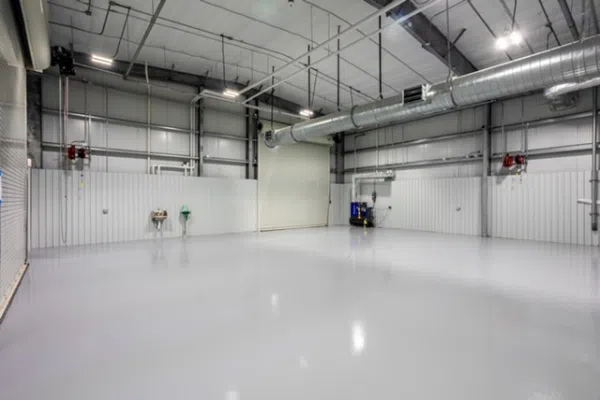
Tom walked into his newly erected 80×120 warehouse in Atlanta and saw potential everywhere. The steel frame stood strong, the roof was weather-tight, and the concrete floor gleamed. But the exposed metal walls and open ceiling made the space feel cold and unfinished.
“I need this operational in six weeks,” Tom told his contractor. “Office space up front, climate-controlled storage in the middle, and workshop area in back. What are my options?”
The answer surprised him. Unlike traditional construction where interior choices get locked in early, commercial steel buildings offer remarkable flexibility in how you finish the interior. You can start basic and upgrade later, finish different zones to different standards, or create a polished environment that rivals any conventional building.
The key to steel building interior finishing is understanding your options and making smart decisions that align with your operational needs and budget.
Your wall finishing strategy balances aesthetics, functionality, insulation requirements, and budget. Commercial steel buildings support multiple approaches, each suited to different applications and performance requirements.
Leaving interior walls as exposed metal panels represents the most economical approach. The steel panels that form your building’s exterior create a durable, maintenance-free interior surface requiring no additional materials or labor.
This approach works well for warehouses, storage facilities, workshops, and any space where temperature control isn’t critical. The metal surface cleans easily, resists damage from forklifts and material handling equipment, and provides decades of service without maintenance.
However, exposed metal panels offer no insulation value and can create condensation issues in humid climates or temperature-controlled spaces. The industrial appearance works for many commercial applications but may not suit customer-facing areas or office environments.
Spray foam applied directly to interior metal panels creates an insulated, finished surface in a single application. The foam adheres to the steel panels, providing excellent R-value while sealing air gaps and creating a vapor barrier that prevents condensation.
This solution excels in climate-controlled warehouses, cold storage facilities, and any application requiring superior thermal performance. The seamless application eliminates the thermal bridging that occurs with batt insulation, potentially reducing energy costs by 30-40% compared to traditional insulation methods.
Spray foam costs more upfront than other insulation options but often justifies the investment through energy savings and improved performance. The finished white surface reflects light well, brightening the interior and potentially reducing lighting costs. Many commercial operations leave spray foam exposed as the final interior surface, though you can install finished walls over it if desired.
Insulated metal panels (IMPs) provide factory-manufactured wall systems with foam insulation sandwiched between metal facings. These panels create a finished, insulated wall system in a single installation, offering excellent thermal performance with a clean, professional appearance.
IMPs work particularly well for temperature-controlled spaces requiring consistent climate control and professional aesthetics. Food processing facilities, pharmaceutical operations, and climate-controlled warehouses commonly use IMPs for their superior insulation properties and easy-to-clean surfaces.
The higher material cost balances against reduced installation labor compared to traditional framed walls. The panels install quickly, potentially saving weeks on project timelines compared to conventional wall construction.
Traditional framed walls using steel or wood studs with drywall finishing create spaces indistinguishable from conventional construction. This approach suits office areas, showrooms, retail spaces, and anywhere requiring a polished commercial appearance.
Framing interior walls provides maximum flexibility for running utilities, installing electrical outlets and data connections, and creating the exact aesthetic you want. Insulation fits between studs, and standard drywall finishing techniques create painted surfaces matching any design preference.
The trade-off involves higher material and labor costs compared to other finishing options. However, for customer-facing areas or spaces where appearance significantly impacts your business, the investment often proves worthwhile.
Consider mixing approaches based on functional zones. Frame and finish walls in office and customer areas while using spray foam or exposed panels in warehouse and storage zones. This targeted approach optimizes spending without compromising functionality.
Ceiling choices dramatically affect acoustics, lighting efficiency, and the overall feel of your space. Steel buildings offer several approaches, each with distinct advantages for different applications.
Leaving your steel building’s structure exposed creates maximum ceiling height while minimizing costs. The exposed purlins, beams, and roof panels create an industrial aesthetic increasingly popular in modern commercial design.
This approach works well for retail spaces, breweries, restaurants, gyms, and any business where the industrial look supports your brand. Exposed ceilings also provide easy access to utilities for future modifications or maintenance.
The main consideration involves acoustics. Hard surfaces throughout create significant sound reflection, potentially making spaces uncomfortably loud. Adding acoustic panels or fabric treatments at strategic locations can mitigate noise issues while maintaining the exposed structure aesthetic.
Installing insulation directly against your roof panels, similar to spray foam on walls, creates a conditioned space that includes the full building height. This approach works particularly well when you need climate control but want to maintain maximum ceiling height for storage racks, overhead cranes, or material handling equipment.
Spray foam applied to roof panels provides excellent insulation performance while creating a finished white surface that reflects light effectively. Some operations leave this as the final ceiling treatment, while others add suspended ceiling systems below for improved acoustics or aesthetics.
Liner panels attach to the interior of your roof purlins, creating a finished ceiling below the structural roof. These panels come in various styles and can include insulation backing for improved thermal performance.
Liner panels offer a clean, finished appearance at a reasonable cost. They provide some acoustic dampening and create a uniform ceiling that conceals utilities and structure. The reduced ceiling height compared to a fully exposed structure rarely causes problems in commercial applications with standard equipment and storage needs.
Traditional suspended ceiling grids with acoustic tiles create the most finished appearance and best acoustic performance. This approach suits office areas, showrooms, and any space where appearance and sound control matter significantly.
Suspended ceilings provide easy access to utilities above while creating a polished commercial interior. The acoustic tiles dramatically improve sound quality compared to hard surfaces. However, the reduced ceiling height and higher installation cost make this approach less practical for warehouse areas where the extra height and cost savings of other options prove more valuable.
Many businesses use suspended ceilings in office and customer areas while leaving warehouse and shop spaces with an exposed or insulated structure, creating distinct zones appropriate to each area’s function.
Your steel building foundation typically provides a concrete slab suitable for many commercial applications. However, specific uses may benefit from additional flooring treatments that improve functionality, appearance, or comfort.
Basic sealed concrete represents the most economical flooring solution for commercial steel buildings. Professional concrete sealing using penetrating sealers or epoxy coatings protects the surface from moisture, staining, and wear while making the floor easier to clean.
This approach works exceptionally well for warehouses, workshops, manufacturing facilities, and any operation involving heavy equipment or material handling. Modern concrete sealers can create attractive finishes in various colors while providing decades of low-maintenance service.
The initial slab finishing quality significantly affects the final result. Properly finished and sealed concrete provides an excellent commercial floor at minimal additional cost beyond the foundation itself.
Epoxy floor coatings create durable, attractive surfaces that withstand heavy traffic, chemical exposure, and frequent cleaning. These coatings bond to concrete slabs, creating a seamless surface available in numerous colors and finishes.
Epoxy floors work particularly well in food service facilities, retail spaces, showrooms, and anywhere requiring an attractive, easy-to-clean surface that handles commercial traffic. The coatings resist most chemicals, don’t harbor bacteria, and maintain their appearance through years of heavy use.
Professional epoxy application costs more than basic sealing but less than other flooring options. The durability and low maintenance requirements often justify the investment for businesses where floor appearance and performance matter.
Mechanically polished concrete creates attractive, extremely durable floors increasingly popular in retail, restaurants, and commercial spaces seeking an industrial-modern aesthetic. The polishing process densifies the concrete surface while creating a glossy finish that requires minimal maintenance.
Polished concrete offers excellent durability, easy cleaning, and an upscale appearance at a moderate cost. The reflective surface improves lighting efficiency while the dense surface resists moisture, staining, and wear better than untreated concrete.
This option works particularly well when your steel building’s industrial character aligns with your brand or design concept. Modern commercial spaces often embrace the polished concrete aesthetic as both practical and stylish.
Certain operations require specific flooring solutions beyond sealed or coated concrete. Anti-static flooring for electronics manufacturing, food-grade flooring for processing facilities, or impact-resistant flooring for heavy manufacturing represent specialized applications where the right flooring system proves essential.
These systems typically install over your concrete slab, adding functionality specific to your operational requirements. Working with your building manufacturer and flooring specialists during the planning phase ensures your foundation accommodates any specialized flooring requirements.
Interior finishing choices significantly impact operating costs. Proper insulation and air sealing can reduce energy consumption by 40-50% compared to poorly finished structures, with most commercial operations seeing payback periods of 3-5 years on insulation investment.
Understanding how different insulation approaches work in steel buildings helps you balance upfront costs against long-term savings. Light-colored interior surfaces like white spray foam or light liner panels improve lighting efficiency by reflecting more light, with some operations reporting 20-30% reductions in lighting energy use from improved surface reflectivity alone.
Underestimating insulation needs leads to uncomfortable working conditions and high energy costs. Most commercial operations in climate-controlled spaces benefit from higher insulation R-values than the minimum code requirements. The energy savings quickly justify the additional insulation investment.
Inconsistent finishing approaches create visual discontinuity and can compromise performance. If you’re finishing office areas to high standards, plan appropriate transitions to less-finished zones rather than creating jarring boundaries between spaces.
Ignoring acoustics in open commercial spaces creates uncomfortable noise levels affecting productivity and communication. Adding acoustic treatment costs far less than trying to fix noise problems after occupancy.
Skipping vapor barriers in insulated spaces risks condensation problems that damage insulation and create moisture issues. Proper vapor barrier installation prevents problems that prove expensive and disruptive to correct later.
Neglecting lighting planning until after interior finishing makes optimal lighting placement and electrical routing difficult. Plan your lighting layout while designing interior finishing to ensure efficient placement and proper electrical infrastructure.
Can I finish my steel building interior to look like conventional construction?
Yes, steel buildings support any interior finishing approach, including traditional framed walls, suspended ceilings, and standard flooring systems. Office areas, showrooms, and customer-facing spaces can be finished identically to conventional buildings. The steel structure simply provides a different framing system that supports the same interior finishes.
Should I insulate my warehouse if it’s not climate-controlled?
Even unheated warehouses benefit from roof insulation in most climates. Insulation reduces extreme temperature swings, prevents condensation that can damage stored materials, and makes the space more comfortable for workers. The moderate cost of basic insulation often proves worthwhile even without active climate control.
How much does interior finishing typically cost?
Interior finishing costs vary dramatically based on your choices. Basic sealed concrete floors with spray foam insulation might add $8-12 per square foot. Fully finished office-quality space with framed walls, suspended ceilings, and epoxy floors can cost $30-50 per square foot. Most commercial projects fall between these extremes, with mixed finishing levels averaging $15-25 per square foot.
Can I finish the interior myself or hire separate contractors?
Steel building interiors accommodate standard finishing trades and practices. You can hire conventional contractors for framing, insulation, drywall, and flooring work. Many building owners complete basic finishing themselves for simple applications like sealed concrete or basic insulation installation. Complex systems like spray foam typically require specialized contractors.
Should I finish everything at once or phase the work?
Phased finishing often makes sense for larger buildings or when budget constraints matter. Complete basic weatherproofing and any insulation that’s difficult to add later, then finish specific zones as needed or budget allows. This approach lets you occupy and use your building while completing finishing work in stages.
Steel building interiors accommodate any finishing level from basic to fully finished. Focus your budget on creating excellent conditions where they matter most while keeping overall costs reasonable. Work with qualified contractors who understand steel building construction to ensure your finishing systems integrate properly with your structure.
Ready to start your steel building project? Contact us today to discuss your commercial building needs. Our steel building systems provide the durable, flexible framework that supports whatever interior finishing approach works best for your operation.
From warehouses to retail spaces, MBMI delivers quality steel buildings that serve as the foundation for your commercial success.