
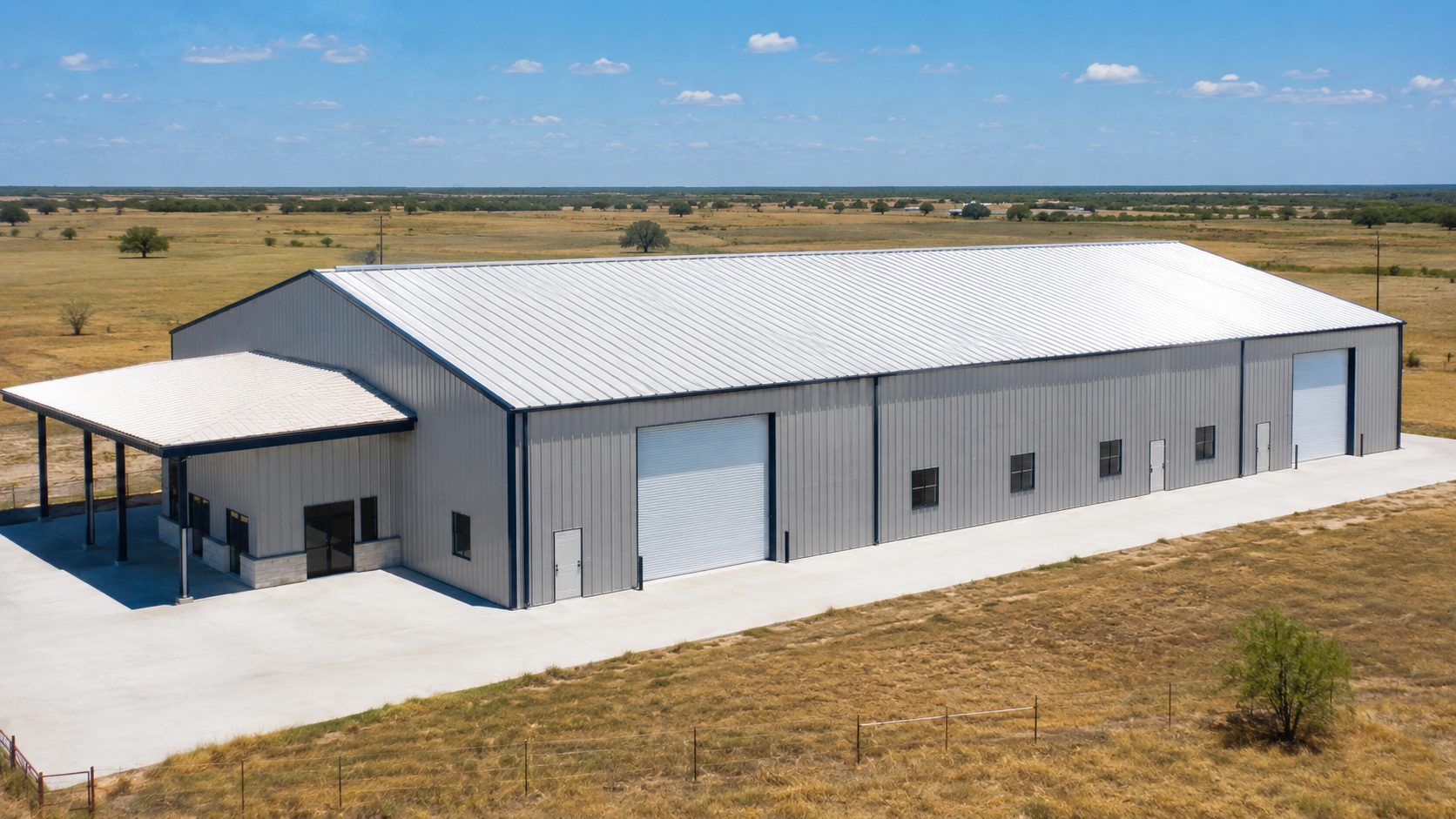
TL;DR: Three choices decide whether a steel building in Texas stays comfortable or bakes: insulation, ventilation, and roof color. Get them right at the spec stage.
A steel building in Texas faces a heat load that lasts most of the year, with long stretches of high sun, humidity along the Gulf, and interior temperatures that climb fast if the envelope is not planned for it. The good news is that steel handles that climate as well as any material, provided the insulation, airflow, and roof surface are specified for the conditions rather than treated as add-ons. The metal frame is not the problem; an unplanned envelope is. Get the insulation package, the ventilation strategy, and the roof color right at the quote stage, and the building stays workable through August without punishing your cooling bill.
Heat gets into a building three ways: it radiates through the roof and walls, it conducts through the metal skin, and it rides in on outside air. A bare metal panel in direct Texas sun can reach surface temperatures well above the air temperature, and that heat drives straight into the space below unless something stops it. So the real question is not whether steel gets hot. It is how you interrupt each of those paths.
That framing matters because owners often try to solve a heat complaint with a bigger air conditioner. Oversizing the cooling equipment treats the symptom and raises the electric bill for the life of the building. Planning the envelope first, then sizing mechanical equipment to the reduced load, is the cheaper and more durable order of operations. Whether you are putting up a warehouse, a shop, or a barndominium, the same physics applies to steel buildings across Texas.
Insulation is the single biggest lever on comfort and running cost, and in a hot climate it does double duty by keeping conditioned air in and radiant heat out. The right amount depends on how the building is used. A climate-controlled office or living space needs a far higher R-value than an open equipment barn that only needs to knock the edge off.
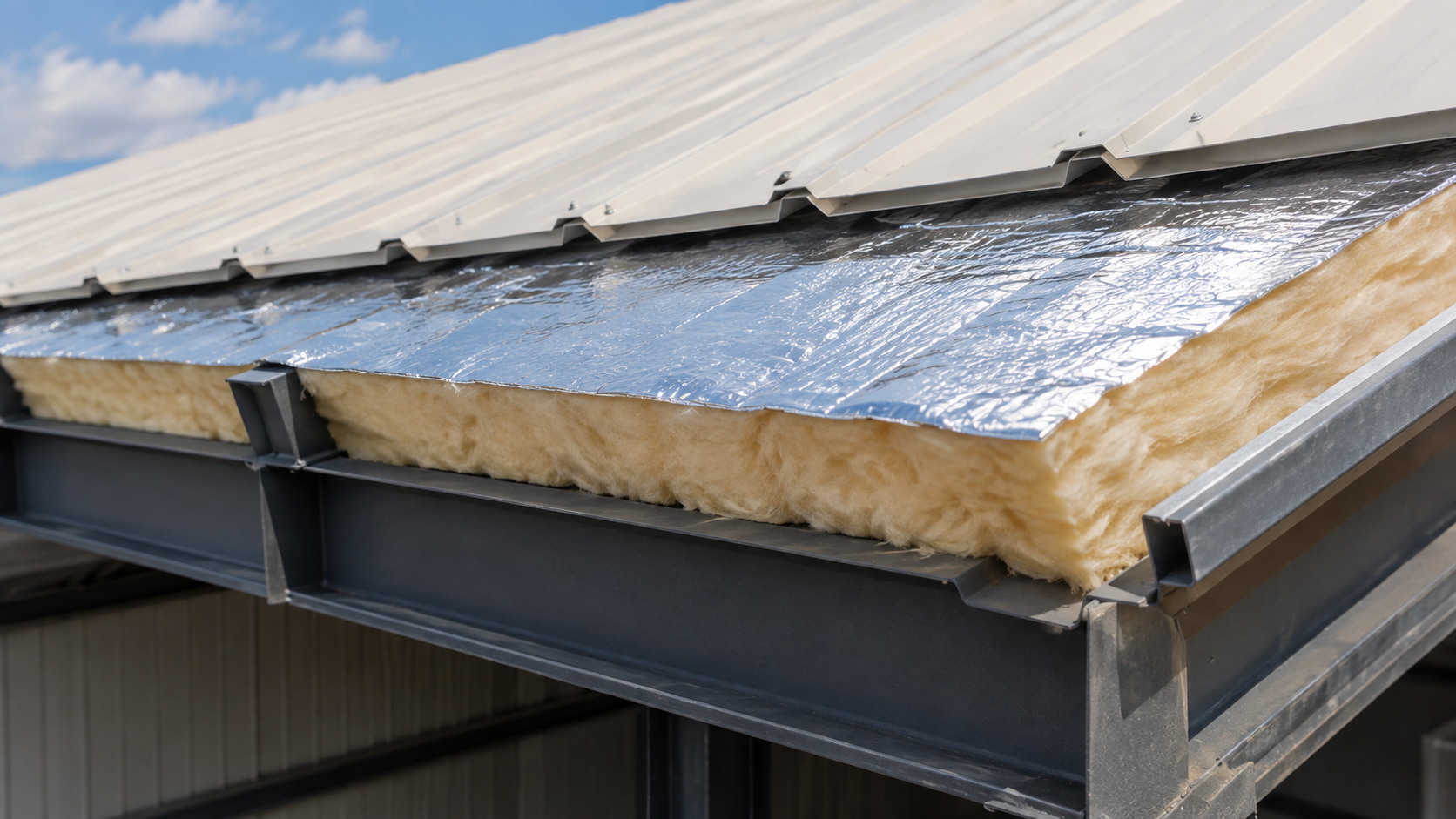
For most conditioned buildings in Texas, the roof is where you invest first, since that is the surface taking the most direct sun. Blanket insulation with a facing, or an insulated panel system, both work; what matters is achieving a continuous layer without gaps or crushed spots that create thermal shorts. Walls come next, and the payoff is largest on the east and west elevations that catch low-angle morning and afternoon sun.
A radiant barrier, a reflective foil facing on the insulation, earns its keep in Texas more than in cooler states. It reflects radiant heat back toward the roof rather than letting it soak into the space, which is exactly the load that dominates a hot, sunny climate. Paired with adequate insulation and a ventilated roof cavity, a radiant barrier can meaningfully cut the peak afternoon heat gain that makes an under-specified metal building feel like an oven.
Roof color is not just an aesthetic choice in this climate; it changes how much solar heat the building absorbs in the first place. A light, reflective roof stays dramatically cooler than a dark one under the same sun. According to ENERGY STAR, a clean white roof that reflects about 80 percent of sunlight will run roughly 50 degrees Fahrenheit cooler than a gray roof that reflects only 20 percent, and cool roofs deliver their biggest energy savings in hot, sunny regions like the southern United States.
You do not have to accept a stark white roof to get the benefit. Modern coatings give many colors a high solar reflectance, so you can hold a look you like while still shedding heat. When you weigh steel building color choices, treat the roof and the walls as separate decisions, since the roof carries most of the thermal consequence and the walls carry most of the curb appeal.
The reflective roof pays off twice. It lowers the cooling load in summer, and by running cooler it slows the thermal cycling that ages roofing and fasteners over time. In a climate that punishes materials, that longevity is a quiet but real return.
Insulation slows heat transfer and reflective color reduces absorption, but ventilation removes the heat that still builds up, especially in the roof cavity and in non-conditioned buildings. Hot air rises and stalls at the ridge, so an effective system lets it escape high while drawing cooler air in low.
Ridge vents paired with eave or gable intake create a continuous convective flow that flushes the hottest air out of the peak. For shops and warehouses, powered exhaust fans or turbine vents add capacity on the worst days. In a fully conditioned building, controlled ventilation and a tight vapor barrier work together so you are not fighting humid Gulf air and mold risk while you cool the space.
No single measure carries the whole load. A reflective roof over poor insulation still lets heat conduct through; heavy insulation with no ventilation traps moisture; good airflow cannot rescue a dark, uninsulated shell. The buildings that stay comfortable through a Texas summer treat all three as one system decided together at the design stage.
Insulated wall and roof assemblies make that easier by combining structure, insulation, and a continuous vapor seal in one component, which removes the gaps that field-assembled insulation tends to leave. Specify the insulation depth, the roof reflectivity, and the ventilation plan together when you request a quote, and the building will handle the heat instead of fighting it. That upfront coordination is far cheaper than retrofitting comfort into a building that was priced on square footage alone.
No, not when the envelope is planned for the heat. The metal frame does not make a building hotter than any other material once you specify adequate insulation, a reflective or light-colored roof, and proper ventilation. Uninsulated metal buildings get hot, but that is a specification gap, not a property of steel. A correctly detailed steel building stays comfortable and often costs less to cool than owners expect.
Lighter, more reflective colors absorb the least solar heat and keep the roof surface coolest, which lowers your cooling load. White and light gray perform best on raw reflectance, but modern high-reflectance coatings let many mid-tone colors perform well too. Because the roof takes the most direct sun, prioritize reflectivity there and give yourself more freedom with wall colors.
It depends on use. A climate-controlled office, shop, or living space warrants a substantially higher R-value in the roof and walls than an open storage barn that only needs to temper extremes. The roof is the priority in every case because it takes the most sun. A supplier can recommend an insulation package matched to your building’s use and location.
Generally yes. Radiant heat gain through the roof is a dominant load in a hot, sunny climate, and a reflective foil facing sends much of that heat back out rather than into the building. It works best alongside adequate insulation and a ventilated roof cavity, not as a substitute for insulation. For most Texas buildings the added cost is modest relative to the comfort and cooling savings.
In hot, sunny climates it can, which is exactly why cool roofs are promoted for the southern United States. A reflective roof lowers peak surface temperature by dozens of degrees, trimming the heat that reaches the conditioned space and easing the load on your air conditioning. The savings depend on insulation levels, building type, and roof area, so treat the reflective roof as one part of a whole-envelope strategy.