Category: Uncategorized

  • Warehouse Building Layout: Traffic Flow and Storage Optimization

    Warehouse Building Layout: Traffic Flow and Storage Optimization

    The warehouse operated at 60% capacity but felt completely full. Forklifts waited for each other constantly. Pickers walked twice the distance they should. The problem wasn’t space… it was layout.

    “We have 12,000 square feet,” the warehouse manager said, pointing at the building plans. “We should fit 800 pallet positions easily. We’re stuck at 480 and still feel cramped.”

    The issue became obvious walking the floor. Aisles ran the wrong direction for their traffic. High-turnover items sat in back corners. Receiving and shipping shared the same congested area. Every operational decision fought against the building layout.

    Good warehouse layout isn’t about square footage. It’s about how products flow through your space, where equipment travels, and how storage density balances against access speed.

    Start With Product Flow, Not Building Shape

    Most warehouse layout mistakes happen because people design from the building outward instead of from operations inward.

    Map your current process before touching building plans. How do products arrive? Where do they stage? How do they move to storage? What happens during picking? Where do orders consolidate before shipping? Draw this flow on paper first.

    Identify your bottlenecks in the current operation. Is it receiving capacity? Pick path length? Staging area congestion? Shipping dock backups? Your new layout should eliminate these constraints, not recreate them in a bigger building.

    Calculate your product velocity for different inventory categories. Fast-moving items need easy access near shipping. Slow movers can sit in less accessible deep storage. The layout should position products based on turnover, not just fill available space alphabetically.

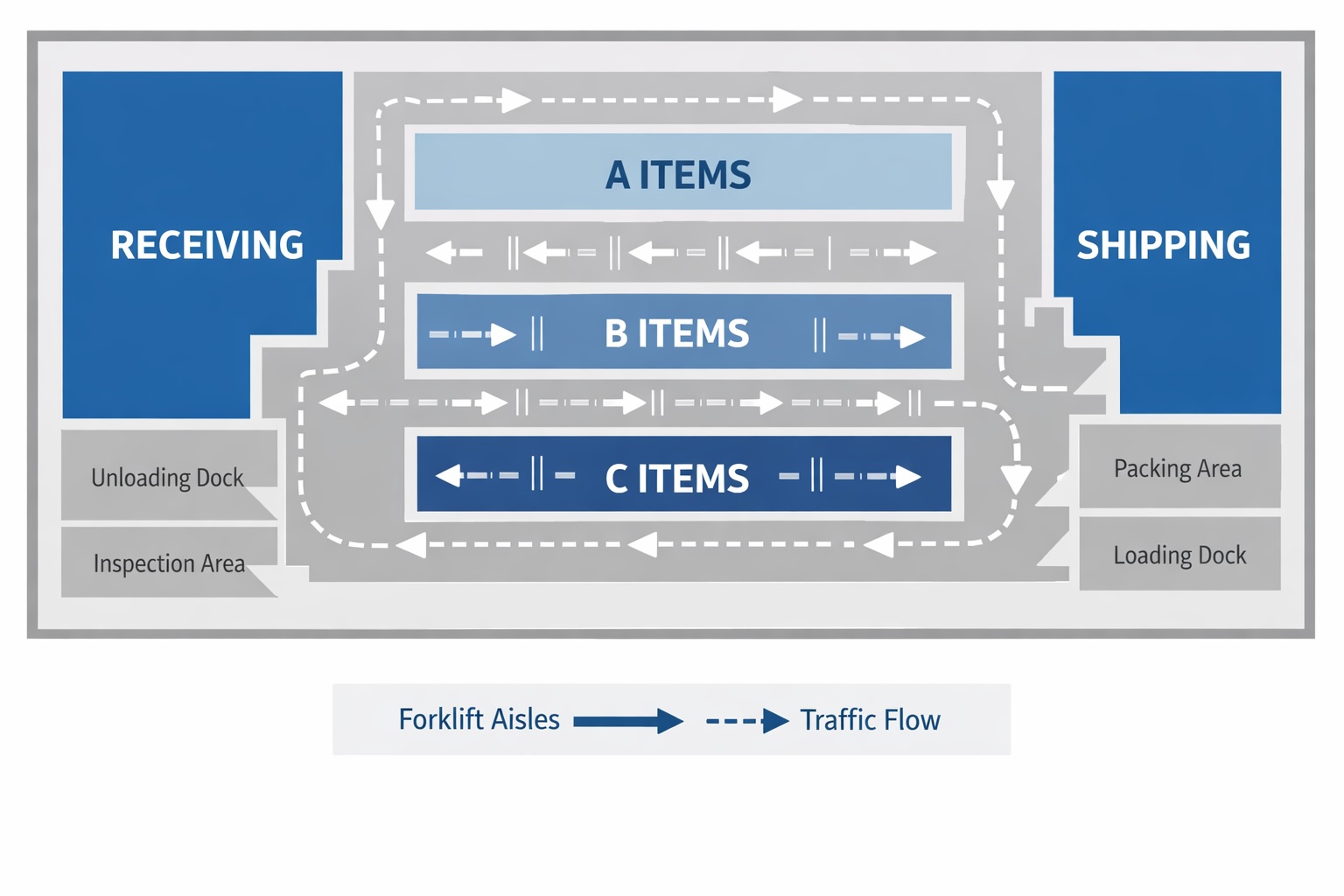
    Most operations split into three velocity zones: A items (top 20% of picks) get prime location near shipping, B items (next 30%) get standard racking, C items (remaining 50%) go to deeper storage. This classification drives your entire storage layout.

    Building Dimensions That Support Operations

    Building shape affects traffic flow. A 60×120 warehouse and an 80×90 warehouse both provide 7,200 square feet, but they function differently.

    Match building depth to your storage systems. If you’re using back-to-back pallet rack rows with forklift aisles, calculate your rack configuration first, then size the building to fit it, not the reverse.

    Align building length with your traffic patterns. Most warehouses run their longest aisles parallel to the building’s long axis to minimize aisle count and maximize storage density.

    Consider expansion direction during initial design. Expanding perpendicular to your primary aisles works better than extending them, since lengthening aisles increases travel time.

    Storage Layout Strategies

    How you configure storage determines both density and operational speed. These goals often conflict, so layout choices involve trade-offs.

    Selective Rack vs. Floor Stacking

    Selective pallet rack provides access to every pallet position but consumes more space due to aisle requirements. Floor stacking achieves higher density but limits access to products.

    Selective rack works best for operations with diverse SKUs, moderate turnover, and need for first-in-first-out rotation. Plan 12-15 square feet per pallet position including aisles. Standard configurations use 42-inch or 48-inch-deep rack in back-to-back rows with 12-foot aisles for counterbalance forklifts.

    Floor stacking makes sense for high-volume, low-SKU operations or buffer storage. Stack pallets 2-3 high if products allow. Budget 8-10 square feet per pallet position at two-high stacking. This density advantage disappears if you need frequent access to specific pallets buried in the stack.

    Hybrid approaches work for many real operations. Use selective rack for A and B items requiring frequent access. Floor stack C items or seasonal buffer inventory where density matters more than accessibility.

    Aisle Configuration

    Aisle width determines equipment options and storage density.

    Standard counterbalance forklifts need 12-13 foot aisles. Most operations use these widths because they accommodate standard equipment.

    Reach trucks work in 8-10 foot aisles, increasing storage density by 30-40%. However, they cost more and require flatter floors.

    Very narrow aisle (VNA) systems operate in 6-foot aisles, maximizing density for high-bay warehouses. These specialized systems suit operations with high land costs but require significant investment.

    Traffic Pattern Planning

    Efficient traffic patterns minimize congestion and reduce equipment travel time. Poor patterns create bottlenecks even in spacious buildings.

    One-Way vs. Two-Way Aisles

    Two-way aisles provide flexibility but require wider dimensions. Main aisles accommodating two-way traffic need 16-18 feet minimum width. This flexibility helps during peak periods when multiple forklifts work simultaneously but consumes significant floor space.

    One-way traffic patterns reduce aisle width requirements to 12-14 feet while still enabling efficient movement. Design a loop traffic pattern where forklifts travel through the facility in consistent directions. This works particularly well in operations with predictable flow from receiving to storage to shipping.

    Separate high-traffic zones from storage areas when possible. Designate main aisles for travel and branch aisles for storage access. This separation reduces congestion and improves safety by minimizing forklift interactions in tight quarters.

    Receiving and Shipping Separation

    Separate receiving from shipping to prevent traffic conflicts and product mix-ups. Facilities receiving and shipping from the same area create constant forklift congestion and risk shipping incoming products before quality checks or proper inventory procedures.

    Position receiving and shipping on opposite ends of the building for maximum flow efficiency. Products travel one direction through the facility: in through receiving, to storage, through picking, to shipping. This linear flow minimizes backtracking and simplifies material handling.

    Cross-dock operations need different layouts entirely. Place receiving and shipping doors on opposite building sides with clear through paths. Products move directly from inbound trailers through a central sorting area to outbound trailers with minimal time in storage.

    Maximizing Storage Density

    Most warehouses can increase storage capacity 20-40% through better layout without adding square footage.

    Vertical Space Utilization

    Ceiling height determines storage capacity as much as floor space. A warehouse with 24-foot clear height can store 40-50% more pallets than one with 16-foot ceilings using the same floor area.

    Standard selective rack reaches 20-22 feet with adequate top-of-rack clearance. Higher ceilings enable taller racking or future mezzanine installation for pick modules or overflow storage. When planning commercial metal buildings, ceiling height costs relatively little during construction but proves nearly impossible to add later.

    Mezzanines double usable space for the right applications. Install mezzanines for order picking, packing, or office space while preserving the ground floor for bulk storage and material handling equipment. This vertical expansion works particularly well in facilities with expensive land or limited expansion room.

    Zone-Based Layout Design

    Fast-pick zones near shipping reduce travel time for high-velocity items. Dedicate prime forward-pick locations to your A items that generate 80% of picks. Position these locations for minimum travel distance from the shipping area.

    Reserve storage for overflow or slow movers belongs in less accessible areas. Products that turn slowly or require full-pallet picks can sit deeper in the facility without impacting operational efficiency. This zones your storage by activity level rather than treating all space equally.

    Seasonal or promotional storage needs flexible allocation. Design one area to handle variable volumes without disrupting the core operation. This buffer zone absorbs fluctuations while keeping your standard storage layout stable year-round.

    Workflow Efficiency

    Smart layout eliminates wasted motion and reduces order fulfillment time.

    Organize storage by pick frequency rather than alphabetically. The most-picked items should be closest to shipping. Velocity-based layout reduces average pick path length by 30-50%.

    Design logical pick routes that minimize backtracking. Single-order picking should flow through the facility efficiently without revisiting areas.

    Adequate staging space prevents congestion. Allocate 15-20% of your floor area to staging, quality control, and order consolidation. Undersizing these areas creates bottlenecks.

    Common Layout Mistakes

    Designing storage before understanding workflow creates facilities where the building fights your operation. Start with how products actually move, then design storage to support that flow, and not the reverse.

    Ignoring equipment turning radius leads to aisles too narrow for your forklifts. Measure your equipment’s turning dimensions and add adequate clearance. Saving two feet of aisle width costs hours in slower operations and damaged product.

    Treating all storage equally wastes prime locations on slow movers. Zone your storage by velocity. A items get the best locations regardless of product category.

    Insufficient staging areas because “staging doesn’t store product” creates constant congestion. Adequate staging, quality control, and consolidation space keeps product flowing smoothly.

    Static layouts that can’t adapt to changing inventory mix or business models force expensive redesigns. Plan some flexibility in how different areas can be repurposed as your operation evolves.

    Frequently Asked Questions

    How do I calculate how much storage fits in my building?

    Calculate based on your storage system. Selective rack uses 12-15 sq ft per pallet including aisles. Floor stacking at two-high uses 8-10 sq ft per pallet. Multiply your building square footage by 0.70 (70% of space) for actual storage area after aisles, staging, and support areas. Divide by square feet per pallet for your storage system to estimate pallet positions.

    Should aisles run lengthwise or widthwise in my building?

    Run primary aisles along your building’s long axis to maximize storage density. This creates fewer, longer aisles rather than many short ones. Exception: if your receiving and shipping are on opposite short ends, you might run aisles between them for straight-through traffic flow.

    How wide should warehouse aisles be?

    Standard counterbalance forklifts need 12-13 foot aisles minimum. Reach trucks operate in 8-10 foot aisles. Very narrow aisle systems use 6-foot aisles with specialized equipment. Main travel aisles should be 16-18 feet to accommodate two-way traffic comfortably.

    Where should receiving and shipping be located?

    Separate them to prevent congestion and product mix-ups. Ideal layout places them on opposite ends of the building so products flow one direction: receive → store → pick → ship. This eliminates backtracking and simplifies material handling.

    How much space should I allocate for non-storage areas?

    Plan 25-30% of your floor space for non-storage: aisles consume 15-20%, staging/quality control uses 5-8%, and offices/support spaces take 5-7%. This leaves roughly 70-75% of your building for actual storage. Operations with high throughput need more staging space than those focused on bulk storage.

    Can I change my warehouse layout after construction?

    Steel buildings accommodate layout changes easily. Rack systems, aisles, and staging areas can be reconfigured without structural modifications. The building shell provides a flexible framework, while your internal layout can evolve as your operation changes. Plan for this flexibility by avoiding permanent walls or built-in features that limit future adaptability.

    Design Layout That Works

    Warehouse layout determines whether your operation runs efficiently or fights itself daily. The building simply provides space, whereas layout decisions determine how effectively you use it.

    Start with product flow, not building shape. Zone storage by velocity. Separate traffic patterns and staging areas. Calculate density based on your actual systems and equipment. Plan for operational evolution as your business grows.

    Ready to plan your warehouse facility? Contact MBMI to discuss steel building systems sized and configured for efficient warehousing operations. Our buildings provide the flexible framework that supports smart layout design from day one.

    We build the space. You optimize the layout.

  • Building Winter Preparation: 5 Signs You’re Not Ready (And How to Fix Them Fast)

    Building Winter Preparation: 5 Signs You’re Not Ready (And How to Fix Them Fast)

    Is your building ready for winter’s worst? With temperatures already dropping and forecasts calling for a harsh winter ahead, now’s the time to take an honest look at your facility. These five warning signs could mean the difference between a smooth winter and costly emergency repairs when it’s 20 below zero.

    Last winter caught many building owners off guard. Emergency repair calls spiked 300% during the polar vortex, and most could have been prevented with simple fall preparations. Don’t let your business become another winter casualty story.

    Here’s what to look for, and more importantly, what you can do about it before the snow flies.

    1. Drafts Around Doors and Windows

    The Warning Sign: You feel cold air rushing in around doors, windows, or overhead entrances, even when they’re closed. Your heating system runs constantly, and employees complain about cold spots near entrances.

    Why It’s Dangerous: Those seemingly minor drafts can increase heating costs by 25-40% and create serious comfort problems. Worse, they’re entry points for moisture that can freeze inside walls, causing structural damage and creating ice hazards around entrances.

    Quick DIY Assessment:

    • Hold a tissue near door and window frames on a windy day
    • Check for daylight visible around closed doors
    • Look for worn, cracked, or missing weatherstripping
    • Test door and window operation – sticking can indicate warping

    Professional Solutions Needed:

    Immediate fixes (This weekend):

    • Replace worn weatherstripping ($50-200 per door)
    • Adjust door thresholds and install door sweeps
    • Caulk gaps around window frames

    Professional upgrades (Before first freeze):

    • Install commercial-grade gasket systems ($300-800 per opening)
    • Replace single-pane windows with insulated units
    • Consider overhead door upgrades with thermal breaks

    Cost Reality Check: Investing $500-1,500 in door and window sealing typically saves $200-400 monthly in heating costs. The math works, especially when you avoid the emergency service calls.

    2. Ice Dams from Last Winter

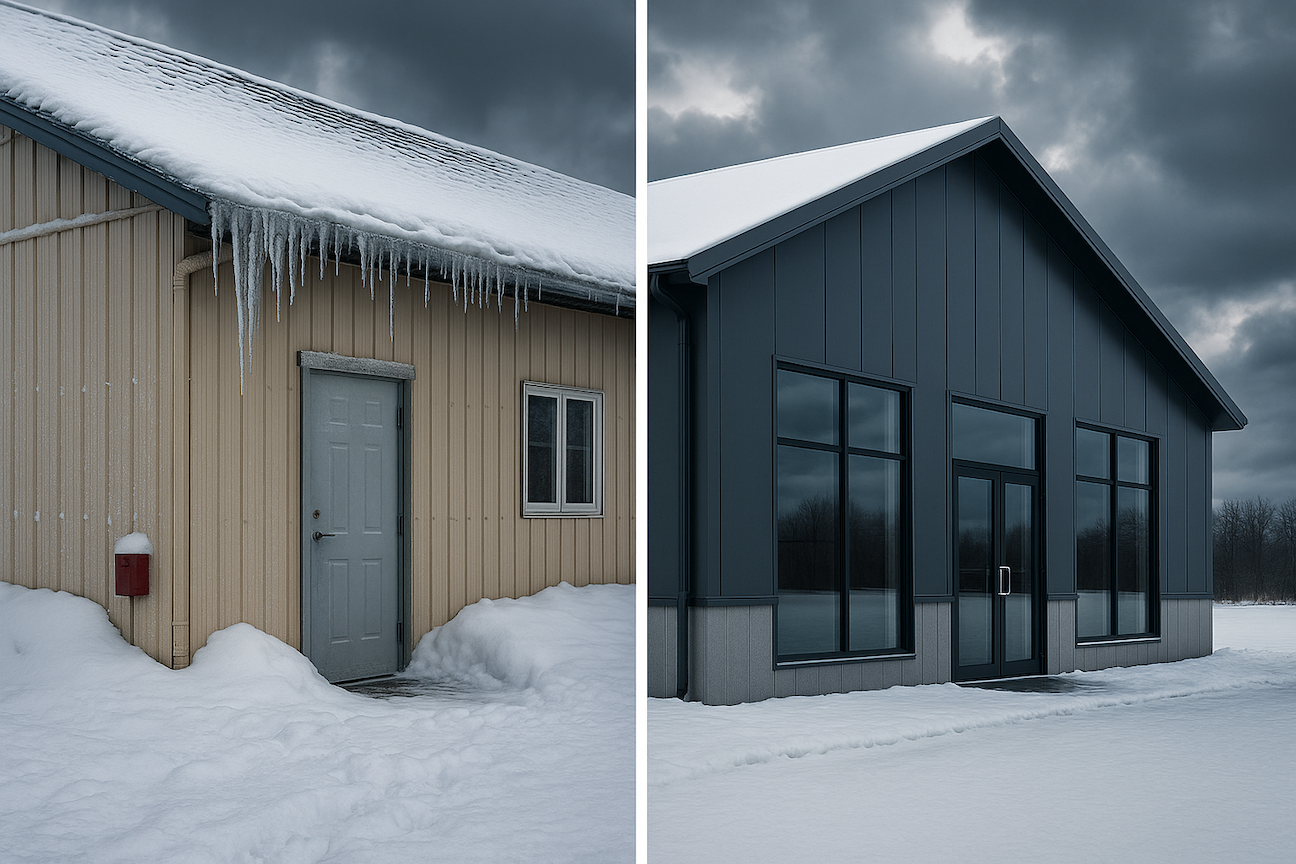
    The Warning Sign: You had icicles, ice buildup along roof edges, or water damage inside the building during last winter’s thaw cycles. Even small ice dams are red flags for bigger problems.

    Why It’s Critical: Ice dams form when warm air heats your roof deck unevenly, melting snow that refreezes at cold edges. This creates water backup that finds its way inside, causing ceiling damage, equipment problems, and potential roof collapse from ice weight.

    What Causes Ice Dams:

    • Inadequate insulation allowing heat loss through the roof
    • Poor ventilation creating temperature imbalances
    • Air leaks that warm the roof deck
    • Clogged gutters that trap melting water

    Professional Solutions:

    Urgent (Next 30 days):

    • Professional insulation inspection and upgrades
    • Ventilation system evaluation and improvements
    • Gutter cleaning and heat cable installation where needed

    The Real Cost: Ice dam removal during winter runs $500-1,500 per incident. Interior water damage can easily hit $5,000-25,000. Proper insulation and ventilation upgrades ($2,000-8,000) prevent these problems entirely.

    MBMI Insight: Our cold weather steel building designs eliminate ice dam risk through proper roof pitch, continuous insulation, and integrated vapor barriers. If you’re experiencing recurring ice dam problems, it might be time to consider a building upgrade.

    3. Condensation or Moisture Stains

    The Warning Sign: You see water droplets forming on walls, ceilings, or windows during cold weather. Brown stains, musty odors, or visible mold growth anywhere inside the building. Metal surfaces showing rust or corrosion.

    Why It Matters: Condensation happens when warm, humid interior air hits cold surfaces – a sign that your building envelope isn’t controlling moisture properly. This leads to mold growth, equipment damage, and structural deterioration that gets exponentially worse in winter.

    Where to Look:

    • Around windows and doors during temperature swings
    • On metal surfaces like beams, panels, or equipment
    • In corners where walls meet ceilings
    • Near ventilation units or areas with high humidity

    Quick Assessment Tips:

    • Use a flashlight to check hidden corners and behind equipment
    • Look for discoloration, staining, or peeling paint
    • Check for musty smells, especially in storage areas
    • Monitor problem areas during the next cold snap

    Professional Solutions Required:

    Immediate (Before winter):

    • Vapor barrier inspection and repair
    • Ventilation system balancing
    • Air sealing of penetrations and transitions
    • Dehumidification if needed for high-humidity operations

    Moisture problems don’t fix themselves… they multiply. Professional moisture control upgrades ($1,500-5,000) prevent equipment damage, health issues, and structural problems that can cost tens of thousands to remediate.

    4. Skyrocketing Heating Bills

    The Warning Sign: Your heating costs increased significantly last winter, or they’re already climbing this fall despite similar weather conditions. Your heating system runs constantly but the building never feels truly warm.

    Why This Signals Trouble: Rising heating costs usually indicate your building envelope is failing, as heat is escaping through poor insulation, air leaks, or thermal bridging. Your heating system is working overtime to compensate for heat loss, driving up costs while failing to maintain comfort.

    Energy Audit Basics:

    • Compare heating costs from the last 2-3 winters
    • Check if bills spike during cold snaps vs. steady cold periods
    • Note if some areas are consistently colder than others
    • Monitor how long heating systems run during mild vs. extreme weather
    • Use the EPA’s Energy Star Portfolio Manager to benchmark your building’s energy performance against similar facilities

    Common Culprits:

    • Inadequate insulation: R-13 when you need R-19+ for your climate
    • Thermal bridging: Heat conducting through metal framing
    • Air leaks: Unsealed penetrations, gaps, poor weatherstripping
    • System inefficiency: Aging equipment or poor maintenance

    Professional Energy Solutions:

    Assessment phase:

    • Professional energy audit ($300-800)
    • Thermal imaging to identify heat loss areas
    • System efficiency evaluation

    Upgrade options:

    • Insulation improvements: $2-6 per square foot
    • Air sealing and weatherization: $1,500-4,000
    • System upgrades or maintenance: $2,000-15,000

    ROI Reality: Most building envelope improvements pay for themselves in 3-5 years through energy savings, with immediate comfort improvements and reduced maintenance needs.

    5. Foundation Cracks or Wall Movement

    The Warning Sign: New cracks in foundation walls, floor slabs, or building walls that appeared last winter or spring. Doors that suddenly don’t close properly. Windows that stick or have gaps that weren’t there before.

    Why It’s Serious: These signs often indicate frost heave – soil moisture freezing and expanding, creating tremendous upward pressure on foundations. Left unchecked, frost heave can cause major structural damage requiring expensive repairs.

    What to Look For:

    • Hairline cracks that grow during freeze-thaw cycles
    • Horizontal cracks in foundation walls
    • Floor cracks near exterior walls
    • Doors or windows that bind or won’t close properly
    • New gaps around building penetrations

    Immediate Assessment:

    • Photograph all cracks with a ruler for scale
    • Mark crack ends with pencil to monitor growth
    • Check building level using a smartphone app
    • Note if problems worsen during cold weather

    Professional Foundation Protection:

    Critical interventions:

    • Foundation insulation to prevent frost penetration
    • Drainage improvements to control soil moisture
    • Structural assessment if damage is already visible
    • Soil stabilization in severe cases

    Don’t wait on foundation issues. Minor cracks can become major structural problems over a single harsh winter. Professional foundation winterization ($2,000-8,000) prevents damage that can cost $25,000-100,000+ to repair.

    Your Winter Readiness Action Plan

    This Weekend:

    • Walk your building perimeter looking for these five warning signs
    • Test all doors and windows for drafts
    • Check gutters and downspouts for clogs or damage
    • Take photos of any concerning areas

    Next 30 Days:

    • Schedule professional inspections for any problem areas identified
    • Get quotes for weatherstripping, insulation, or ventilation improvements
    • Clean gutters and install heat cables if ice dam risk exists
    • Address any urgent safety issues before severe weather hits

    Before First Hard Freeze:

    • Complete all weather sealing and insulation upgrades
    • Ensure heating system is professionally serviced
    • Stock winter maintenance supplies (ice melt, snow removal tools)
    • Establish relationships with emergency contractors before you need them

    Don’t Wait Until Winter Wins

    These five warning signs don’t fix themselves; they get worse every winter until something fails catastrophically. The building owners who weather winter storms successfully aren’t the lucky ones; they’re the prepared ones.

    At MBMI Metal Buildings, we’ve seen too many businesses face costly winter emergencies that proper preparation could have prevented. Our engineering team has designed buildings across some of North America’s harshest climates, from Alaska to northern Maine, and we understand what it takes to create truly winter-ready facilities.

    Free Winter Readiness Consultation Available

    Don’t gamble with winter weather. Our experienced team can assess your building’s winter readiness and provide practical solutions that fit your budget and timeline. Whether you need simple weatherization or are considering a new building designed for extreme weather, we’re here to help.

    Contact MBMI Metal Buildings today for your free winter readiness consultation. We’ll help you identify problem areas, prioritize solutions, and create a plan that keeps your operations running smoothly all winter long.

    Remember: Emergency repairs in January cost 3-5 times more than preventive work in October. The choice is yours, but winter won’t wait.

  • How Fully Sealed Steel Buildings Reduce Long-Term Maintenance Costs

    How Fully Sealed Steel Buildings Reduce Long-Term Maintenance Costs

    Smart design choices that protect your investment year after year

    A brand-new steel building looks impressive on day one. But what really matters is how it holds up five, ten, or twenty years down the line. For commercial metal building owners, long-term maintenance costs can eat into profit margins and disrupt operations. One of the most effective ways to control those costs is to start with a better building envelope. That’s where sealed steel buildings come in.

    At MBMI Metal Buildings, we take a proactive approach to protection. Fully sealed steel buildings are engineered to prevent moisture, air infiltration, pests, and inefficiencies. They deliver lower maintenance needs and higher performance from the inside out.

    What Is a “Sealed” Steel Building?

    In simple terms, a sealed steel building uses properly integrated components to close every potential point of intrusion. This means controlling how air, water, heat, and even small animals move into and out of the structure. Unlike ad hoc caulking or patch jobs added after the fact, a well-sealed building is engineered that way from the start.

    Key sealing elements include:

    • Insulated walk doors with weatherstripping and steel jambs
    • Base trim and base angle that tightly seal the connection to the foundation
    • Closure strips and foam fillers for roof and wall panels
    • Eave closures and ridge caps designed to prevent wind-driven rain and snow
    • Neoprene gasketed fasteners that seal against leaks at every panel connection

    These features are often overlooked in low-cost packages, but they matter.

    The Enemies of Building Longevity

    Even high-quality steel buildings can suffer long-term damage without proper sealing. The main culprits are moisture, air leaks, and pests. Here’s how each impacts your investment:

    Moisture

    Water intrusion is the leading cause of maintenance calls for metal buildings. Leaks can rust structural elements, stain interiors, and lead to costly insulation or drywall replacements. Moisture can also create conditions for mold and mildew growth, especially dangerous in commercial facilities where air quality matters. This Building Science Corporation guide on vapor barriers emphasize how important it is to prevent condensation and water intrusion from the design phase forward.

    Even condensation from within the building, caused by temperature swings, can result in slow, silent corrosion. Moisture not only weakens the building but also creates long-term risks for health and safety compliance, particularly in buildings storing inventory or housing personnel.

    Drafts and Air Leaks

    Poor sealing leads to thermal inefficiency. Over time, gaps in the building envelope create conditions where your HVAC system constantly compensates, raising energy bills and reducing the lifespan of climate control systems. Drafts may also interfere with interior pressurization, which can be critical in clean rooms, laboratories, or manufacturing environments.

    Pests and Debris

    Rodents, birds, and insects are more than a nuisance. They bring droppings, damage, health hazards, and insurance complications. Sealing a building properly during the construction phase eliminates the small gaps they use to enter. It also protects sensitive storage areas from wind-blown dust, dirt, and debris, reducing janitorial costs and equipment downtime.

    MBMI’s Built-In Sealing Features

    What sets MBMI apart is that many of these protective elements are standard. We don’t treat weather-tightness as an upgrade. Instead, we engineer for longevity from the outset.

    Our sealing systems include:

    • Fully insulated walk doors that resist warping and keep air leakage to a minimum
    • Base angle and trim systems that prevent water ingress at the slab line
    • Pre-fitted closures for wall and roof panel gaps
    • Premium fasteners with lifetime rust protection and sealing washers
    • Custom-fit ridge caps and eave trim to eliminate wind-driven leaks

    Unlike many steel building kits that require on-site improvisation to seal vulnerable points, MBMI pre-engineers each closure and trim piece to fit tightly and consistently across your structure. This not only simplifies erection but also ensures every element works together as part of a complete building envelope system.

    Commercial Use Cases: Where Sealing Saves the Most

    Warehouses

    Temperature control and moisture protection are vital to avoid warped packaging, product spoilage, or mold. A sealed steel building helps maintain consistent internal conditions, protecting everything from food products to electronics.

    Auto Shops and Service Centers

    Tools, lifts, and diagnostic equipment require a clean, dry workspace to perform correctly. Sealing the structure prevents moisture damage, rust, and dust buildup, cutting down on maintenance and improving safety for mechanics.

    Retail and Office Buildings

    In climate-controlled spaces with foot traffic, proper sealing reduces HVAC strain, drafts near doors, and uneven heating or cooling. It also protects against sound intrusion, improving the customer or employee experience.

    Storage Facilities

    When your tenants rely on you to protect their belongings, even a small leak or pest problem can trigger liability. Fully sealed buildings add peace of mind and help retain occupancy rates by preventing issues before they start.

    The Financial Upside of Sealing It Right

    Short-Term Savings

    • Lower heating and cooling costs
    • Reduced risk of construction rework due to misfit trim or flashing
    • Less pest mitigation or cleaning needed

    Long-Term Gains

    • Preventative protection against mold, rust, and structural wear
    • Extended lifespan of building systems (HVAC, insulation, finishes)
    • Better insurance ratings and fewer damage claims

    When analyzed across the building’s lifecycle, sealing measures provide a high ROI. A modest investment during design and assembly saves exponentially more in reduced emergency repairs, downtime, and operational inefficiencies.

    Final Thought

    Great buildings aren’t just built; they’re protected. Sealed steel buildings represent a smarter investment for commercial owners who want predictable performance and fewer surprises. At MBMI, we build with those priorities in mind, using premium materials and time-tested sealing systems that work as hard as you do.

    Want to reduce maintenance costs before they start? Contact us to get the ball rolling on a sealed steel building package tailored to your site, function, and goals.

  • Calculating Steel Building Costs Per Square Foot

    Calculating Steel Building Costs Per Square Foot

    In my years at MBMI, discussing steel building costs per square foot with clients has become a cornerstone of our consultations. It’s fascinating to see how these conversations unfold, revealing the intricate dance between desires for customization and budget considerations. Our commitment is always towards demystifying this aspect, ensuring every client feels confident in their investment decisions from the get-go.

    Table of Contents

    Understanding Steel Building Costs

    Key Factors Affecting Cost Per Square Foot

    How to Get an Accurate Estimate for Your Project

    Understanding Steel Building Costs

    Overview of Factors Influencing Steel Building Costs Per Square Foot

    The intricacies involved in calculating the cost per square foot for steel buildings stem from a complex interplay of factors that extend far beyond simple material costs. At MBMI, we’ve honed our expertise to consider everything from the current market price of steel—a variable that fluctuates based on global supply and demand—to the specific design requirements unique to each project. 

    For instance, the inclusion of customized features such as oversized doors and advanced insulation systems can significantly impact final pricing. Likewise, geographic location plays a pivotal role not only due to shipping expenses but also local building codes, which may necessitate additional structural reinforcements, thereby influencing the overall cost.

    Explanation of How These Costs Are Calculated and What They Include

    When it comes down to brass tacks, calculating steel building costs per square foot is an exercise in meticulous detail-oriented planning. This process begins with assessing base materials required for construction and then layer labor and fabrication charges atop those foundational expenses. From there, any client-requested customizations are added into the mix alongside ancillary services like delivery. You’ll also need to figure out installation costs in your area. 

    Beyond raw numbers this calculation takes into account necessary engineering work and site preparations, ensuring clients receive a holistic estimate that encompasses every aspect of their investment without fear of hidden fees or unexpected expenditures. Transparency in these calculations helps demystify potential sticker shock, providing a clear rationale behind each line item.

    Key Factors Affecting Cost Per Square Foot

    Discussing Variables Such as Materials, Customization Options, Location, and Size That Impact Overall Pricing

    The final cost of a prefabricated steel building is not a static figure but rather the result of various contributing factors. The choice of materials plays an essential role; for instance, opting for higher-grade steel or specialized coatings to enhance durability can adjust costs accordingly. 

    Customization options also significantly affect pricing – from adding unique architectural features to incorporating energy-efficient windows or doors, each tailored aspect adds layers to the overall expense.

    Location further complicates these calculations due to both logistical concerns such as shipping distances and potential site preparation challenges dictated by local terrain and climate. Furthermore, the size of the building will be a major factor in its cost, both in building materials and design along with construction.

    How MBMI Optimizes These Factors To Offer Competitive Rates

    At MBMI, we approach each project with a strategic mindset aimed at optimizing these variables without compromising on quality. Through leveraging long-standing relationships with suppliers securing bulk material rates, we can mitigate some inherent costs associated with high-quality construction materials.

    Furthermore, our design team excels in creating efficient layouts that maximize the use of space to minimize waste, thereby offering clients more bang for their buck. Additionally, we constantly monitor market trends and steel prices to anticipate shifts and potentially lower expenses wherever possible. This proactive comprehensive strategy allows us to maintain a competitive edge in the industry and ensure our customers always receive the best value for their investment.

    How To Get an Accurate Estimate for Your Project

    Navigating the complexities of planning and budgeting for a prefabricated steel building project can be daunting. That’s where our expertise at MBMI comes into play, ensuring that every client receives an accurate, personalized estimate tailored to their specific needs and aspirations. The journey towards obtaining this precise quote involves several critical steps designed to capture the full scope of your project while considering all variables that could impact cost.

    Working with MBMI Professionals: A Collaborative Approach

    The first step in securing an accurate estimate is initiating a detailed consultation with one of our experienced professionals. This collaborative discussion allows us to understand your vision,

    Requirements, and preferences beyond mere structural considerations. By delving deep into aspects such as the intended use of the building, desired features, customizations, and location factors we gain the comprehensive insight necessary to craft a bespoke solution perfectly aligned to your expectations and budget.

    Tailoring Estimates Based on Specifics and Requirements

    Following initial consultations, our team conducts thorough analysis, incorporating everything from site-specific conditions to potential engineering challenges associated with customization options. Each of these elements is carefully evaluated to ensure the proposed plan not only meets but exceeds client standards. Furthermore, leveraging advanced software tools and modeling techniques enables us to simulate various scenarios and refine cost projections with accuracy and precision, ensuring no detail is overlooked during the estimation process.

    Moreover, our customization options enable us to create a building that meets your purposes, including a barndominium, an agricultural building, a church/community center, and much more. Contact us today for a consultation, or use our 3D building designer and submit your output, or simply fill in your needs for a free quote.

  • Attractive Commercial Metal Buildings

    Attractive Commercial Metal Buildings

    Attractive commercial metal buildings are not just a trend; they’re revolutionizing the way businesses view their physical premises. As a company at the forefront of this innovative shift, we’ve seen firsthand how these structures combine aesthetics with functionality to meet diverse needs. From sleek and modern designs to energy-efficient features, our approach is all about creating spaces that stand out and serve efficiently.

    Table of Contents

    Aesthetic Appeal and Customization Options

    Modern Design Possibilities with Metal Buildings

    Gone are the days when metal buildings were merely functional structures devoid of any aesthetic appeal. Today, they embody modern architecture’s sleekness and versatility, offering endless design possibilities that can accommodate any vision. Our commitment to innovation means we provide a variety of finishes, colors, and architectural details that transform traditional perceptions of metal buildings into examples of contemporary design marvels. By incorporating glass facades, intricate textures, or even vibrant colors, we ensure each project stands as a testament to how attractive commercial metal buildings can indeed be.

    Tailoring Your Building to Reflect Your Brand

    Understanding the importance of brand identity in today’s business landscape drives us to offer customization options that allow our clients’ brands to shine through their physical spaces. Whether it’s through specific color schemes matching company logos or architectural elements symbolizing brand values, our team works closely with clients to encapsulate their essence within the building’s design. This personalized approach not only enhances the attractiveness but also ensures that every structure is unique—a tangible representation of what each business stands for in its industry.

    Durability Meets Style

    The attractiveness of commercial metal buildings isn’t solely attributed to their visual appeal but also to their inherent durability and strength. Metal constructions are renowned for their ability to withstand harsh weather conditions, from scorching heat waves to frigid snowstorms, ensuring that they maintain their aesthetic integrity over time without succumbing easily to wear and tear. This resilience translates into lower maintenance costs and a longer lifespan compared to traditional building materials, which can fade or degrade more rapidly under similar circumstances.

    Moreover, the style of these structures doesn’t come at the expense of substance. The architectural flexibility of metal allows for innovative designs that do not compromise on structural integrity. From expansive clear-span interiors free from supporting columns or beams—ideal for open retail spaces or warehouses—to multi-story office complexes with intricate facades, our metal buildings marry form and function seamlessly.

    This combination is particularly attractive in today’s market where sustainability and cost-effectiveness play crucial roles in decision-making processes. By investing in a material known for its longevity and minimal upkeep requirements, businesses can ensure that their establishments not only look appealing upon completion but continue to project professionalism and quality years down the line.

    Our approach emphasizes this blend by offering design solutions that reflect current trends while ensuring each structure’s endurance against time’s tests—a true fusion of durability meeting style within the realm of attractive commercial metal buildings.

    Eco-Friendly and Energy-Efficient Solutions

    In an era where sustainability is not just appreciated but expected, attractive commercial metal buildings stand out for their eco-friendly and energy-efficient characteristics. Our commitment to green building practices is evident in the materials we choose and the processes we employ. Metal, as a core material, boasts significant environmental advantages; it’s highly recyclable and often made from recycled content itself, reducing the need for virgin resources and minimizing waste.

    Moreover, our designs prioritize energy efficiency through advanced insulation techniques and smart roofing systems that reflect sunlight rather than absorb heat—this significantly reduces cooling costs during warmer months. Incorporating natural light through strategically placed windows or skylights further diminishes reliance on artificial lighting, lowering electricity consumption while enhancing the indoor environment’s quality.

    These sustainable features do more than just lower operational costs; they contribute to a healthier planet by reducing carbon footprints and promoting resource conservation. By choosing attractive commercial metal buildings designed with these principles in mind, businesses can align themselves with environmental stewardship values—a powerful statement in today’s market.

    Our approach at MBMI seamlessly integrates aesthetics with sustainability: proving that business facilities can be both visually striking and kind to our planet. Through innovative design solutions focused on eco-friendliness and energy efficiency, we’re proud to offer structures that are not only beautiful but also embody forward-thinking environmental responsibility.

    Versatility in Application

    The adaptability of attractive commercial metal buildings extends far beyond their visual appeal, encompassing a wide range of uses that cater to various business needs. From retail spaces and warehouses to offices and recreational facilities, the structural flexibility inherent in metal construction allows for customized solutions tailored to specific operational requirements.

    Retail establishments benefit from large, open floor plans free of obstructive columns, creating an inviting atmosphere for customers while maximizing usable space. For industrial applications such as warehouses or manufacturing plants, the durability and strength of metal are paramount—supporting heavy loads and machinery without compromising safety or efficiency. Meanwhile, businesses looking for office space find value in the ability to design multi-story buildings with customizable interior layouts that foster productivity and collaboration among employees.

    Recreational facilities like gyms or community centers also take advantage of these versatile structures; high ceilings and expansive interiors accommodate equipment and activities comfortably. Moreover, the quick construction times associated with metal buildings mean these communal spaces can be up and running sooner—a significant advantage when meeting tight project deadlines.

    Our approach is centered on understanding each client’s unique needs—leveraging the versatility of commercial metal buildings to deliver attractive yet functional solutions across diverse sectors. By embracing this adaptability at its core, we ensure our projects not only meet but exceed expectations—providing lasting value through designs that are as practical as they are visually compelling.

  • How Much Does A Steel Building Cost?

    How Much Does A Steel Building Cost?

    You’ve learned about the many benefits of metal buildings, so asking, “how much does a steel building cost?” is the logical next step.

    Firstly, it’s important to understand the different factors that go into pricing out the cost of your metal building. Here, we will break down exactly the types of expenses that are commonly considered when pricing out a metal building.

    The Cost of a Metal Building Per Square Foot

    When researching the cost of a metal building per square foot, pricing can certainly vary depending on the different factors that go into determining an estimated fee. Misleading information and confusing comprehensive price variations that exist within the industry can be discouraging, but stick with us and we’ll help alleviate your apprehension by addressing common misconceptions and answering your burning, cost-related questions surrounding the construction of a steel building. 

    Here’s the deal…

    Formulating an accurate steel building price quote requires the right information. No matter how much we may wish for it, that all-inclusive, magic number simply does not exist.

    On the high side, a steel building could cost $44 per square foot. However, that number is by no means set in stone and may not apply to the construction of the metal building. That begs the question, how did we come up with $44 per square foot? 

    Here’s a metal building cost breakdown:

    A steel building price of $44 per square foot will typically include permits, concrete, a shell of the metal building, and its erecting cost.

    A rough estimate for a 50×100 building should look a little like this: 

    • Erecting price per square foot: in FL: $12-$14 (depending on insulation, framed openings & accessories) and $14-20 elsewhere
    • The shell of 50 x 100 x 14 building per square foot: $12 (The price per square foot of the shell can go down as the building gets larger)  
    • Concrete per square foot: $10-12 depending on the depth of footers and thickness of the slab

    Needless to say, prices will often fluctuate. Contractors have different rates, while loads and codes are also going to be variables in determining each metal building’s cost per square foot.

    Our team of professionals at MBMI has thoughtfully calculated a reliable ballpark price that’s easily adapted to a state-by-state case. We are happy to provide you with a free price quote on our buildings to help you get started.

    The front of a gray completed (with doors, windows, and everything else installed) metal building, with parking spaces in front.

    This will give you a better understanding of how much your steel building will cost, regardless of whether you want it to be a barndominium, agricultural steel building, commercial steel building, or for any other purpose.

    Don’t just take our word for it, though.

    Below you’ll find an outline that examines the cost determination factors for pricing each metal building size.

    Designing A Metal Building

    Not all steel buildings are the same, nor are they just a simple box. At MBMI Metal Buildings, our team will masterfully craft each metal building to suit your specific needs. Therefore, the cost of each unique metal building can vary with any slight design alterations you may request. 

    Details – Dimensions 

    While we have about 10 popular sizes on our site to give you a rough idea of what a steel building costs, we know you may require specific size dimensions that we are unable to publish in explicit detail. Accordingly, our staff and experts are always happy to help create a more personalized quote for your own steel home or building.

    Customization

    The customization process of a metal building can be the most volatile factor in determining the cost of your steel structure.

    When you’re ready to start constructing your metal building, please call and speak to our expert designers. Keep in mind that there are intricate details that cannot be done solely through a messenger chat or a couple of clicks online. Our seasoned professionals will provide a seamless experience by gathering all the necessary information to formulate a reliable steel building price estimation and design plan. 

    They will then develop a thoughtful and comprehensive plan to ensure all your concerns are met. They’re also happy to answer any questions you may have related to cost and design decisions.

    More Windows & Doors Means More Money

    The quote form will allow you to request your preferred number of windows and doors, or “openings” in the notes section, as well as where they’re located and how large or small each opening will be.

    However, be aware that the more openings you add to a project, the more your price will increase.

    All of our metal buildings are built to the exact specifications requested, for the highest satisfaction rate in the industry. With this level of accuracy, we assure our clients that there are no misunderstandings as we deliver the exact details requested by our customers.

    Because of our diligence, phone conversations with our designers are highly recommended, and in most cases required. 

    Unique Shapes

    A green metal building, fully constructed. This is a depiction of a complex design, with vents, and an opening near the top that allows for the use of industrial machinery that is installed outside the building.

    A simple box shape is an easy consideration for cost-conscious, budget-friendly projects.

    More intricate, in-depth designs will fabricate a more complicated design on the engineering side as well as the installation process. These unique shapes will also be reflected in the price of your metal building. 

     Different Panel Colors

    Color combinations can create a more unique and visually stunning design to your steel building, however many different color panels can also cause a bump in the price as well. More components and a more complex installation effort are contributing components to a price increase.

    Wainscotting panels can make an incredible difference to the look of the building. It’s a simple and elegant touch that won’t necessarily break the bank, but if your goal is to keep the design simple and costs low, you may want to reconsider adding additional panel colors.

    Location

    The location of your project is very important in creating an accurate metal building price quote.  

    Our manufacturing locations include Houston, Tulsa, and Atlanta. The closer you are to one of our manufacturing plants, the better your shipping rate will be.

    Loads & Codes 

    Metal building under construction. One wall is built, and half the roof has sheets. Other sheets are still on the ground.

    This is one of the most common culprits in price fluctuation. 

    If there was no wind, snow, earthquakes, or seismic activity to account for then it would be easy to price out everyone’s metal building in less than a minute. If this were the case, the magic number would exist.

    However, we do not live in a cookie-cutter world, where one size fits all. Each metal building project has unique details, dimensions, locations, and design specifications that must be considered in producing an accurate cost estimation.  

    Also, consider what your metal building will be used for. Will you have a sprinkler system, mezzanine, a crane inside? All these variables will affect your price.

    Permits

     A close-up of a person's hands signing a contract. The pen is held in the right hand, while the left is holding the paper for stability. There is a ring on the left hand.

    Acquiring permits is another crucial component in calculating additional building costs. Different areas require different permits. Your General Contractor can help in obtaining the specific permits needed on a per-project basis. 

    We can provide engineered stamped drawings through your local building department. Stamped drawings are mandatory in obtaining the permit- if a permit is required by your county.

    Cost Efficiency 

    Cutting Costs on Your Steel Building 

    Here are are a few ways you can save money on your metal building:

    1. Small buildings can offer a “do-it-yourself” alternative.
      • With smaller projects, it is very possible to put up the steel building yourself. However, that’s not to say it’s as simple as assembling an IKEA dresser. These are NOT metal building “kits.” If you are planning on erecting the building yourself, you should already have experience putting up a metal building or work with someone who has.
      • The bottom line: the more experience you and your crew have, the better your building will go up. 
    2. In some areas, steel buildings can have lower insurance fees, however, some might worry about cooling and heating costs. Whereas wood frames make it easier to modify your home – some concerns are weather damage, rot, mold, warping, and pests.
    3. Cheaper than tilt-wall for commercial and industrial buildings.
      • Once buildings start to reach the 10,000 square foot mark and up, many companies consider building with metal to decrease the price of the project. 
      • Metal buildings still offer durability and can withstand hurricane strong winds. Additionally, for those that do not wish to have the metal look can add exterior materials so that it looks like stucco or anything else desired. 
    4. Churches and organizations can organize a group together and put the building up together with simple designs
      • As previously mentioned in the first point, these are not metal building kits. Groups and organizations can work with an experienced crew, and as the saying goes, “many hands make light work,” which can also save a great amount of money.  
    Early stages of metal building erection. The concrete slab is down and some of the frame has been put up. Workers and a small crane are on-site.

    Low Maintenance 

    Because there is little to no maintenance for metal buildings, this can benefit you in the long term as steel buildings are mold and termite resistant

    This means buildings made from steel will virtually cost nothing to upkeep.

    Extra Costs to Consider

    As previously mentioned, you have:

    • Concrete that can roughly cost about $8-$10 per square foot. 
    • Erecting the building (includes employing a crew to install the building) price will vary from $4-$6 per square foot or 10% -15% of the building price.

    There are a few more costs to consider that is outside of the shell of the building: 

    • Interior: Includes the drywall, cabinets, stairs, etc. This can be done through your GC. 
    • Electric/ plumbing: Can be done through GC or other companies.  
    • Land: Consider the cost of the property if you do not already own land.

    In summary, there are a multitude of factors that configure the cost of a metal building. We understand that wanting an instant price online would be ideal. However, with all the questions involved, we hope you better understand why a phone call with our designers ultimately makes the experience easier.

  • How to Keep Your Metal Building Cool During the Summer Heat in 7 Ways

    How to Keep Your Metal Building Cool During the Summer Heat in 7 Ways

    When designing a metal building, it is of the upmost importance that strategies that keep the building cool during the summer be implemented, as this will keep your HVAC system from having to work harder and longer to keep temperatures at the desired inhabitable setting, inevitable affecting your energy bill.

    Thankfully, there are several measures you can use in your metal building ranging from insulation to landscaping. We will walk through each method and its effectiveness in cooling down your building. These tips will keep you comfortable while also improving the efficiency of energy consumption and air quality!

    First, let’s look at some basic science concepts to understand why buildings get so hot during the summer. 

    Thermodynamics

    When it is hot outside, buildings leak a lot of air. On top of that, while your building is losing cool air, an equivalent amount of hot air enters your home to replace the air that has escaped. This is thermodynamics in action. To simplify, heat constantly seeks equilibrium; heat moves to cold until everything is the same temperature. 

    Heat is persistent in finding a way to enter colder areas until there is neutralization.
    Listed below are the three main ways heat “moves” into your colder home:

    Conduction: Heat conducts from the hot side toward the cold side. This transfer of heat happens through direct contact. In other words, when your hot roof transfers heat into your hot attic 

    Convection: When hot air rises causing your attic to be a lot hotter than the rest of the house

    Radiation: When scorching sun rays heat your roof and walls

    If enough heat flows toward the cool area, your interior can become uncomfortable.

    Insulation

    Inside of a steel garage with a red convertible car inside

    Insulation isn’t only used for keeping your building warm in the winter months. It is also a very effective way of cooling older and newer buildings. Insulation acts like a barrier keeping the hot outside air from entering your building.

    Adding insulation to your building frame can be one of the most cost-efficient ways to reduce your heating and cooling bills. The majority of heat gain and loss happens in the attic space. Therefore, it is crucial in prioritizing attic insulation. 

    Speaking to an expert is important since buildings require different insulation depending on the climate, building type, and building use. Make sure to look for insulation that has a warranty of at least 6 to 10 years. Always replace or renovate your insulation with a new layer when you reach the end of the insulation’s warranty period.

    Sealing Your Home

    Think of your ideal temperature “resistant” building as a thermostat. Thermostats are well-sealed, hence your building should be sealed, making it as hard as possible for any hot air from entering. This dramatically increases the energy efficiency of your building and your cooling systems don’t need to work as hard. 

    Luckily, metal is less porous than other types of building materials, so it creates a tight seal, which is necessary for mitigating energy loss.

    Your Roof Gets Hot

    The hottest part of your building will be your roof. Not only does your roof absorb the hot sun rays, but also is the recipient of internal hot air (since hot air rises). Some roofing materials can heat up to as high as 200 F. Even if you incorporate other great heat reduction features, you will always be using more energy to keep your metal building cool if you don’t properly sort out your roof.

    Thankfully, modern metal roofs have been designed to efficiently reflect more heat and can reduce your cooling cost by as much as 25%! Metal roofs are cooler than asphalt, wood, tile, and concrete shingles. Light-colored metal roofs that have reflective coatings are even more effective at sending a large percentage of the sun’s UV rays back into the atmosphere and away from your building.

    A roof mist cooling system, also known as an evaporation system,  is a cool new way to help mitigate the sun’s pressure on your roof. It can help your roof last significantly longer, giving you the benefits of a cool roof for a low price.  The misting system sprays ultra-fine mist onto your roof. This mist is then vaporized by the sun’s energy. These vaporized water droplets create cool air. The cool air then sinks on the roof while the hot air rises. This system is mainly used in commercial roofing and is being slowly integrated into residential use.

    View of the roof of a large multipurpose metal building in Naples, Florida

    Apply a Cool Coating

    We all know dark colors attract more sun than lighter colors. Using this concept in your building design can help mitigate the heat. It helps to incorporate lighter and more reflective paint colors and coating to your metal building. Listed below are some pre-engineered parts that should be considered:

    • Exterior Walls
    • Panels
    • Cladding
    • Roof

    Here at MBMI, many of our colors are Energy Star Approved, dramatically improving the heat releasing properties of a metal building. 

    Ventilation

    Ventilation is crucial for good air quality. It can also be used to maintain your home at a comfortable temperature during the summer heat. Poor ventilation in the attic area can cause your attic to reach excess temperatures trapping hot rising air. Incorporating ventilation in your attic space is key. 

    In some instances, you can use natural ventilation at night. This can significantly reduce the energy consumption used by your cooling system. Listed below are several ventilation options to consider for your building:

    • HVAC systems
    • Powered fans 
    • Gravity vents 
    • Turbine vents
    • Dehumidifiers
    Inside a metal building, looking at the ceiling. There are vents to help keep cool.

    Accessorize your building with awning, overhangs, and canopies

    This method is especially popular in residential properties. Where homeowners looking to guard their home from the harsh sun add awnings. Awnings can significantly reduce a home’s air conditioning usage in the summer, saving an estimated $200 or more annually.

    The American Society of Heating and Air Conditioning Engineers suggests using extended shaded coverings such as awnings, overhangs, or canopies to minimize building heat load! The placement of these shading coverings is something to consider. Adding these to the west and south-facing part of your building will drastically reduce the amount of sun exposure.

    metal building from the outside, beige color with an awning in front of the building to keep that side of the building protected from the harsh sun rays

    Landscaping isn’t only for aesthetics 

    Smart landscaping can considerably help in cooling your home during the day. You can plant trees and shrubs that shade the west-facing and south-facing walls and windows of your building, dramatically cooling the building’s surface. Trees shade roofs from the hot summer sun. Shrubs and vines can be planted to keep walls cool. Make sure to leave a bit of space between the plants and the home, as this will prevent moisture buildup if humidity is a problem.

    Mulch is another friendly additive to keeping the ground cooler since it prevents the ground from absorbing heat. Not to mention, its great water conservation properties.

    A picture of a lush garden with various plants surrounding grass
  • Metal Building Drawings: What Makes Them Unique?

    Metal Building Drawings: What Makes Them Unique?

    Metal building drawings serve as the foundational blueprint for constructing durable and versatile structures, offering a glimpse into the architectural intricacies involved. These detailed plans ensure precision in the creation of buildings that can withstand various environmental challenges. As such, they are indispensable tools for architects and builders aiming to bring their robust designs to life accurately and efficiently.

    Table of Contents

    Understanding Metal Building Drawings

    Navigating the complex world of metal building drawings requires understanding their key components and significance. These drawings not only detail the dimensions and specifications for each section of a structure but also highlight critical aspects such as load-bearing capacities, material types, and connection details between different parts. 

    By meticulously outlining every element—from the foundation to the roof—these blueprints ensure that construction teams have a clear roadmap to follow. This level of detail aids in preventing costly mistakes during construction and contributes to creating buildings that are not just aesthetically pleasing but also structurally sound and sustainable over time.

    Creating Metal Building Drawings

    Beyond their practical utility in guiding construction, metal building drawings also play a crucial role in the approval and permitting process. Before any physical work begins, these plans must be reviewed and approved by local building authorities to ensure compliance with relevant codes and standards. This step is vital for ensuring the safety, durability, and legality of the structure. 

    Additionally, well-prepared drawings can facilitate smoother communication among all stakeholders involved—architects, engineers, contractors, and clients—by providing a common reference point that illustrates how various elements of the project interconnect. Consequently, investing time in creating detailed and accurate metal building drawings not only streamlines the construction process but also minimizes potential legal hurdles down the line.

    Key Elements in Metal Building Drawings

    The evolution of technology has significantly impacted the creation and utilization of metal building drawings. Modern software tools, such as Computer-Aided Design (CAD) programs, have transformed these blueprints from hand-drawn sketches into precise digital models. This advancement not only enhances the accuracy and detail of the drawings but also enables easier modifications and faster sharing among project participants. 

    Furthermore, with the advent of Building Information Modeling (BIM), stakeholders can now access a 3D representation of their project, allowing for a more comprehensive understanding of how each component fits within the overall structure. These technological strides foster greater collaboration between teams, reduce errors during construction, and pave the way for more innovative design solutions in metal buildings.

    Precision in Metal Building Drawings

    As we further examine the future of metal building drawings, sustainability and eco-friendliness emerge as key themes shaping their evolution. Architects and engineers are increasingly incorporating green building practices into their designs, reflecting a global push towards environmental responsibility. This includes selecting materials with lower carbon footprints, designing for energy efficiency, and planning for rainwater harvesting systems. 

    Additionally, the precision afforded by advanced drawing techniques minimizes waste during construction by ensuring that materials are used efficiently. The synergy between cutting-edge technology and sustainable design principles in metal building drawings not only enhances the structural integrity of these buildings but also contributes to a healthier planet by reducing their environmental impact over time.

    At MBMI Metal Buildings, our in-house engineers have decades of experience in designing metal buildings, with clients ranging from locals in need of agricultural buildings and barndominiums to giants such as Mobil and Walt Disney. Contact us today to learn more about how we can bring your project to fruition.

  • Advantages of Choosing Steel Buildings for Agricultural Purposes

    Advantages of Choosing Steel Buildings for Agricultural Purposes

    Investing in agricultural steel buildings can seem like a significant decision, especially when you’re considering various options for your farming operations. What are the advantages of doing so?

    Table of Contents:

    Durability

    When considering construction materials for agricultural applications, one stands out from the rest: steel buildings. Their robustness and resilience are unparalleled.

    The robustness of steel cannot be understated. 

    In the wise words of Henry Ford, “Quality means doing it right when no one is looking.” This sentiment perfectly encapsulates why steel structures excel in terms of longevity.

    Steel’s inherent strength ensures that these buildings can withstand harsh weather conditions without compromising their structural integrity. Realizing the perks of utilizing steel for constructing edifices can help make your decision simpler.

    Factors that Make Steel Buildings Durable:

    Able to endure extreme weather conditions: Be it heavy snowfall or high winds; nothing fazes a well-constructed steel building. They’re designed with such situations in mind and will stand tall amidst adversity.

    Additional bonus points if you take into account how rust-resistant they are due to protective coatings applied during manufacturing.

    Maintenance-free lifespan: Unlike other construction materials like wood which require regular upkeep, a quality-made steel structure requires minimal maintenance over its lifetime. It’s an investment that pays off.

    This isn’t an exaggeration—it’s simply highlighting facts that underscore their cost-effectiveness and long-term value.

    Built-to-last Construction: These aren’t your average constructions—they’re engineered for maximum strength and stability. With precise assembly instructions ensuring correct installation, every component contributes towards overall toughness.

    Remember this crucial fact: proper installation equates to better resistance against natural disasters. Make sure all steps are followed accurately during assembly for optimal performance.

    Now let’s move on to another significant aspect—cost effectiveness—which we’ll discuss further in our next section.

    Cost-Effectiveness

    In the world of agricultural structures, saving on initial costs can lead to substantial earnings in the long run.

    Economical Material and Construction Costs: The Game Changer

    Mass production has revolutionized many industries, including building construction. Prefabricated steel components are produced en masse, resulting in significant savings on material costs. Coupled with reduced labor for assembly due to streamlined processes, steel buildings offer an economical solution.

    Sustainability: An Investment That Pays Back Future Generations

    Besides immediate cost advantages, choosing prefabricated steel structures can be an eco-friendly choice. Steel’s durability means that not only will your building last a long time, but it also allows it to be reused, making it an eco-friendly selection that preserves resources and provides economic savings over time.

    Customization Options

    If you’re looking to revolutionize your agricultural operations, steel buildings may be the perfect solution. These structures offer unmatched flexibility, allowing you to easily accommodate the specific needs that come with diverse farming practices.

    Explore Design Possibilities

    One of the standout features of MBMI Steel Buildings is the wide range of design choices available due to our in-house engineering team. You can choose the dimensions and configuration of your building, as well as pick a color scheme that fits with your branding or personal style.

    Incorporate Durability Features

    Aside from aesthetics, you can also enhance the durability of your steel building with features such as advanced insulation or weather-resistant coatings. These additions not only extend the lifespan of your structure but also ensure it functions effectively in the various climatic conditions typically found in agriculture.

    Add-Ons Tailored for Agriculture

    The customization options don’t end there—MBMI offers add-ons specifically tailored for agricultural use, such as barn doors and ventilated eaves. These features are crucial for maintaining optimal internal environments within the structures.

    Ease of Installation

    As a farmer or agricultural entrepreneur, your time is valuable. That’s why MBMI Steel Buildings are designed with ease of installation in mind.

    The game changer: simplified construction process.

    Akin to assembling an intricate puzzle, the pieces of MBMI steel buildings fit together seamlessly. With components crafted off-site and delivered ready for assembly, you can say goodbye to on-site cutting or measuring – it’s all about saving precious hours and labor costs.

    What’s more? You don’t compromise on quality or structural integrity while speeding up the erection process – that’s efficiency redefined.

    Flexibility

    In the realm of agriculture, every operation has its unique needs, and steel stands at the forefront of flexibility today. How so?

    The key lies in versatile configurations.

    Agriculture encompasses a spectrum – from livestock rearing to crop storage, housing machinery, or even processing facilities. Imagine having one solution that fits all these requirements. That’s exactly what prefabricated steel buildings offer with their wide-ranging adaptability.

    Custom Configuration

    Steel holds strength like no other building material. It permits large open interiors without support columns acting as obstructions. What does this mean for you? Spacious areas are perfectly suited for accommodating heavy machinery or providing ample space for animal husbandry activities, which will complement your barndominium farmhouse perfectly.

    Easily Modified to Match Needs

    “The only constant in life is change,” said Heraclitus, and he couldn’t be more right when talking about farming and agribusinesses’ evolving needs over time. Prefabricated steel buildings can be easily expanded or modified, matching your growth pace or changing direction effortlessly.

    This characteristic not only adds long-term value but also saves on costs related to major structural modifications typically associated with traditional materials such as wood or brick.

    Reduced Environmental Impact

    The agriculture industry has been under scrutiny for its environmental impact. However, farmers can significantly reduce their carbon footprint by choosing steel buildings from MBMI Steel Buildings.

    The thermal performance of these buildings is unmatched.

    Understanding how agricultural steel buildings provide superior insulation can help reduce energy costs associated with heating and cooling. These cost savings not only have a monetary value, but they also help to achieve sustainability objectives by lessening greenhouse gas discharges.

    Now let’s discuss the recyclability of these structures.

    In the larger scheme of things, steel is one of the most recycled materials on Earth. When your agricultural steel building from MBMI Steel Buildings reaches the end of its useful life, it doesn’t have to contribute to landfill waste like other construction materials. Instead of being discarded, your MBMI steel building can be completely recycled and reused for other projects when it reaches the end of its life cycle.

    The environmental and economic advantages of steel buildings are undeniable, and that’s without mentioning solar panels systems.

    Now, let’s address the issue of toxic chemicals or pollutants – or rather, the lack thereof:

    A significant advantage of using prefabricated steel buildings over traditional wooden structures is that they do not release harmful toxins or pollutants throughout their lifecycle. Unlike wood buildings, which often require chemical treatments to prevent pest infestation and decay, steel buildings offer an eco-friendly solution.

    Farmers who are committed to reducing their impact on the environment should seriously consider green building practices, such as those offered by MBMI Steel Buildings. Prefab agricultural steel buildings not only minimize the negative effects associated with conventional farming infrastructure but also provide a durable and customizable solution for enhancing farming operations.

    Ready to enhance your farming operation with these resilient structures? MBMI Steel Buildings offers prefabricated steel building solutions designed specifically for agricultural purposes. And we are not limited to agriculture, with options including barndominiums, aircraft hangars, commercial metal buildings, and more. Explore our offerings today!

    Agricultural Steel Buildings FAQs

    What is the difference between a metal building and a steel building?

    Metal buildings can use various metals like aluminum or tin, while steel buildings strictly utilize high-grade steel for superior strength and durability.

    What is agricultural steel?

    Agricultural steel refers to a specialized grade of steel used in constructing structures like barns, sheds, and silos that are integral to farming operations.

    Is a steel building a good investment?

    Yes. Steel buildings offer an excellent return on investment due to their durability, cost-effectiveness, low maintenance needs, and long lifespan.

    What is the difference between a fabric building and a steel building?

    Fabric buildings use tensioned membrane materials offering portability but less durability. Steel buildings provide more robustness ideal for permanent structures with a longer life expectancy.

  • Advantages of Prefabricated Metal Buildings

    Advantages of Prefabricated Metal Buildings

    Metal buildings, with their customizable options and quick construction times, are revolutionizing traditional construction methods. So whether it’s an agricultural building or a commercial powerhouse you’re looking to build – there’s an affordable metal solution waiting for you.

    Let’s jump right in…

    Table Of Contents:

    Advantages of Prefabricated Metal Buildings

    Prefabricated metal buildings offer a world of benefits that extend beyond their initial appeal. From cost-effectiveness to quick construction times, they have become a popular choice for residential and commercial use alike.

    The Cost-Effectiveness and Durability of Metal Buildings

    Metal buildings can be significantly more cost-effective than traditional structures, offering savings of up to 50%. This is due in part to their simple bolt-together design. Prefabrication methods allow for mass production which helps cut down costs while maintaining high-quality standards.

    Apart from being wallet-friendly, these buildings are known for their durability. They resist environmental elements better than many other materials used in construction. That means less money spent on maintenance over time—another win-win situation.

    Quick Construction Time for Metal Buildings

    No one likes waiting around when they need a building set up quickly—and prefabricated metal constructions shine here too. By manufacturing components off-site, we get them ready ahead of schedule. Once delivered to your site, it’s just about bolting things together—a process much faster than conventional brick-and-mortar constructions.

    This efficient approach not only saves you precious time but also cuts labor costs significantly since fewer man-hours are needed on-site—an added advantage when looking at overall project budgets. Recent data suggests that prefabrication reduces timelines by nearly half compared with traditional building methods—now isn’t that something?

    Beyond Savings: Customization and Variety

    In addition to saving both money and time, prefab steel buildings offer a degree of customization that’s hard to beat. Whether you’re seeking residential metal buildings such as barndominiums or need larger, commercial spaces like metal warehouse buildings, there’s something for everyone.

    You can tailor the design according to your needs—choosing from various sizes and styles. And let’s not forget about color choices. With prefab constructions, it really is all about what YOU want.

    A Green Choice

    Not only is choosing prefabricated steel a savvy move for your wallet and customization needs, but it’s also a green choice. Remember, steel can be recycled completely.

    Key Takeaway: 

    Looking for both residential and commercial solutions? Prefabricated metal buildings are a standout choice. They’re wallet-friendly, potentially cutting costs by up to 50% with their straightforward bolt-together design. Not only that, but they’re also durable as all get-out, saving you on upkeep expenses in the long run. And if speed is your thing? These structures have got your back, with quick installation times.

    Customization and Ordering Process for Metal Buildings

    If you’re seeking a custom-built, durable structure that meets your unique needs, look no further than the ease of online customization options offered by MBMI Steel Buildings.

    Online Customization Options

    The first step in creating your perfect metal building is choosing from various sizes to fit anything from small garden tools to large machinery. Think of it as picking the size of the canvas before painting; both are crucial foundations.

    Beyond dimensions, you have full control over accessories and design elements like roof style and wall panels. Whether it’s something sleek and modern or more traditional, we’ve got options to suit every aesthetic taste.

    The fun doesn’t stop there. Just like dressing up a character in video games, color selection lets you personalize even more aspects of your metal buildings—right down to trim details.

    Making It Yours – The Preview Stage

    After setting all those choices into motion comes one thrilling moment: previewing what will soon stand proud on your property. You wouldn’t buy clothes without trying them on first – similarly seeing how all these components come together visually helps ensure satisfaction with your customized steel structure.

    Key Takeaway: 

    Picking out your MBMI Steel Building online is as simple and enjoyable as selecting pizza toppings. You get to choose everything from size, design elements, and colors to trim details – it’s all up for grabs. Check out a preview of your choices before buying just to make sure you’re happy with them.

    Things to Know Before Buying a Metal Building

    Before deciding to purchase a metal building, take into account various essential factors. Don’t fret, we’re here to help you.

    Understanding Your Needs

    To start with, it’s crucial to understand your specific needs before diving into the vast sea of metal building options available. Are you looking for small metal buildings or large ones? Will this be a residential structure or is it intended for commercial use?

    Your space requirements and location restrictions will also play significant roles in your decision-making process. Potentially searching for ‘metal buildings near me’ might yield results that cater specifically to your local weather conditions and regulations.

    Evaluating Building Components

    A solid understanding of different building components can go a long way toward ensuring that you make an informed purchase decision.

    The frame is often considered the backbone of any structure. Opting for high-quality materials such as clear-span steel ensures durability and longevity.

    The exterior elements like cladding and roofing contribute not only towards aesthetics but also functionality – they shield against environmental damage while contributing positively towards energy efficiency.

    You may have heard about round metal buildings offering superior resistance against wind loads due to their unique design.

    Whether it’s an RV storage designed elegantly with steel frames or church sanctuaries built to last with robust metal, the choices are plenty. At the end of their lifecycle, many of these structures can be recycled – a decision that is both green and sustainable.

    Key Takeaway: 

    Before buying a metal building, you need to know what size and type suits your needs. Understanding the components of buildings like frames, cladding, and roofing is key to making an informed decision. Remember: many steel structures can be recycled for sustainability.

    Metal Building FAQs

    Is it cheaper to build your own metal building?

    You can save some bucks by DIY-ing a metal building, but you need the skills and tools. If not, hiring pros is smarter.

    How much does it cost to build a metal building in Texas?

    A basic Texas metal structure costs around $20-$50 per square foot, depending on customization and installation complexities.

    What is the difference between a metal building and a steel building?

    Metal buildings use various metals like aluminum or copper. Steel buildings are simply one type of them – they’re just made from steel.

    Are metal buildings steel or aluminum?

    Metal buildings could be either. They’re built with different materials including both steel and aluminum based on specific needs.