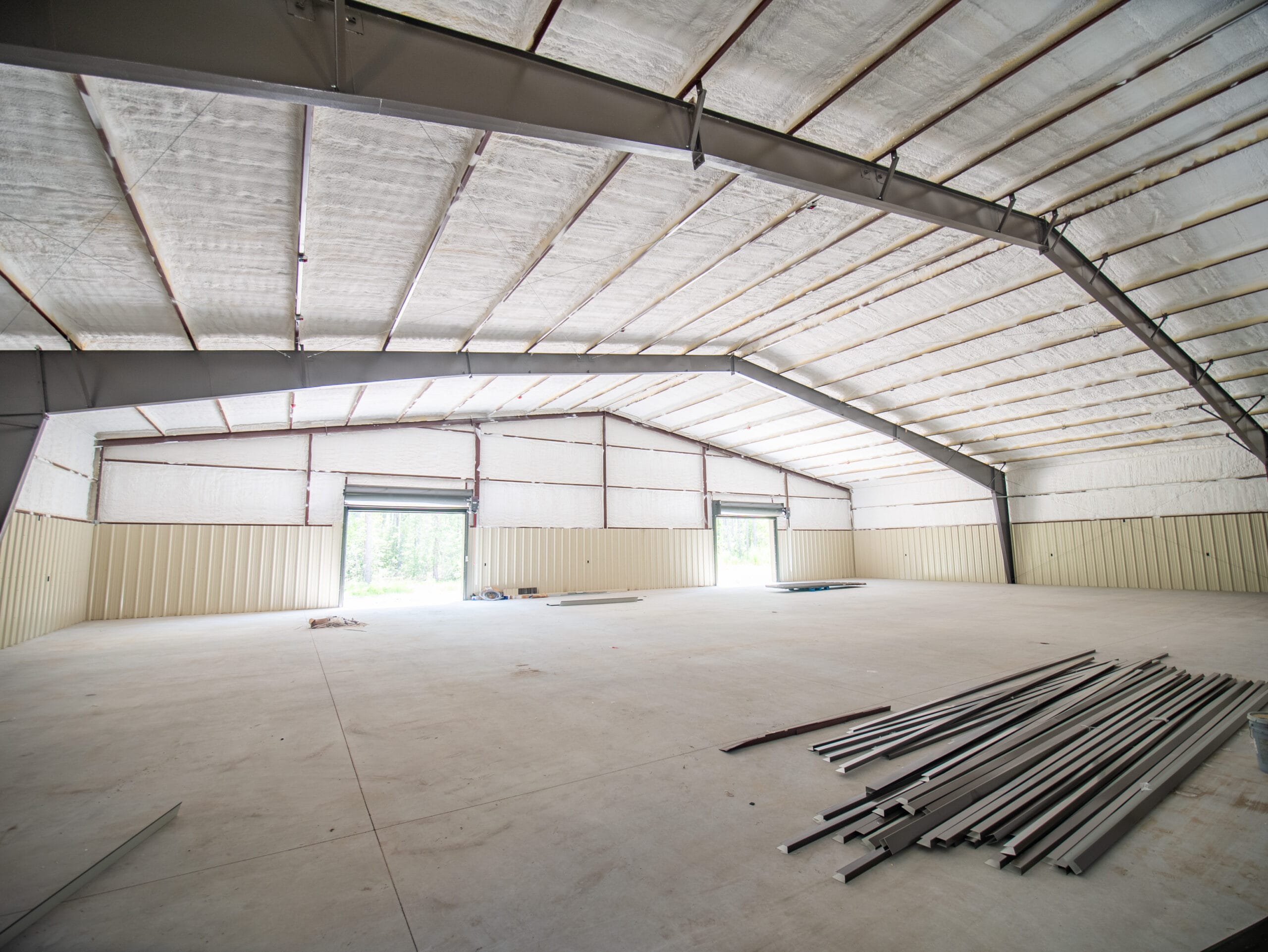
Commercial Steel Building Project Planning Checklist: A Complete Preconstruction Roadmap

Commercial Steel Building Project Planning Checklist: A Complete Preconstruction Roadmap

The difference between a commercial steel building project that breaks ground on schedule and one that stalls in permit review for six months usually comes down to what happened before the first shovel hit dirt. By 2025, commercial construction timelines are tighter and code requirements more detailed than ever, which means the preconstruction phase is where you either set yourself up for a smooth build or inherit a cascade of expensive fixes.

This checklist walks through the full planning process for commercial metal building projects, from feasibility and site selection through permit approval and contractor coordination. It's built around the five-phase structure that defines modern commercial construction: planning, preconstruction, procurement, construction, and post-construction. We'll focus on the first two phases here, because that's where most delays and cost overruns originate.

Phase One: Development and Planning


The development and planning stage sets the foundation for a successful construction project. The construction team determines and solidifies the project's feasibility, budget, scope, timeline, and regulatory requirements during this phase. Skip or rush this stage and you'll spend the rest of the project playing catch-up.

Define Project Scope with Precision

Scope definition is not "we need a warehouse." Scope definition is answering these questions in writing before you talk to a single contractor:

  • What is the purpose of the building? (Retail storefront, office space, cold storage warehouse, manufacturing facility, mixed-use?)
  • What functionalities are required? (Open floor plan with no interior columns, climate control, overhead crane capacity, dock-height loading, ADA-compliant restrooms?)
  • What are the quality expectations and deadlines? (Move-in date tied to a lease expiration, finish level for customer-facing spaces, energy performance targets?)
  • Do future scalability options need to be incorporated? (Expandable end walls, additional electrical capacity for future equipment, pre-wired zones for tenant build-outs?)

In the hundreds of commercial quotes we've run, the single most common source of change orders is vague scope at the outset. A client says "40,000 square feet of warehouse space," then six weeks into design mentions they need a 10-ton overhead crane, which changes the primary framing, the foundation design, and the budget by 20 percent. Write the scope document as if the person reading it has never walked your site and has no access to your internal conversations.

Phase One: Development and Planning — photo for commercial steel building project planning checklist article.

Conduct Feasibility Studies and Market Research

Feasibility work answers whether the project makes financial and operational sense before you commit capital. For commercial steel buildings, feasibility typically includes:

  • Location analysis: Is the site zoned for your intended use? Does it have access to utilities (water, sewer, three-phase power, gas if needed)? Is it accessible for delivery trucks and customer traffic?
  • Market research: What are comparable lease rates or sale prices in the area? What's the vacancy rate for similar commercial space? Will this building generate enough revenue or operational savings to justify the investment?
  • Preliminary cost estimates: What does a building of this size and spec typically cost in your region, and does that fit within your budget?

According to HUD guidance on local zoning compliance for commercial development, zoning and land use regulations must be verified during this stage. A site that's zoned light industrial won't support a retail storefront without a variance, and variance applications can add months to your timeline.

Select and Evaluate the Site

Site selection drives everything downstream. For commercial metal building projects, the ideal site meets these criteria:

  • Level topography: A site that's already level or requires minimal grading reduces foundation costs and speeds construction. Sloped sites can work, but you'll pay for cut-and-fill, retaining walls, or stepped foundations.
  • Firm soil with adequate bearing capacity: Soil investigation reports determine foundation type, bearing capacity, and settlement risks, according to Euro Steel International. Soft or expansive soils may require deeper footings, piers, or soil stabilization, all of which add cost and time.
  • Natural drainage: Does the site naturally drain well, or will you need to install French drains, retention ponds, or swales to manage stormwater? Sites that pond water after rain are red flags.
  • Utility access: Verify that water, sewer, electric, and gas (if needed) are available at the property line or within a reasonable distance. Extending utilities half a mile to reach your site can blow the budget before you pour the first footing.
  • Access for construction and operations: Can concrete trucks, steel delivery flatbeds, and erection cranes reach the site? Is there room for material staging and laydown areas during construction? Will customers and employees be able to access the building once it's operational?

We've walked sites in Florida where the property looked perfect on paper, flat, cleared, utilities nearby, until we realized the access road couldn't handle a loaded concrete truck without sinking. Always walk the site in person, ideally after a heavy rain, and bring someone who's delivered materials to commercial sites before.

Phase Two: Preconstruction Planning


Preconstruction is where ideas and information from the development and planning phase are transformed into a commercial construction checklist. This stage begins with creating a construction team such as engineers, general contractors, subcontractors, and estimators. It's also where you lock in your building design, secure permits, and coordinate delivery schedules.

Assemble Your Construction Team

A commercial steel building project typically requires coordination among:

  • Metal building manufacturer: The supplier who engineers, fabricates, and delivers the pre-engineered steel building system. visit our site provides in-house engineering and custom design services for commercial projects nationwide, which streamlines coordination between design and fabrication.
  • General contractor or erector: The team responsible for site preparation, foundation work, and steel erection. Some clients hire separate concrete and erection contractors; others prefer a turnkey general contractor who handles everything from dirt work to final finishes.
  • Architect or engineer of record: Required in most jurisdictions to stamp the building plans for permit submittal. Even when the metal building manufacturer provides engineered drawings, local codes often require a licensed professional in your state to review and seal the full set.
  • Subcontractors: Electrical, plumbing, HVAC, fire protection, and interior finish trades. For commercial buildings, these scopes are often more complex than residential projects due to code requirements for fire safety, ADA compliance, and commercial-grade systems.

Start recruiting your team early. In tight construction markets, good erectors and concrete contractors book out months in advance. If you wait until after permit approval to start calling, you may have a permitted site and no one available to build it.

Define Project Scope with Precision — photo for commercial steel building project planning checklist article.

Design the Building and Obtain Engineered Drawings

The first step in building a steel structure is design, according to Northern Steel Buildings. This often means working with an architect or engineer to create a blueprint that outlines the structure's dimensions, materials, and other key details. The design phase is critical in ensuring the building will meet the needs of the client, is structurally sound, and complies with all local building codes and regulations.

For pre-engineered metal building systems, the manufacturer typically provides engineered drawings and specifications as part of the building package. These drawings prove that your building will be safe and up to code, per Worldwide Steel Buildings. Engineers and architects play an essential role in ensuring your plans meet the required standards.

Design of steel building structural members must conform to the Specification for Structural Steel Buildings (ANSI/AISC 360), covering load and resistance factor design for beams, columns, and connections in pre-engineered systems. This is the authoritative standard governing the design, fabrication, and erection of structural steel.

Your engineered drawings should include:

  • Structural drawings: Primary framing (columns, rafters, end-wall frames), secondary framing (purlins, girts, eave struts), building parts and components, and bracing in metal buildings (rod bracing, portal frames, or X-bracing).
  • Foundation plan: Footing sizes, anchor bolt layout, embed plate details, and soil bearing pressure assumptions. This drawing ties directly to your geotechnical report.
  • Roof and wall panel details: Panel profile, gauge, fastener schedule, flashing and trim details, and insulation specifications if required.
  • Door and window schedules: Sizes, locations, hardware, and any special requirements (fire-rated doors, impact-resistant glazing, ADA-compliant thresholds).

Commercial steel building projects must address environmental loads including wind, snow, and seismic forces as defined in ASCE 7, with risk category based on occupancy and importance. Chapter 1 of ASCE 7 defines Risk Categories I through IV; metal buildings typically fall under Category II (standard occupancy like warehouses and retail) or Category III (assembly or essential facilities). Your engineer will calculate these loads based on your site location and building use.

Budget and Secure Financing

Creating a realistic budget means accounting for more than just the building package. A complete commercial steel building budget includes:

  • Building package: The pre-engineered metal building system (primary and secondary framing, roof and wall panels, trim, fasteners, and accessories). Request a detailed quote that breaks out each component so you can make informed decisions about upgrades or substitutions.
  • Foundation and site work: Grading, compaction, footings, slab-on-grade or slab-with-thickened-edge, and any retaining walls or drainage improvements.
  • Erection labor: Steel erection, panel installation, and trim work. Erection costs vary widely by region and building complexity; expect higher rates in urban areas and for buildings with complex roof lines or multiple crane picks.
  • Mechanical, electrical, and plumbing (MEP): HVAC, electrical service and distribution, plumbing (if required), fire sprinklers (often required for commercial occupancies over a certain size), and low-voltage systems (data, security, fire alarm).
  • Interior finishes: Insulation, interior walls (if subdividing space), ceilings, flooring, restrooms, and any tenant improvement work.
  • Permits and fees: Building permit fees, plan review fees, impact fees, utility connection fees, and any required third-party inspections (special inspections for welding, concrete testing, etc.).
  • Contingency: A 10 to 15 percent contingency is standard for commercial projects to cover unforeseen conditions (rock in the excavation, utility conflicts, change orders).

Also be mindful of your budget to cover any permit fees or adjustments needed for compliance, per Worldwide Steel Buildings. Permit fees for commercial projects are often calculated as a percentage of construction value, so a $500,000 building may carry $5,000 to $10,000 in permit fees depending on your jurisdiction.

Exploring financing options early gives you leverage. Commercial construction loans, SBA 504 loans, and equipment financing (if the building houses equipment) all have different terms, down payment requirements, and approval timelines. Lenders will want to see your engineered drawings, cost estimates, and proof of site control before committing funds.

Obtain Permits and Navigate Code Compliance

Before construction can begin, you'll need to submit the design plans to the relevant departments for review and approval, according to Northern Steel Buildings. This includes meeting fire safety standards, ensuring that the structure is accessible to people with disabilities, and complying with zoning regulations.

Commercial building plan check submittals must include full sets of plans as PDF per trade, with file names indicating the drawings, such as Electrical.pdf or Mechanical.pdf, per the Town of Apex, NC. Typical submittal packages include:

  • Architectural plans: Site plan, floor plan, roof plan, elevations, building sections, door and window schedules, wall sections, and details.
  • Structural plans: Foundation plan, framing plan, connection details, and structural calculations sealed by a licensed engineer.
  • Mechanical plans: HVAC equipment schedules, ductwork layout, load calculations, and equipment specifications.
  • Electrical plans: Service size and location, panel schedules, lighting layout, receptacle layout, and emergency egress lighting.
  • Plumbing plans (if applicable): Water and drain-waste-vent (DWV) plan for each floor, water and soil riser diagrams, roof drain diagrams for the entire closed system, and backflow prevention device diagrams specifying device make/model, location, and configuration, per the Town of Apex, NC.
  • Fire protection plans (if required): Sprinkler layout, hydraulic calculations, and fire alarm system if the building size or occupancy triggers sprinkler requirements.

State and local building departments enforce the International Building Code (IBC) with site-specific amendments. Plan review timelines vary, some jurisdictions turn around commercial permits in two weeks, others take two months. Incomplete submittals or missing calculations will trigger correction notices and restart the clock.

Fire safety standards for commercial buildings often include:

  • Fire-resistance-rated assemblies: Walls, floors, and structural members may need to meet one-hour or two-hour fire ratings depending on building size, occupancy type, and proximity to property lines.
  • Sprinkler systems: Most commercial buildings over 12,000 square feet or with certain high-hazard occupancies require automatic fire sprinklers.
  • Fire alarm and detection: Smoke detectors, pull stations, and audible/visual notification devices tied to a monitored fire alarm panel.

ADA compliance is non-negotiable for commercial buildings. Accessible routes from parking to building entrances, accessible restrooms with proper clearances and grab bars, compliant door hardware, and appropriate signage are all part of the permit review. Lightning safety for metal buildings is also a common question during code review, steel buildings are non-combustible, which often works in your favor for fire-rating and insurance purposes.

Conduct Feasibility Studies and Market Research — photo for commercial steel building project planning checklist article.

Conduct Geotechnical Investigation

Pre-construction planning for commercial steel buildings requires geotechnical site investigation to determine soil bearing capacity, settlement potential, and foundation design parameters. ASCE 7-22 Section 11.6 requires site-specific ground motion and soil properties for seismic design; soil reports are standard for foundation engineering in steel structures.

A geotechnical report typically includes:

  • Soil boring logs: Samples taken at multiple locations across the site to identify soil layers, depth to bedrock, and groundwater level.
  • Bearing capacity recommendations: The allowable soil bearing pressure (measured in pounds per square foot) that your foundation can safely impose on the soil.
  • Settlement estimates: How much the soil is expected to compress under load, and whether differential settlement (uneven settling) is a risk.
  • Foundation recommendations: Whether spread footings, continuous footings, or deep foundations (piers, piles) are appropriate for the site conditions.

Soil investigation reports determine foundation type, bearing capacity, and settlement risks, according to Euro Steel International. Soft or organic soils, high groundwater, or expansive clay can all drive up foundation costs. If your geotechnical report recommends deep foundations or soil stabilization, budget accordingly and factor the additional time into your schedule.

Site Preparation and Pre-Construction Coordination


Once permits are in hand and your construction team is assembled, the focus shifts to site preparation and coordination. According to Worldwide Steel Buildings, choosing the right location and prepping the site is essential. Begin with site preparation to ensure a firm foundation. Clear any obstacles, consider your customization needs, and make sure installation teams can easily access the site. By closely coordinating with your supplier and carefully planning the delivery schedule, you avoid delays and ensure materials arrive when crews are ready to install them.

Clear and Grade the Site

Site preparation for commercial metal buildings requires:

  • Clearing: Remove trees, brush, stumps, and any existing structures. Dispose of debris off-site or designate a burn area if local regulations allow.
  • Grading: Establish the finished floor elevation and grade the site to promote drainage away from the building. A minimum 2 percent slope away from the foundation is standard.
  • Compaction: Compact the subgrade to the density specified in your geotechnical report (typically 95 percent of maximum dry density per ASTM D698). Uncompacted fill will settle and crack your slab.
  • Utility rough-ins: Trench and install underground utilities (water, sewer, electric, gas, storm drains) before pouring the foundation. Coordinate trench depths and locations with your MEP contractors to avoid conflicts.

When preparing your construction site for a steel building, follow appropriate guidelines. It's essential to establish a level foundation to support the structure and remove any obstacles that may impede construction, per Steel Struct Pro. We've seen projects lose two weeks because the site crew poured the slab before the electrician trenched for the service conduit, the slab had to be saw-cut and patched, which delayed the building erection and introduced a potential leak point.

Coordinate Material Delivery and Erection Schedule

Pre-engineered metal building manufacturers fabricate your building components off-site and deliver them on flatbed trucks. A typical 10,000-square-foot commercial building might arrive on two to four truckloads, depending on the configuration. Coordinate delivery timing with your erection crew so materials don't sit on-site exposed to weather or theft.

Key coordination points:

  • Delivery access: Verify that flatbed trucks (often 53 feet long) can access the site and turn around. Narrow roads, low-hanging power lines, or soft shoulders can all block delivery.
  • Staging area: Designate a level, well-drained area for unloading and staging materials. Panels and trim are often bundled and strapped; you'll need room to sort and organize components before erection begins.
  • Crane access: Steel erection requires a crane (typically a 40- to 60-ton mobile crane for low-rise commercial buildings). The crane needs a firm, level pad and clearance to swing loads without hitting power lines, trees, or adjacent structures.
  • Erection sequence: Most erectors start with the primary framing (columns and rafters), then install secondary framing (purlins and girts), then roof and wall panels, then trim and accessories. Weather delays are common, so build float into your schedule.

Pre-Construction Safety and Compliance Planning


Occupational safety planning is required during steel building construction, including fall protection, scaffolding, and steel erection standards. OSHA mandates compliance with 29 CFR 1926 Subpart R for steel erection, covering pre-construction hazard assessments.

Key safety requirements for commercial steel erection include:

  • Fall protection: Any work at heights above six feet requires fall protection (guardrails, safety nets, or personal fall arrest systems). Erectors working on open-web joists or installing roof panels are at high risk for falls.
  • Steel erection plan: OSHA requires a site-specific erection plan that identifies hazards, sequences the work to minimize risk, and specifies fall protection and load-handling procedures.
  • Qualified rigger and signal person: Crane operations require a qualified rigger to attach loads and a qualified signal person to direct the crane operator.
  • Pre-shift inspections: Cranes, rigging hardware, and fall protection equipment must be inspected before each shift.

Regular inspections are mandatory before construction work begins to ensure electrical systems, HVAC, and utilities are in optimal condition, according to DownToBid. Once the initial groundwork is completed, the next step is laying the foundation. It's followed by concrete pouring and steel erection to create structural integrity and a solid base.

Finalizing the Pre-Construction Checklist


A complete pre-construction checklist for commercial steel building projects includes:

Planning and Feasibility ☐ Define project scope with specific functional requirements ☐ Conduct feasibility study (location analysis, market research, preliminary cost estimate) ☐ Select and evaluate site (topography, soil, drainage, utilities, access) ☐ Verify zoning and land use compliance

Design and Engineering ☐ Assemble construction team (manufacturer, contractor, engineer, subcontractors) ☐ Develop building design and engineered drawings ☐ Confirm structural design complies with AISC 360 and ASCE 7 ☐ Calculate environmental loads (wind, snow, seismic) per ASCE 7 ☐ Prepare foundation plan based on geotechnical report

Budgeting and Financing ☐ Create detailed budget (building package, foundation, erection, MEP, finishes, permits, contingency) ☐ Explore financing options and secure funding ☐ Budget for permit fees and third-party inspections

Permits and Compliance ☐ Prepare plan check submittal package (architectural, structural, mechanical, electrical, plumbing, fire protection) ☐ Submit plans for review and respond to correction notices ☐ Obtain building permit and any required special permits (grading, encroachment, utility connection) ☐ Verify ADA compliance (accessible routes, restrooms, doors, signage) ☐ Confirm fire safety compliance (sprinklers, fire alarm, fire-rated assemblies if required)

Geotechnical and Site Work ☐ Conduct geotechnical investigation and obtain soil report ☐ Design foundation based on bearing capacity and settlement recommendations ☐ Clear and grade site to finished floor elevation ☐ Compact subgrade to specified density ☐ Install underground utilities before foundation work

Material Coordination and Safety ☐ Coordinate delivery schedule with manufacturer and erector ☐ Verify delivery access and staging area ☐ Arrange crane access and confirm clearances ☐ Develop site-specific steel erection safety plan per OSHA 1926 Subpart R ☐ Schedule pre-shift inspections for cranes, rigging, and fall protection equipment

Once you've worked through this checklist, you're ready to break ground. The difference between a project that finishes on time and under budget and one that drags on for months usually comes down to how thoroughly you addressed these items before the first concrete truck arrived.

Why Pre-Engineered Metal Buildings Simplify the Process


Pre-engineered metal building systems account for approximately 60 percent of the low-rise non-residential building market in the United States. They're valued for efficiency in design and fabrication, the manufacturer engineers the building as a complete system rather than as a series of individual components, which streamlines coordination and reduces field conflicts.

A pre-engineered metal building is defined as a building that is "pre-engineered" in the sense that certain standard components are used in their construction, and the building is designed as a system rather than as a series of individual components. Primary framing members and secondary members are fabricated to predesigned sizes and configurations, optimized using computer analysis for specific loading and spacing conditions.

For commercial projects, this system approach offers several advantages:

  • Faster design and fabrication: Because the manufacturer uses standardized components and computer-aided design, turnaround time from quote to delivery is often four to eight weeks (compared to months for custom-fabricated structural steel).
  • Predictable cost: The building package is priced as a complete system, so you know the material cost up front. Field labor (erection, concrete, MEP) still varies by region and contractor, but the building itself is a fixed cost.
  • Single-source accountability: One manufacturer provides the entire structural system, which simplifies warranty and reduces finger-pointing if issues arise.
  • Design flexibility: Despite the "pre-engineered" label, these buildings are highly customizable. You can specify clear span widths, roof slopes, door and window locations, insulation levels, and finish colors to match your exact needs.

When you're ready to move from planning to pricing, the next step is to request a detailed quote that breaks out the building package, optional accessories, and delivery terms. Most manufacturers (including MBMI) provide free quotes based on your size, location, and specification requirements.

Planning for Future Flexibility


One question we hear often from clients in the early planning stages is whether to design for future expansion. The answer depends on your business model and site constraints, but here's what we've observed after years of commercial projects: if there's any chance you'll need more space in five to ten years, design the end walls to be removable and leave room on the site for an addition.

Steel buildings are uniquely suited to expansion. Because the primary framing uses rigid frames or clear-span trusses, you can remove an end wall, extend the building longitudinally, and tie the new framing into the existing structure without disrupting operations in the original space. Compare that to tilt-up concrete or masonry construction, where expansion often means demolishing a load-bearing wall and shoring the roof while you build the addition.

Design considerations for future expansion:

  • Site layout: Position the building so there's room to extend in at least one direction without running into property lines, setbacks, or utilities.
  • End-wall framing: Specify removable end-wall panels and non-load-bearing end-wall framing (the roof load is carried by the interior rigid frames, not the end wall).
  • Foundation: Pour footings for the future addition at the same time you pour the original foundation, even if you don't build the addition immediately. It's far cheaper to pour extra footings now than to mobilize a concrete crew later.
  • Utilities: Oversize your electrical service, water service, and septic/sewer capacity to accommodate the future addition. Running a new service later is expensive and disruptive.

Even if you never build the addition, designing for flexibility costs very little up front and preserves your options. We've seen too many clients box themselves in with a building that can't expand, then face the choice of relocating or building a second structure on a different site when they outgrow the original space.

Moving from Planning to Action


Commercial steel building projects succeed when the preconstruction work is thorough. The checklist above covers the critical steps, but every project has unique wrinkles, difficult soil, complex zoning, tight timelines, or budget constraints that require creative solutions.

The fastest way to move from planning to pricing is to gather your project requirements (size, use, location, timeline, budget) and request a quote. MBMI provides custom design services and in-house engineering for commercial projects nationwide, which means you're working directly with the team that will fabricate your building, no middleman, no markup, no coordination gaps.

For more detail on finishing the interior once your building is enclosed, see the guide to steel building interior finishing. If your project involves a residential component (office/warehouse combo, live-work space, or a barndominium-style commercial building), explore metal building terminology and can you build a home with a metal frame for floor plan options and finish details.

Ready to get started? Request a price quote today and we'll provide a detailed proposal based on your project specifications. Every quote includes engineered drawings, a complete material list, and delivery terms, everything you need to finalize your budget and move into the permit phase with confidence.

About MBMI
MBMI is formed by a group of top steel building professionals who focus on delivering the best products and services possible.

We have the experience and know how to put together the highest quality steel building kit existing in the metal industry.
©2026. Metal Building Manufacturers Inc.
Privacy policy