Tag: commercial metal buildings

  • Commercial Steel Buildings vs Tilt-Up Construction: Pros, Cons, and Use Cases

    Commercial Steel Buildings vs Tilt-Up Construction: Pros, Cons, and Use Cases

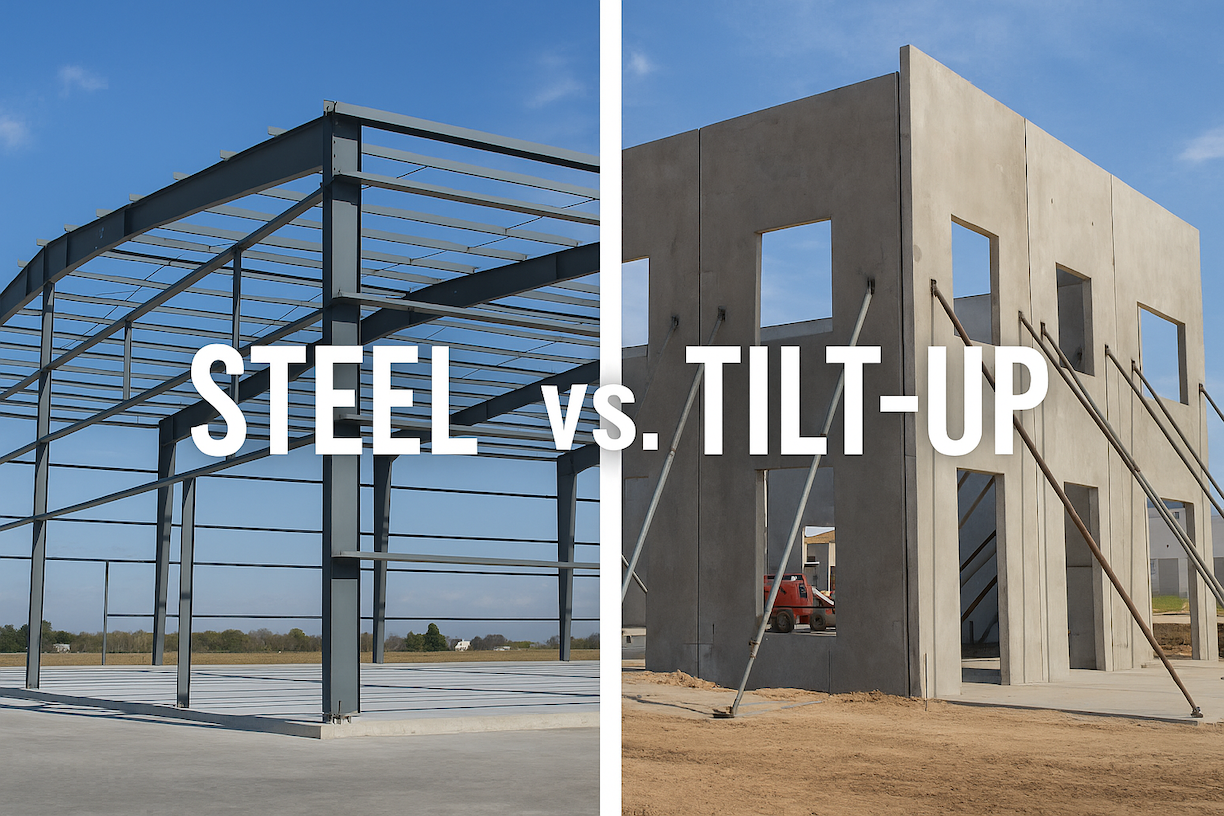
    When planning a commercial structure, one of the first critical decisions developers face is the construction method. The two most common systems in large-scale commercial construction are commercial steel buildings vs. tilt-up construction.

    Both methods are proven, but each has distinct strengths, challenges, and suitability depending on project requirements. Your choice affects not only upfront cost and construction speed but also long-term performance, flexibility, and total cost of ownership.


    What is Tilt-Up Construction?

    Tilt-up construction involves casting large concrete wall panels horizontally on the building site itself. Once cured, these panels are “tilted” upright using cranes and braced into position. The remaining structure (roof framing, interior framing, doors, and finishes) is then completed around these walls.

    This method is often favored for projects that require large, simple footprints with smooth concrete exterior walls, such as warehouses, distribution centers, and large retail stores.

    However, tilt-up relies heavily on weather conditions, site access, and precise sequencing. The panels must cure properly on-site, which can extend timelines during periods of rain, cold, or humidity. Additionally, tilt-up requires large work areas for laying out and casting panels and heavy equipment for lifting them into place.


    What is a Pre-Engineered Commercial Steel Building?

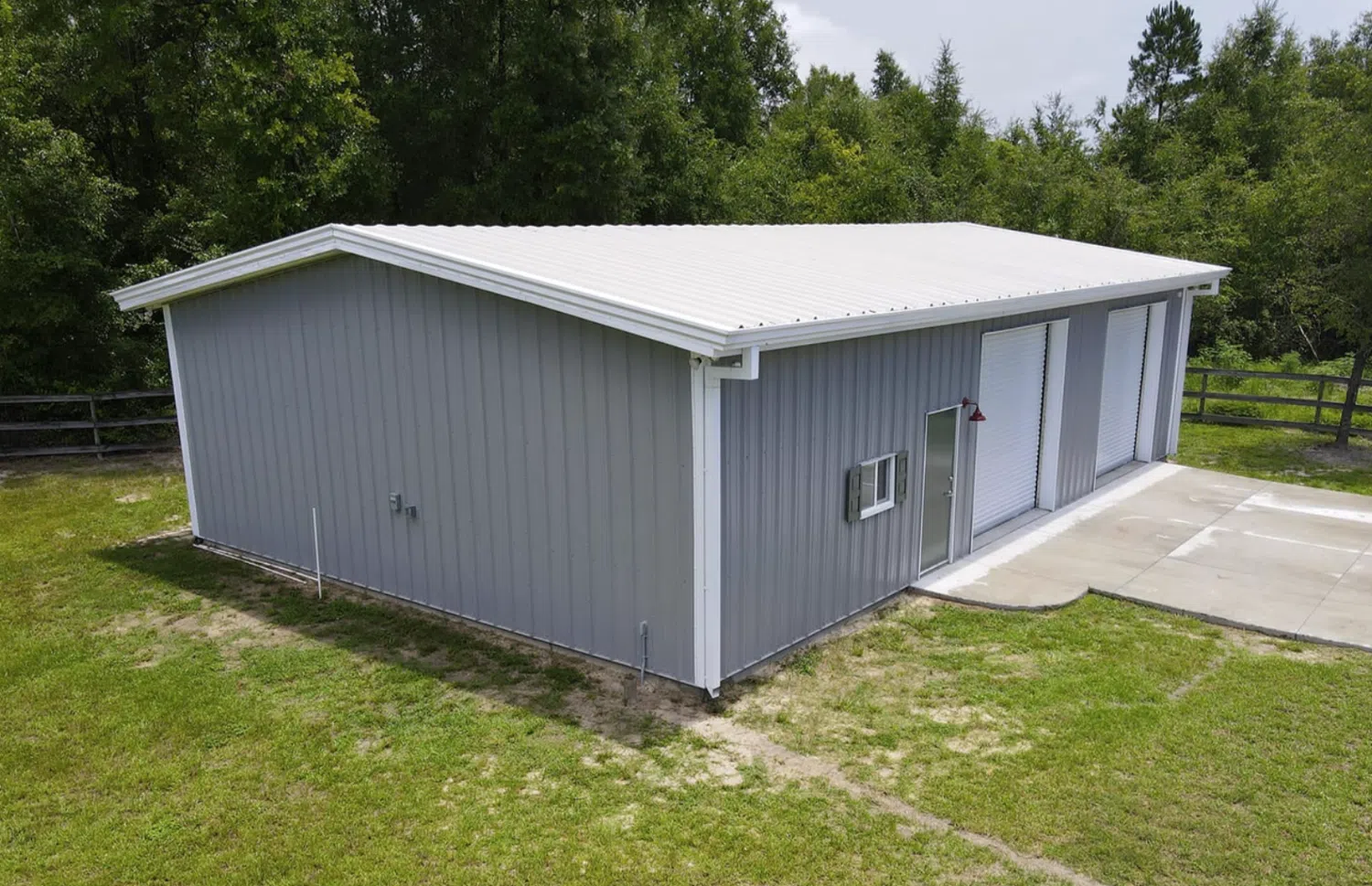
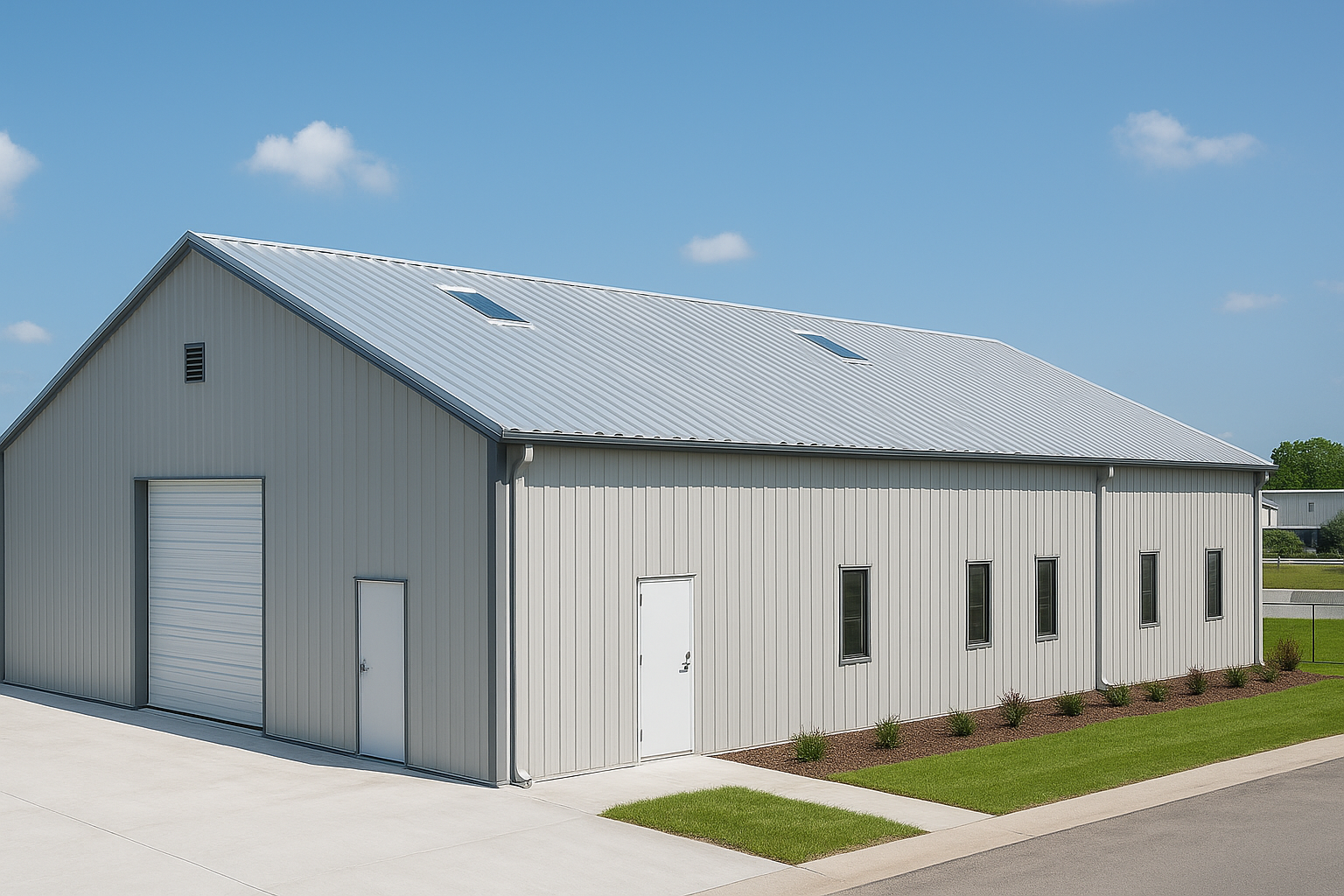
    Pre-engineered commercial steel buildings (PEMBs) are systems where the building’s frame, roof, and wall panels are fabricated in a factory before being shipped to the jobsite. These buildings arrive ready for efficient assembly by a trained erection crew, reducing on-site labor time and minimizing weather-related delays.

    PEMBs are incredibly versatile and are commonly used for warehouses, manufacturing facilities, service centers, agricultural structures, and flexible multi-use spaces. At MBMI, we design pre-engineered buildings that are highly customizable, allowing owners to tailor dimensions, framed openings, insulation packages, and finishes to their specific operational needs.


    Pros and Cons of Tilt-Up Construction

    Tilt-up construction has several clear advantages. The solid concrete walls provide inherent fire resistance and durability and are capable of supporting large clear spans for open interior spaces. The smooth concrete finish may appeal to developers seeking a minimalist, modern exterior aesthetic.

    However, there are drawbacks. The concrete panels require substantial, reinforced foundations to support their weight, which adds to cost and complexity. Tilt-up is also more labor-intensive on-site, with many steps dependent on perfect weather conditions. Any rain, excessive heat, or humidity can delay the curing process or complicate pours, pushing timelines out.

    Another limitation is flexibility: once complete, a tilt-up structure is difficult and expensive to modify or expand. Future renovations involving additional doors, windows, or changes to wall configurations often require specialized demolition and patchwork that detracts from the clean original design.


    Pros and Cons of Commercial Steel Buildings

    Pre-engineered commercial steel buildings deliver a compelling set of benefits for commercial owners and developers. One of the most important advantages is speed of construction. Since components are fabricated off-site in controlled conditions, erection can begin immediately upon delivery. Construction timelines are predictable and shorter, which reduces total labor costs.

    Steel buildings also require lighter foundations due to the material’s superior strength-to-weight ratio. This reduces excavation and concrete requirements, making steel a preferred option for sites with challenging soil conditions or where foundation costs could escalate.

    Design flexibility is another hallmark of steel buildings. Framed openings can be located almost anywhere in the structure, interior layouts can be reconfigured easily, and expansions are relatively simple. Many owners plan for future additions at the outset.

    That said, steel buildings do have some limitations. The exterior finish may require architectural cladding if a premium aesthetic is desired, adding to cost. And like all metal buildings, they must be properly sealed and maintained to prevent corrosion over the long term.

    Overall, when comparing commercial steel buildings vs tilt-up construction, steel buildings typically offer faster delivery, lower construction costs, and greater adaptability for changing business needs.


    Factors to Consider When Choosing

    Choosing between these two systems requires careful thought about your project’s specific needs.

    If your timeline is compressed, a steel building’s rapid fabrication and efficient assembly will help meet your schedule. If labor costs or weather variability are concerns, steel’s off-site prefabrication reduces exposure to those risks.

    If aesthetics demand smooth concrete finishes or local fire codes require certain wall assemblies, tilt-up may make sense. But if your project could benefit from future expansion or needs a building envelope that can adapt over time, steel is far superior.

    Cost is a critical consideration. Steel buildings often offer a lower total installed cost, not only because of shorter construction times but also due to savings on foundations and smaller on-site crews. Tilt-up can be more expensive upfront, especially when soil conditions or weather issues demand additional work.

    Finally, think about the building’s future. Can your structure serve your needs today and adapt as those needs change? In many cases, steel’s flexibility makes it the better investment over time.


    Why Steel is Often the Smarter Choice

    In many commercial applications, pre-engineered steel buildings deliver faster return on investment thanks to reduced construction times, lower labor costs, and adaptability for future growth.

    Where tilt-up construction excels in large-scale, permanent warehouses or distribution centers with strict fire-resistance requirements and no anticipated modifications, steel buildings dominate when speed, flexibility, and scalability matter.

    MBMI’s steel buildings can be tailored to meet both aesthetic and performance needs, incorporating high-quality trim and flashing, insulation packages, and architectural options that ensure lasting performance.


    Final Thought

    The decision between commercial steel buildings vs tilt-up construction is more than a cost comparison. It’s about selecting a system that fits your project’s timeline, budget, site conditions, and long-term business goals.

    For most commercial and industrial applications, steel buildings deliver a smarter, faster, and more flexible solution. When you need guidance on your next project, MBMI’s team is ready to help you design a structure that meets your needs today and can evolve with you tomorrow.

    Contact MBMI today to discuss your options and get expert advice tailored to your project requirements.

  • Why MBMI’s Trim and Flashing Options Improve More Than Just Looks

    Why MBMI’s Trim and Flashing Options Improve More Than Just Looks

    The overlooked details that protect your steel building investment

    When planning a commercial steel building, most decision-makers focus on big-ticket components: framing, roof panels, insulation. But the smaller details (especially trim and flashing) often make the biggest difference in how the building holds up over time.

    Trim and flashing options aren’t just about clean lines and sharp corners. They’re essential for keeping water, wind, and pests out while protecting vulnerable joints and edges from long-term wear. MBMI understands this, which is why our trim and flashing packages go beyond aesthetics to deliver genuine performance.

    What Are Trim and Flashing on a Steel Building?

    Trim refers to the metal elements that cap, seal, or finish edges and junctions, such as at corners or door frames. Flashing provides a watertight barrier where panels meet at angles or around openings.

    These components are strategically placed at:

    • Roof edges (eave and rake trim)
    • Base lines (base trim)
    • Corners (corner trim)
    • Framed openings (jamb and header covers)
    • Roof ridges (ridge caps)

    The Practical Benefits of High-Quality Trim and Flashing Options

    Weatherproofing and Moisture Management

    Trim and flashing seal critical points where water might otherwise infiltrate. Without them, even small openings can allow moisture to enter, leading to corrosion, mold growth, or insulation failure.

    Improved Structural Integrity Over Time

    Metal buildings expand and contract as temperatures fluctuate. Proper flashing accommodates this movement while protecting joints from stress and deterioration.

    Ease of Maintenance and Cleaning

    Tight, well-fitted trim prevents debris buildup and makes routine cleaning easier. It also reduces opportunities for pests to nest or burrow into gaps.

    Common Commercial Use Cases for Trim and Flashing

    The importance of quality trim and flashing becomes even clearer when you consider how commercial buildings operate day to day.

    In a warehouse, trim helps maintain a tight seal around large overhead doors, preventing water intrusion that could damage goods or shelving. In retail environments, clean, uniform flashing preserves a polished exterior, which contributes directly to curb appeal and customer experience. Office spaces and service centers rely on proper trim and flashing to ensure energy efficiency, minimizing drafts at doors and windows while keeping occupants comfortable.

    No matter the type of commercial steel building, well-designed trim and flashing contribute to both performance and aesthetics, reducing long-term costs and reinforcing the building’s professional appearance.

    How Trim and Flashing Affect Curb Appeal

    A building’s appearance matters, especially for retail spaces, offices, or customer-facing commercial facilities. Quality trim creates a finished, professional look by concealing edges, corners, and fasteners. It ensures consistent color match and clean architectural lines.

    MBMI’s Trim and Flashing Options: What Sets Them Apart

    At MBMI, our trim and flashing options improve more than just looks… they protect your investment.

    Features that differentiate MBMI’s trim and flashing include:

    • Base trim included as standard, sealing the wall-to-slab junction
    • Contoured eave trim for superior water runoff management
    • Jamb and header covers that finish and seal framed openings
    • Heavy-gauge metal for enhanced durability
    • Factory color match with roof and wall panels
    • Precision manufacturing that ensures tight, consistent fit

    Common Problems When Trim and Flashing Are Overlooked

    Buildings that cut corners on trim and flashing face a range of issues:

    • Water penetration at roof and wall junctions
    • Rust at exposed edges
    • Drafts and energy inefficiency from poor sealing
    • Increased maintenance from pest entry or debris buildup

    Even small leaks at unsealed joints can have outsized consequences over time. Insulation exposed to moisture can lose its effectiveness, driving up heating and cooling costs. Mold growth is another risk that can lead to costly remediation. In severe cases, water infiltration may compromise interior finishes, equipment, or inventory, turning what could have been a simple trim solution into a major repair project.

    By selecting quality trim and flashing at the design stage, you avoid these hidden risks and protect your structure for decades.

    Final Thought

    Trim and flashing are more than a finishing touch. They’re an integral part of a durable, efficient steel building envelope. MBMI’s commitment to quality extends to every component, ensuring that your commercial structure performs and looks its best for years.

    Ready to protect your next steel building from the start? Contact MBMI for a quote or consultation on the best trim and flashing package for your project.

  • Top Design Priorities for Energy Efficient Commercial Steel Buildings

    Top Design Priorities for Energy Efficient Commercial Steel Buildings

    Smart strategies for lower operating costs and long-term building performance

    Energy efficient commercial steel buildings are no longer a luxury. They’re a necessity. As energy codes tighten and utility costs rise, businesses are looking for smarter ways to reduce operational expenses and environmental impact. That begins with the right design.

    At our prefabricated commercial metal building company, energy performance isn’t an afterthought. It’s built into our systems from the ground up, starting with structural planning and continuing through component selection. This guide outlines what matters most when designing a steel building that performs efficiently for decades.

    Why Energy Efficiency Starts with Steel Building Design

    Most energy-saving opportunities are won or lost in the planning phase. Once a building is up, retrofitting systems or upgrading materials becomes more expensive and disruptive. That’s why MBMI Metal Buildings prioritizes performance from the beginning.

    Energy efficient commercial steel buildings take advantage of design flexibility to minimize waste, maximize insulation, and reduce unnecessary heating or cooling needs. Choosing the right size, shape, and orientation can improve airflow and solar performance, all while supporting your business goals.

    Insulation Is the First Line of Defense

    No feature affects thermal performance more than insulation. The right insulation system will help regulate temperature, improve indoor air quality, and reduce HVAC costs across seasons.

    Popular commercial insulation options include:

    • Blanket insulation: Cost-effective and easy to install, ideal for roofs and walls
    • Rigid board: High R-value per inch, best for moisture-prone areas or walls
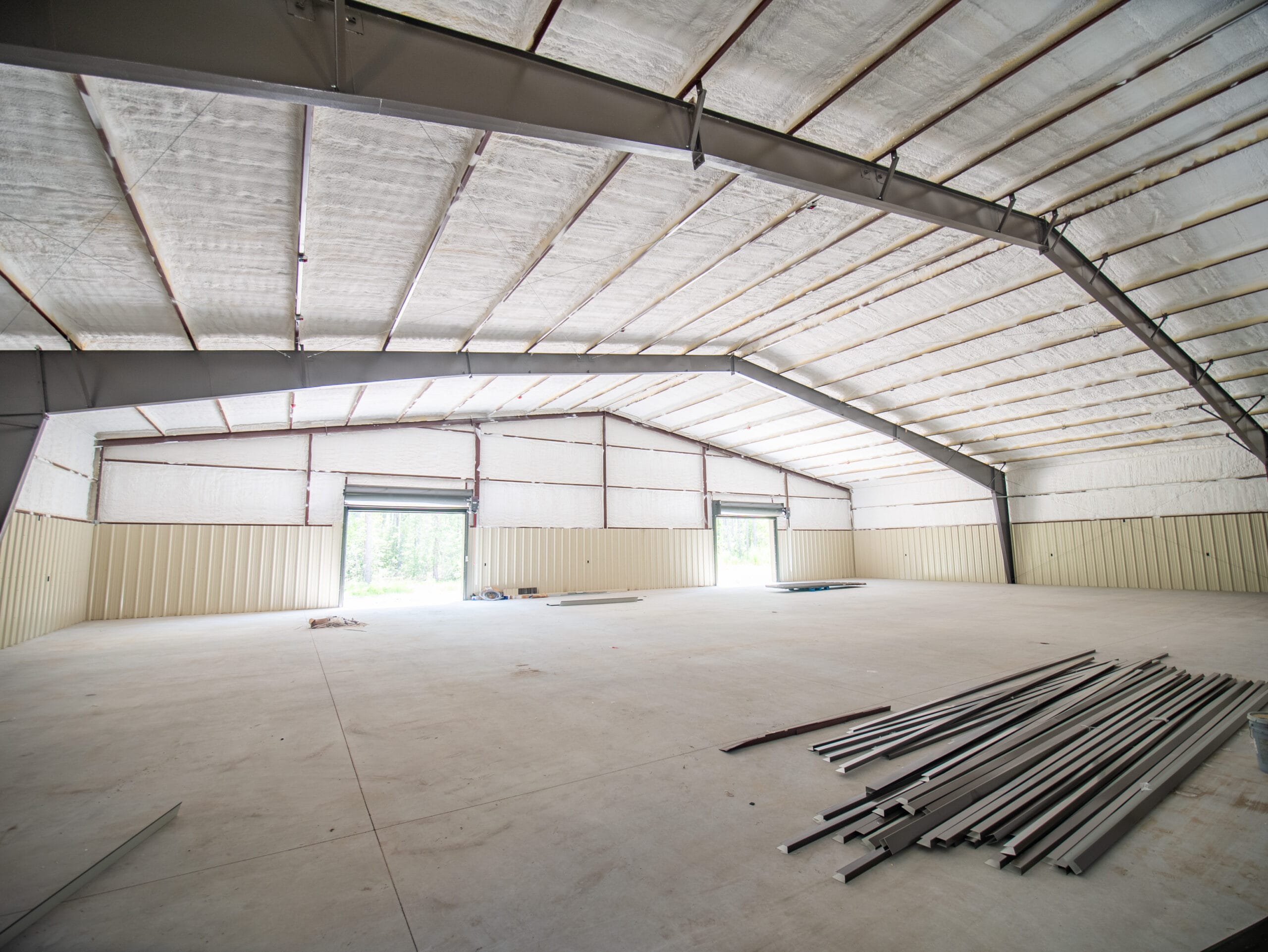
    • Spray foam: Seals gaps and penetrations, excellent for air tightness and irregular surfaces

    At MBMI, we offer tailored insulation packages based on regional climate and building use. Whether you’re building a warehouse, office, or showroom, we help you reach optimal R-values without overspending.

    Learn more about commercial insulation standards from the U.S. Department of Energy, and check out our guide to commercial steel building insulation.

    Roof Coatings and Wall Panels: Reflectivity and Durability Matter

    Cool roofing strategies can reduce the temperature inside your building by up to 30 degrees in warm climates. That translates to significant savings on air conditioning.

    MBMI offers Galvalume+ roof panels as a standard feature. These panels:

    • Reflect solar radiation
    • Offer a 25-year warranty against rust and degradation
    • Resist chalking and fading
    • Require minimal maintenance

    Combined with light-colored coatings or reflective membranes, they help your building maintain a stable internal temperature, especially important for large-span commercial spaces.

    Sealed Entries and Fully Insulated Walk Doors

    Doors are one of the most overlooked sources of energy loss. MBMI walk doors come fully insulated and weather-sealed as standard, not as a costly upgrade.

    Our doors feature:

    • Factory-installed insulation cores
    • High-quality weatherstripping
    • Pre-installed hardware and rust-resistant finishes

    This reduces thermal transfer, minimizes drafts, and helps maintain internal climate conditions without overworking your HVAC system.

    Ventilation, Natural Light, and Interior Climate Control

    Steel buildings that breathe well perform better. Ventilation and lighting choices impact not just energy use but occupant comfort and productivity.

    Energy-efficient ventilation strategies include:

    • Ridge vents to release rising heat
    • Wall louvers for passive airflow
    • Exhaust fans to manage indoor air quality

    When it comes to lighting, translucent wall panels and well-placed windows reduce the need for artificial light. MBMI can include these in your framing plans to optimize daylight without compromising insulation or security.

    Smart Site Orientation and Shading Strategies

    The position of your building relative to the sun makes a surprising difference. South-facing walls receive more solar exposure in North America, which can be beneficial or problematic depending on your climate.

    Strategies to consider:

    • Orient longer sides east-west to minimize solar gain
    • Use roof overhangs or sunshades to block heat during summer
    • Plant deciduous trees that provide seasonal shade

    These passive design elements are especially important for offices or retail spaces where human comfort is a top priority.

    The MBMI Advantage: Built-In Efficiency

    Energy efficient commercial steel buildings aren’t built by accident. They result from purposeful design, quality components, and an understanding of real-world performance. MBMI makes this easy by including many high-efficiency features as standard:

    • Galvalume+ reflective roof and wall panels
    • Fully insulated walk doors
    • Premium trim and weather seals
    • Insulation support and climate-specific recommendations
    • Ventilation accessories and daylighting options

    Our in-house engineering team also ensures that your building meets or exceeds local energy codes from day one.

    Final Thought

    Energy efficiency starts with smart design. From insulation and ventilation to site orientation and high-performance components, MBMI is committed to helping clients build structures that last longer and cost less to operate.

    Want help designing your next energy efficient commercial steel building? Contact MBMI to start the process with a partner who delivers more than just materials.

  • From Blueprint to Business: Planning a Commercial Steel Building That Performs

    From Blueprint to Business: Planning a Commercial Steel Building That Performs

    A step-by-step guide to getting the most from your steel building investment

    The performance of your commercial steel building is determined long before the first panel goes up. From layout and site prep to structural choices and code compliance, early decisions shape everything that follows. Pre-engineered steel buildings offer flexibility, speed, and value–but only when planned with precision.

    At our prefabricated steel building company, we work closely with clients to align function, budget, and building code from day one. This guide outlines the essential steps to planning a commercial steel building that performs now and scales with your business.

    Step 1: Define the End Use and Business Goals

    Before drawing a single line, define what your building needs to do. The more specific your answers, the more efficient and future-proof the design. A steel structure can serve an almost unlimited range of commercial functions–but the best designs are those that reflect the unique demands of each operation.

    Considerations:

    • What is the building’s primary function? (e.g., warehouse, retail, showroom, storage, office)
    • Will it need to support equipment, heavy machinery, or mezzanines?
    • Do you anticipate future expansion, and should the foundation accommodate that now?
    • How many people will occupy the space daily, and in what capacity?
    • What kind of climate control or insulation is required based on business type and region?
    • Are there branding, client experience, or aesthetic considerations that influence design?

    Clear answers to these questions provide the foundation for structural sizing, door and window placement, and thermal envelope requirements. We use this information to recommend framing systems and engineered features that align with your business trajectory, not just your current footprint.

    Step 2: Evaluate the Site and Location-Specific Requirements

    Your building’s performance is also shaped by its environment. Site selection and preparation directly impact everything from code compliance to stormwater drainage to buildability. Early analysis reduces risk and streamlines permitting.

    Key Site Variables:

    • Lot size, boundary conditions, and local setback rules
    • Soil type, grading, drainage, and erosion control
    • Climate zone: wind uplift, snow loads, seismic activity, sun exposure
    • Accessibility for commercial trucks, emergency services, and customer traffic
    • Availability of utilities: electricity, water, sewer, gas, and broadband
    • Zoning laws, noise ordinances, parking requirements, and fire lane clearances

    MBMI’s engineering team is well-versed in translating these site variables into technical specifications and ensuring compliance with standards like the International Building Code (IBC) and IECC. We can tailor your building’s load requirements, trim packages, and material selections to suit both environmental and regulatory demands.

    Step 3: Plan the Building Layout with Function in Mind

    Once you know what you’re building and where, the next step is laying out how it all works together. A poor layout can lead to workflow disruptions, inefficient heating and cooling, and costly change orders. By contrast, a functional layout improves productivity, comfort, and long-term adaptability.

    Functional Layout Features:

    • Clear-span vs. multi-span framing: Clear-span is ideal for warehouses, gyms, and open-plan work areas.
    • Entrances: Strategically place roll-up doors, walk doors, and loading docks to support traffic flow and security.
    • Zoning the interior: Define areas for storage, offices, mechanical equipment, client-facing zones, and specialized spaces (e.g., clean rooms, climate-controlled areas).
    • Ventilation and daylighting: Incorporate windows, ridge vents, and skylights to improve energy efficiency and air quality.
    • Code-compliant egress: Ensure exits are properly spaced, accessible, and easy to navigate during emergencies.

    The most effective building layouts are those that anticipate growth, flexibility, and operational nuances. MBMI helps map these elements into your design early so they’re seamlessly integrated into your steel package.

    Step 4: Choose the Right Building Components

    Components are where MBMI really sets itself apart. We include premium building features that are considered upgrades by most providers, because we know how much they impact performance.

    Common Components to Consider:

    • Roof style and pitch: Gable vs. single slope affects drainage, snow shedding, and aesthetic profile.
    • Framed openings: Necessary for all doors, windows, HVAC penetrations, and future expansions.
    • Insulation systems: Rigid board, blanket insulation, or spray foam–selected based on budget, region, and desired energy efficiency. (See our full insulation guide)
    • Walk doors: MBMI includes fully insulated doors with rust-proof hardware and weather seals.
    • Trim and flashing: Eave trim, base angle, and ridge cap options protect the building envelope and elevate aesthetics.
    • Optional upgrades: Interior liner panels, gutters, canopies, translucent wall panels, and mezzanines add long-term value.

    Each component decision affects how your building will function and age. MBMI’s team ensures these features are engineered for maximum return.

    Step 5: Collaborate with MBMI’s Engineering Team

    One of the greatest advantages of working with MBMI is direct access to seasoned engineers who understand steel buildings, local codes, and commercial project workflows.

    MBMI Provides:

    • Site-specific engineering with stamped drawings for permit submittals
    • Load and wind calculations based on your exact location and use case
    • Structural modifications to support cranes, rooftop units, solar, or multi-use occupancy
    • Custom bracing, anchor bolt plans, and foundation coordination
    • Dedicated support throughout detailing, fabrication, and delivery

    This collaborative process doesn’t just result in faster approvals–it creates buildings that meet real-world demands with fewer compromises or construction delays.

    Common Pitfalls to Avoid in the Planning Stage

    Even well-funded projects can falter when planning missteps aren’t addressed. Knowing where others go wrong can help you make smarter choices from the outset.

    Watch Out For:

    • Overlooking zoning setbacks or lot-specific constraints
    • Failing to consider how expansion will affect current access or systems
    • Choosing insulation or HVAC systems after the structure is finalized
    • Inadequate egress planning or non-compliance with ADA/fire codes
    • Forgetting to plan for electrical, mechanical, or plumbing integration within the steel design

    MBMI’s involvement during planning helps flag these issues before they escalate into redesigns or costly field fixes.

    Final Thought

    A successful commercial steel building isn’t just strong–it’s strategic. From footprint to function, every decision made in the early planning stages contributes to how well the structure serves your business over the next decade and beyond.

    At MBMI, we partner with clients to engineer smarter buildings from the start. Whether you’re developing a new logistics hub, workshop, service center, or hybrid-use barndominium, we bring the foresight and precision that turn plans into performance.

    Ready to start planning your commercial steel building? Contact MBMI for a quote or design consultation–and take the first step toward a structure that works as hard as you do.

  • The Ultimate Guide to Commercial Steel Building Insulation

    The Ultimate Guide to Commercial Steel Building Insulation

    In commercial steel construction, insulation is one of the most crucial decisions you’ll make – yet it’s often treated as an afterthought. While pre-engineered steel buildings are known for their durability, fast turnaround, and cost-effectiveness, their long-term performance hinges on proper insulation.

    At MBMI Metal Buildings, we understand that insulation is not just a line item. It’s the difference between a building that performs and one that constantly demands more from your energy budget. In this guide, we’ll explore the major insulation types, R-values, commercial use cases, and how MBMI supports builders in creating energy-efficient, code-compliant steel buildings.

    Why Insulation Matters in Commercial Steel Buildings

    Insulation is more than a building material; it is a performance enhancer that directly impacts operating costs, comfort, and compliance. Steel, while strong and versatile, conducts heat rapidly. Without proper insulation, this can result in unwanted heat gain in summer and significant heat loss in winter.

    Key Benefits:

    • Lower energy costs over the building’s lifespan
    • Better interior climate control for employees, equipment, or products
    • Prevention of condensation and associated mold or corrosion risks
    • Reduced stress on HVAC systems, potentially lowering equipment costs
    • Compliance with codes like the International Energy Conservation Code (IECC), ASHRAE 90.1, and local amendments

    Insulation transforms a steel shell into a high-performing structure. For commercial builders, it can mean the difference between meeting project budgets and dealing with long-term inefficiencies.

    Key Types of Insulation for Steel Buildings

    Choosing the right insulation for your commercial metal building depends on project location, use case, target R-values, and budget. MBMI provides expert guidance on integrating the right system from the start.

    Fiberglass Blanket (Batt or Roll)

    • The most widely used insulation for metal buildings
    • Comes in long rolls that fit between purlins and girts
    • Available with laminated facings for vapor control and aesthetics
    • Works best in non-conditioned or lightly conditioned environments such as warehouses or storage

    Rigid Board Insulation

    • Typically made from polyisocyanurate (polyiso) or extruded polystyrene (XPS)
    • Delivers high R-value per inch, making it ideal where space is limited
    • Useful for walls, roofs, and under slab applications
    • Often used in office build-outs or buildings requiring more efficient envelopes

    Spray Foam Insulation

    • Expands on contact to seal cracks, gaps, and seams
    • Provides a high R-value and acts as both insulation and an air barrier
    • Superior moisture resistance; excellent for humid or coastal environments
    • Recommended for buildings requiring precise temperature and humidity control

    Insulated Metal Panels (IMPs)

    • Combine structure, insulation, and finish in one product
    • Provide continuous insulation with virtually no thermal bridging
    • Available in a range of finishes and profiles to suit architectural demands
    • Common in cold storage, food processing, and premium retail environments

    Understanding R-Values and Climate Zones

    The R-value of an insulation material reflects its resistance to heat flow. The higher the R-value, the better the material insulates. Choosing the right R-value depends on your region and your building’s use.

    Factors Affecting R-Value Requirements:

    • Geographic location and climate zone
    • Indoor temperature needs (occupied vs unoccupied)
    • Local energy code requirements (IECC, ASHRAE)

    For example:

    • Southern U.S.: May only require R-13 to R-19 for walls
    • Northern U.S.: May require R-30 or higher for roofs and walls
    • Specialized Uses: Cold storage or data centers may demand much higher insulation levels and tighter building envelopes

    MBMI’s engineering team works with clients to calculate and deliver insulation systems tailored to both location and usage.

    Common Commercial Use Cases and Their Insulation Priorities

    Every commercial building type brings unique insulation demands. MBMI guides clients in matching their structure to the right thermal protection.

    • Warehouses: Focus on affordable thermal barriers and condensation control, often with fiberglass batts
    • Office Spaces and Retail: Require higher R-values and attention to indoor air quality and noise control
    • Mini-Storage Facilities: May require variable insulation based on whether units are climate-controlled or ambient
    • Workshops and Service Centers: Often need a balance of insulation and ventilation, especially in hot or cold climates
    • Food Processing or Cold Storage: Require continuous insulation systems like IMPs or closed-cell spray foam to prevent thermal bridging
    • Barndominiums and Live/Work Units: Require residential-grade insulation standards with proper vapor control and thermal continuity

    MBMI’s Approach to Insulated Commercial Steel Buildings

    MBMI doesn’t take a one-size-fits-all approach. Our insulation recommendations are based on each client’s business goals, building function, and regional requirements.

    Our Process Includes:

    • A consultation on energy code requirements and climate needs
    • Coordination with MBMI’s in-house engineering to integrate insulation into structural plans
    • Options for faced fiberglass, high-R rigid boards, or continuous insulation systems
    • Guidance on vapor barriers, thermal breaks, and trim integration for moisture and air control

    In addition to insulation, MBMI includes premium features that enhance the envelope:

    • Fully insulated walk doors for improved entry-point performance
    • Base and eave trim seals to reduce air and water infiltration
    • High-gloss wall and roof panels with 40-year warranties that reflect solar heat and enhance thermal performance

    Final Thought

    Insulation is not a secondary detail – it is fundamental to the performance of any commercial steel building. Whether you’re building a warehouse, service facility, retail space, or live/work environment, proper insulation determines how efficiently and comfortably your building operates over time.

    At MBMI, we deliver more than just steel buildings. We deliver solutions engineered for longevity, comfort, and compliance – insulation included.

    Ready to get started? Contact us today to discuss your insulation needs and let our experts help you build a structure that performs as well as it lasts.

  • Steel Building Essentials: The Value of Fully Insulated Walk Doors

    Steel Building Essentials: The Value of Fully Insulated Walk Doors

    A small detail with major commercial impact

    In commercial construction, details matter. While it’s easy to focus on structural steel, roof spans, or foundation requirements, the truth is that comfort, security, and operational efficiency often hinge on something as modest as a walk door.

    For our custom metal building company, walk doors are not an afterthought. They’re fully insulated, built to perform, and included as a standard in every building package, and that decision is entirely deliberate. In the context of a commercial structure, a walk door is not simply a point of entry. It’s an essential feature that impacts everything from energy management to code compliance and day-to-day usability.

    Here’s why this small yet mighty component deserves a closer look.

    Insulated Entry Points Matter More Than You Think

    In any structure that requires temperature stability, and that includes a surprising range of steel building types, entry doors are a known weak point. A poorly sealed or uninsulated door allows air infiltration that can undermine an otherwise well-insulated building.

    MBMI’s fully insulated walk doors are designed to combat exactly that. Each door features:

    • A solid, insulated core for thermal resistance
    • Rust-resistant construction that holds up in humid and coastal climates
    • A tight seal that reduces drafts and energy loss
    • Pre-installed hardware for quick, secure installation

    Combined with our commercial metal building insulation packages, these doors help form a consistent building envelope that supports HVAC performance and reduces energy bills. This is especially important in:

    • Commercial steel buildings where clients and employees expect climate control
    • Barndominiums and live/work spaces where year-round comfort matters
    • Steel riding arenas where controlling dust and moisture is essential
    • Agricultural steel buildings that protect temperature-sensitive equipment or feed
    • RV storage buildings where air-tight sealing prevents condensation and corrosion

    Whether your structure is built for people, products, or livestock, climate protection starts with the envelope, and walk doors are a key part of that.

    Built to Handle Daily Use

    Steel buildings are often built for hard use. In most commercial and agricultural settings, doors aren’t used once or twice a day, they’re in near-constant operation. That’s why MBMI’s doors are designed for heavy-duty, high-traffic performance.

    Standard features include:

    • Durable steel skins that resist dents and warping
    • Full insulation to prevent thermal bridging
    • Pre-hung frames that simplify installation and alignment
    • Rust-proof hardware built to withstand extreme weather

    Whether you’re running a commercial warehouse, an equestrian training facility, or an RV park with a steel garage, you need access points that don’t compromise under pressure. MBMI’s walk doors are made to function like the rest of our structures; reliably, quietly, and without interruption.

    Security and Compliance from the Ground Up

    Access control and code compliance are critical in commercial and multi-use buildings. A walk door isn’t just a way in, it’s also a boundary for what comes in and out.

    MBMI’s walk doors are engineered with this in mind. They:

    • Support commercial-grade locking systems and ADA-compliant hardware
    • Meet typical code requirements for egress, accessibility, and safety
    • Resist forced entry and environmental intrusion

    That means one less inspection concern, fewer code adjustments, and more peace of mind for clients who need functional security without extra planning or upgrades.

    Seamless Integration for a Professional Finish

    For customers building offices, storefronts, or barndominiums, appearances still matter. MBMI’s walk doors include matching trim that blends with your building’s exterior for a clean, professional finish. Because the door is included and pre-engineered into the building package, there’s no need for custom retrofits or patchwork trim jobs.

    The result is a building that looks just as refined as it is functional, from first impressions to final inspection.

    One More Reason MBMI is the Best Steel Building Company

    Some providers treat walk doors as upgrades or optional components. At MBMI, we include them as standard because we know they belong in every serious steel building design. We believe that quality isn’t just about frames and panels, it’s about every single part of the structure, including how you get in and out.

    Our clients trust us with agricultural steel buildings, barndominiums, riding arenas, mini-storage facilities, and a full range of commercial projects. Across all of them, walk doors are essential to performance, compliance, and comfort, which is why we build them to last and include them from the start.


    Final Thought

    Fully insulated walk doors may not be the biggest component in your steel building, but they’re one of the most important. They keep climates controlled, protect what matters inside, and help your building meet modern standards for usability and efficiency.

    If you’re planning a steel structure for commercial, residential, or agricultural use, make sure your walk doors are built for more than just entry; make sure they’re built for performance.

    At MBMI, they are.

  • 40 Years of Confidence: The Science Behind MBMI’s High-Gloss Panels

    40 Years of Confidence: The Science Behind MBMI’s High-Gloss Panels

    You don’t promise 40 years of protection unless you can back it up.

    At MBMI Metal Buildings, that confidence isn’t just marketing. It’s engineered into every panel we produce. For decades, our customers have trusted that their buildings will stand strong, resist rust, and keep their color, even after years of blazing sun and brutal weather.

    So what’s the secret behind that kind of staying power?

    The answer lies in a carefully layered process that combines metallurgical science with high-performance finishes and an unwavering focus on quality.

    The Core of It All: Galvalume® Steel

    Every long-lasting panel begins with the right foundation. At our metal building company, that foundation is Galvalume®, a steel substrate coated in a precise mixture of 55% aluminum and 45% zinc.

    The aluminum acts as a barrier, shielding the steel from environmental exposure, while the zinc provides sacrificial protection. That means even if the surface is scratched or damaged, the surrounding zinc will corrode first, essentially “taking the hit” to keep rust from spreading.

    It’s a smart, self-preserving system. And it’s one of the biggest reasons our high-gloss panels continue performing after decades in the field.

    Gloss and Grit: The Role of Premium Paint Systems

    Of course, structure is only part of the story. What really sets MBMI panels apart is what you see and what you don’t.

    Our high-gloss paint systems don’t just offer aesthetic appeal. They’re built for performance, using PVDF (polyvinylidene fluoride) coatings that are renowned in the metal building industry for one thing: endurance.

    These finishes use ceramic-based pigments that are chemically stable and highly resistant to UV breakdown. That means less fading, less surface wear, and more visual integrity over time.

    We’re not talking about a few extra years. We’re talking about decades of color stability, even in areas with intense sun exposure.

    No Room for Chalk

    One of the most frustrating signs of aging panels is chalking. That dusty white residue that builds up over time and dulls the look of a building. It happens when resins break down under UV light and moisture, leaving powdery particles on the surface.

    To combat this, MBMI’s coatings include high-grade resins specifically selected for their chalking resistance. These resins stay strong, maintaining both the finish and the clean, professional appearance our customers expect.

    The result? A building that still looks sharp when your neighbor’s panels have already started to show their age.

    Designed to Be Trouble-Free

    Durability at MBMI doesn’t stop with paint and metal.

    Our panel system includes premium lifetime fasteners. A detail many overlook. These fasteners match the finish of the panels and are made to resist rust, which is critical for protecting structural integrity. Cheaper fasteners might save a few dollars up front, but they often void warranties and become the first point of failure.

    We also engineer every building to meet local codes and regional demands, from coastal environments to snowy mountain towns. Our base and eave trim, larger base angles, and cable bracing aren’t just for looks. They improve stability, prevent sagging, and simplify assembly.

    In short, it’s a complete system, backed by engineering experience and built with longevity in mind.

    A Warranty That Means Something

    Our 40-year panel warranty isn’t a formality. It’s a reflection of how confident we are in our materials, coatings, and process. When customers ask how long their building will last, we don’t hesitate.

    And that kind of peace of mind? It’s engineered into every square foot.

    Built to Last. Built to Impress.

    There’s a reason customers come back to MBMI when it’s time for their next project. The shine doesn’t fade. The panels don’t chalk. The structure stays sound.

    Because when you invest in a building, you’re investing in the future. And we’re proud to build panels that are still performing strong 40 years later.

    Whether you are in the market for a barndominium, commercial metal building, agricultural steel building, or anything else, our in-house engineers can design your dream building. Contact us today for a free quote and consultation.

  • How MBMI Steel Buildings Handle Extreme Weather: Strength by Design

    How MBMI Steel Buildings Handle Extreme Weather: Strength by Design

    In an era where climate unpredictability seems to be the new norm, the durability and resilience of steel buildings have become integral to constructing safe and secure spaces. Extreme weather events, ranging from hurricanes and tornadoes to heavy snowfall and seismic activity, pose real threats to any building structure. As such, investing in a building that can withstand these forces is paramount. At MBMI, our steel building designs are crafted with the specific intention of enduring such tests, ensuring that you receive a strong and reliable structure that stands the test of time.

    The need for strong, resilient buildings has grown exponentially as businesses and individuals seek solutions that offer both safety and efficiency. Understanding the elements that contribute to the longevity of steel buildings allows customers to make informed decisions—ones that ultimately safeguard their investments while delivering peace of mind.

    Engineered for Strength: The MBMI Advantage

    One of the cornerstones of MBMI’s success lies in our commitment to engineering excellence. Each building we create is custom-designed to meet local codes and exceed industry standards, which serves as a testament to our dedication to quality. Key features of our prefabricated metal buildings include:

    • High-Quality Components: We utilize premium-grade steel components that provide superior load-bearing capacity, ensuring the building can withstand various external forces, whether natural or man-made.
    • Advanced Engineering Practices: Our design processes rely on industry-leading engineering techniques, ensuring that every aspect of the structure contributes to its overall strength.
    • Customization for Different Needs: From agricultural warehouses to commercial spaces, we recognize the diverse requirements our clients may have. As such, our buildings are tailored to meet specific needs and challenges posed by the environments in which they are placed.

    By focusing on these elements, MBMI ensures that every building is designed not just for today’s realities but for the uncertainties of tomorrow.

    Key Features That Enhance Structural Integrity

    1. Cable Bracing: Reinforcing Stability

    Cable bracing is a critical feature in ensuring structural stability:

    • Lateral Movement Prevention: One of the primary roles of cable bracing is to counteract lateral forces acting on the building during extreme weather events such as high winds, tornadoes, or earthquakes. It helps maintain the structure’s integrity and prevents catastrophic failure.
    • Distribution of Force: Cable bracing works by evenly distributing forces throughout the building framework, which is especially crucial in large-span steel buildings where stability concerns can become more pronounced due to the vast open spaces.
    • Design Versatility: This system can be effectively integrated into various architectural designs, allowing for creative flexibility while not compromising on safety.

    2. Purlin Strapping: Added Roof and Wall Support

    The incorporation of purlin strapping involves particular advantages:

    • Minimized Roof Sagging: Purlins help provide additional support to the roof structure, significantly reducing sagging and ensuring that heavy loads such as snow are evenly distributed across the framework.
    • Wind and Load Resistance: Well-designed purlin systems improve the structure’s ability to withstand both heavy snow loads and pressures from high winds, further securing the longevity of the building.
    • Extended Durability: The added support purlins provide also increases the overall lifespan of roofing panels, giving owners confidence in their building’s operational effectiveness over time.

    3. Local Code Compliance: Built for Any Environment

    MBMI takes compliance seriously:

    • Geographic Customization: Our buildings are engineered according to the specific challenges posed by the location where they will be erected, ensuring adherence to local building codes for wind, snow, and seismic loads.
      • Hurricane and High Wind Areas: We institute high wind ratings for buildings in hurricane zones to withstand intense storms.
      • Snow-Prone Regions: Roof designs are reinforced to handle increased snow loads, which can put immense pressure on structures.
      • Seismically Active Zones: Our flexible yet durable construction methods provide buildings with the ability to absorb vibrations and shocks, thereby safeguarding against earthquake-related damage.

    The adherence to strict local codes not only meets regulatory standards but elevates the overall safety and security of our buildings.

    The Role of Insulation in Weather Protection

    The addition of insulation in insulated steel buildings takes weather protection to a new level:

    • Temperature Regulation: Insulated buildings combat extreme external temperatures, allowing for climate control that keeps interiors comfortable regardless of weather conditions outside.
    • Condensation Management: Proper insulation significantly reduces the likelihood of condensation, which can lead to water damage and the growth of mold and mildew if left unchecked.
    • Energy Efficiency: Insulated steel buildings reduce the need for excessive heating or cooling, leading to decreased energy costs and a lower carbon footprint. This energy efficiency is particularly important given rising energy costs and growing environmental awareness.

    Thus, insulation transforms steel buildings into not only durable structures but also more energy-efficient and comfortable spaces.

    Why MBMI Stands Out in Extreme Weather Protection

    MBMI has built its reputation on several key advantages that emphasize our commitment to safeguarding customers:

    • Premium Materials and Protective Coatings: We source the highest quality materials and apply advanced protective coatings that enhance the resistance of structures to rust and corrosion, significant threats in volatile weather.
    • Advanced Bracing Systems: Our bracing systems have demonstrated the ability to maintain integrity during even the harshest storms, providing unparalleled safety for occupants and the items contained within.
    • Robust Warranty Options: We back our products with 40-year paint warranties, ensuring protection against fading, chalking, and cracking. This warranty not only speaks to our confidence in our products but also adds to the value customers derive from their investment.

    By incorporating superior materials, innovative designs, and customer-focused warranty options, MBMI offers a level of protection and reliability that is difficult to match in the steel building industry.

    Conclusion 

    In conclusion, MBMI’s steel buildings are thoughtfully engineered to endure the most extreme weather conditions while maintaining structural integrity and aesthetic value. Our commitment to quality engineering, compliance with local codes, and customer satisfaction position us as a trusted leader in the steel building industry.

    If you’re looking for a durable, weather-resistant steel building, contact MBMI today. We are enthusiastic about discussing your project and offering expert guidance tailored to your needs. With MBMI, you can build with confidence, knowing that your structure is designed to last against the uncertainties of nature. Together, let’s create a steel building that not only meets your needs but exceeds your expectations for years to come.

  • Rust-Free for Life: Why Premium Lifetime Fasteners Matter for Steel Buildings

    Rust-Free for Life: Why Premium Lifetime Fasteners Matter for Steel Buildings

    Fasteners are often overlooked components in construction, yet they bear the critical responsibility of ensuring the durability and integrity of steel buildings. Imagine a bridge held together by weak, rust-prone fasteners; the consequences would be catastrophic. This simple analogy underscores the importance of selecting high-quality, rust-proof fasteners for long-term performance and safety. 

    The Critical Role of Fasteners in Steel Buildings

    Fasteners serve as the connective tissue of steel buildings. They link structural components and panels, enabling the entire system to function cohesively. Here are some crucial points regarding their role:

    • Load-Bearing Capacity: Fasteners are essential for distributing loads throughout a structure. A poorly fastened panel can result in an uneven weight distribution, leading to structural failures.
    • Environmental Exposure: Unlike some building materials, fasteners must withstand extreme environmental stress. They face:
      • Moisture: Rain and humidity can lead to rusting.
      • Temperature Changes: Rapid shifts between warm and cold can cause expansion and contraction, putting stress on fasteners.
      • UV Exposure: Sunlight can degrade coatings on fasteners, making them susceptible to corrosion.
    • Consequences of Compromise: If a fastener fails, the resulting issues can range from minor inconveniences to significant hazards. A compromised connection can lead to leaks, structural weakness, and ultimately, safety risks to inhabitants.

    Understanding Rust and Corrosion

    Understanding the phenomenon of rust is essential for recognizing the importance of premium fasteners:

    • How Rust Forms: Rust is the product of iron reacting with oxygen in the presence of moisture. This reaction leads to iron oxide, commonly known as rust, which gradually degrades the metal’s integrity.
    • Common Causes of Rust in Fasteners: Poor-quality materials, insufficient protective coatings, and environmental factors can all lead to premature rusting. Fasteners that are not designed for sustainability in tough conditions are more likely to fail.
    • Corrosion-Resistant vs. Rust-Proof: While both types offer a degree of protection, it is vital to understand that corrosion-resistant materials may still succumb to rust over time, especially under harsh conditions. Rust-proof materials actively prevent rust formation, making them a more reliable choice for steel buildings.

    Why Premium Lifetime Fasteners Matter

    Investing in premium lifetime fasteners offers numerous advantages:

    • Rust-Proof Materials and Coatings: Premium fasteners are constructed from high-grade materials accompanied by advanced coatings designed to withstand continuous exposure to moisture, chemicals, and other corrosive elements. This bolsters their resistance to rusting.
    • Long-Term Structural Integrity: Quality fasteners maintain their strength and performance over time. This prevents degradation that could compromise safety, functionality, and load-bearing abilities. Not only do they hold components tightly, but they also safeguard against catastrophic failures.
    • Enhanced Aesthetics: Fasteners contribute to the visual aspect of a steel building. Quality fasteners not only hold panels together but also maintain a clean, polished appearance, enhancing the overall design and curb appeal.
    • Cost Savings: Investing in premium fasteners can translate to significant long-term savings. What may seem like a higher upfront cost will indeed provide value by avoiding expensive repairs or replacements resulting from rust damage down the road.

    Non-Lifetime Fasteners: The Hidden Risks

    The lure of inexpensive fasteners may seem appealing, but the risks often far outweigh the benefits. Consider the following pitfalls:

    • Premature Failure: Non-lifetime fasteners are prone to rust and degradation, leading to:
      • Structural weaknesses.
      • Unwanted leaks within panels.
      • Enhanced visual degradation that diminishes the building’s appeal.
    • Warranty Voidance: Many manufacturers do not honor warranties if non-lifetime fasteners are used. This poses significant financial risks should repairs become necessary, as the costs can skyrocket in the event of structural failure.
    • Long-Term Operational Risks: The repeated need for repairs or replacements due to substandard fasteners can disrupt business operations, financial stability, and overall productivity.

    How to Choose the Right Fasteners for Steel Buildings

    Selecting the right fasteners requires careful consideration:

    • Material Compatibility: Ensure that the fasteners you choose are compatible with the steel panels. This includes understanding the type of steel used and opting for fasteners that complement those materials.
    • Climate Considerations: Factors such as humidity, saltwater exposure, or temperature extremes can influence choice. Opt for fasteners specifically designed for your environmental challenges.
    • Consulting Experts: Engaging with industry professionals can provide insights and guidance, helping you make informed decisions that can save you time, energy, and money in the long run.

    Common Myths About Fasteners

    It’s vital to dispel the myths surrounding fasteners to make informed decisions:

    • “All fasteners are the same.” Each fastener is designed with specific materials, coatings, and uses in mind. Quality can vary dramatically.
    • “Rust-resistant is good enough.” Rust-proof fasteners provide a level of assurance that rust-resistant options cannot.
    • “Premium fasteners aren’t worth the extra cost.” Consider the long-term savings and peace of mind that come with investing in high-quality fasteners as opposed to their cheaper counterparts.

    MBMI Metal Buildings’ Premium Lifetime Fasteners

    MBMI Metal Buildings stands out in the industry due to our commitment to quality craftsmanship:

    • Key Features: We utilize guaranteed rust-proof, self-drilling, self-tapping lifetime fasteners with matching finish on all our roof and wall panels, designed to withstand environmental stressors while enhancing aesthetic values.
    • Warranty Benefits: The use of premium lifetime fasteners supports extensive warranty programs, safeguarding your investment for years and providing peace of mind to building owners.
    • Customer Testimonials: Numerous satisfied customers attest to how MBMI’s fasteners have proven their resilience, still performing effectively after many years. Real-life success stories highlight MBMI’s reliability and commitment to excellence.

    Conclusion

    In conclusion, the significance of investing in premium lifetime fasteners cannot be overstated when constructing steel buildings. Their role in ensuring longevity, maintaining warranties, and enhancing overall structural integrity is crucial. With extensive experience and a reputation for quality, we at MBMI Metal Buildings stand ready to partner with you to ensure that your steel building is rust-free and built to last.

    Don’t wait; contact MBMI today for more information or to embark on your custom steel building project. Your investment deserves nothing less than the best.

  • Essential Maintenance and Care Tips for Metal Buildings

    Essential Maintenance and Care Tips for Metal Buildings

    Maintaining metal buildings is crucial for their longevity and durability. These structures, whether utilized for commercial, agricultural, or residential purposes, require regular maintenance to safeguard their integrity and appearance. Proper care for metal buildings not only extends their lifespan but also enhances their functionality, ensuring that owners get the most out of their investment.

    Routine Inspections

    Frequency of Inspections

    Regular inspections are essential for identifying potential issues early. Consider conducting monthly inspections for critical areas, while seasonal reviews—especially before and after harsh weather—can help catch problems that may arise.

    Key Areas to Inspect

    Focus on these crucial areas during inspections:

    • Roof: Check for signs of damage, loose panels, or leaks.
    • Walls: Look for dents, rust, or signs of wear.
    • Foundation: Inspect for cracks or settlement issues that could compromise stability.
    • Doors: Examine for proper alignment and functionality, ensuring they open and close smoothly.

    Signs of Wear and Damage

    When inspecting your metal building, keep an eye out for:

    • Dents: Could indicate structural issues or have occurred from external impacts.
    • Rust: Appears as a reddish-brown color, signifying corrosion that must be addressed promptly.
    • Corrosion: Look for flaky or peeling paint, which can signal underlying issues.

    Cleaning Recommendations

    Best Practices for Exterior Cleaning

    Proper cleaning ensures that your metal structure maintains its aesthetic appeal while preventing damage. Use the following recommendations:

    • Right Cleaning Agents: Always select a mild detergent to avoid stripping protective coatings. Avoid acidic or abrasive products.
    • Ideal Cleaning Tools and Techniques: Soft bristle brushes, sponges, and microfiber cloths are ideal for routine cleaning, reducing the risk of scratches.

    Interior Maintenance

    Keeping the interior of metal buildings free of dust and debris is equally essential. Regular sweeping and vacuuming help maintain a clean environment.

    Pressure Washing: When and How to Do It Safely

    Pressure washing can be effective for deep cleaning, particularly on exteriors. Use a low-pressure setting to avoid damage—ideally below 1,500 PSI— and start from the top, working your way down to prevent streaking.

    Preventing Rust and Corrosion

    Importance of Rust Prevention

    Rust can significantly impair the integrity of metal buildings over time, making prevention crucial. Regularly addressing rust will extend durability and minimize maintenance costs.

    Protective Coatings

    Consider using protective coatings such as galvanized finishes or rust inhibitors. These can be applied with a spray, brush, or roller:

    • Galvanized Paint: Provides an excellent barrier against moisture.
    • Rust Inhibitor Coatings: Specifically designed to prevent corrosion.

    Monitoring Humidity Levels

    Controlling humidity levels helps reduce the risk of corrosion. Invest in moisture control systems or dehumidifiers to maintain an adequate level of dryness within the structure.

    Managing Insulation and Energy Efficiency

    Regular Checks on Insulation Integrity

    Inspect insulation for any signs of wear or settling. Ensuring the integrity of insulation is vital for effective thermal management, which lowers energy costs and enhances comfort.

    Tips for Improving Energy Efficiency

    • Seal Gaps: Look for cracks and gaps around windows and doors and seal them effectively.
    • Reflective Roofing: Consider upgrades to reflective roofing options to keep temperatures down.

    HVAC System Maintenance

    Regular servicing of HVAC systems ensures efficiency. Schedule professional inspections at least once a year to check for proper functioning and address any potential issues early.

    Addressing Structural Concerns

    Importance of Foundation Maintenance

    Your building’s foundation is crucial to its stability. Watch for signs like cracks in walls or floors, which could indicate potential issues.

    Solutions for Settling Structures

    If your building is settling, apply techniques such as:

    • Underpinning: Strengthening the foundation by adding support beneath.
    • Filling voids: Using foams or cement to fill gaps that cause shifts.

    Identifying Frame Issues

    Early detection of frame issues is critical. Look for misalignment or gaps where panels meet, which may lead to larger structural problems if not addressed.

    Door and Window Maintenance

    Regular Checks for Seal Integrity

    Ensuring seals are intact helps prevent air leaks and energy loss. Inspect seals regularly, especially in older buildings.

    Lubrication Tips for Hinges and Locks

    Use a silicone-based lubricant to maintain smooth operation of hinges and locks. Regularly lubricate every few months, or as needed, to avoid rust and wear-related jams.

    Repairing or Replacing Damaged Elements

    Address any damage promptly:

    • DIY Repairs: Simple issues like replacing a lock or tightening screws can be done independently.
    • Professional Help: For larger structural repairs or replacements, consider hiring a professional.

    Preparing for Seasonal Changes

    Winter Readiness

    Prepare for winter by managing snow loads and preventing ice buildup. Ensure roofs are cleared of snow to avoid excess weight, which can damage structural integrity.

    Summer Strategies

    In summer, focus on keeping the interior cool. Shade the building with trees or awnings, and apply reflective coatings to manage heat levels effectively.

    Seasonal Preventative Care

    Adjust maintenance plans according to climate changes. Regularly reviewing and updating your maintenance checklist will help address the unique challenges posed by each season.

    Working with Professionals

    When to Hire Professionals vs. DIY Maintenance

    Understanding when to tackle repairs yourself and when to hire professionals is vital. For routine cleaning and minor repairs, DIY approaches can be effective. However, consulting experts for significant structural or complex systems issues is often necessary.

    Finding Reputable Contractors

    Research local contractors experienced with metal buildings. Look for reviews, recommendations, and past work examples to ensure quality service.

    Importance of Keeping Maintenance Records

    Maintaining a detailed log of inspections, repairs, and maintenance history is crucial. These records can help protect warranties and provide valuable references for future maintenance needs or property valuation.

    The MBMI Difference

    At MBMI, many of the concerns related to maintenance are alleviated due to the quality of our products and designs. From our fasteners that are guaranteed not to rust to our 40-year warranty on our panels (and much more), our steel buildings are built to last