Author: Jennifer

  • Pre-Engineered vs Custom Steel Buildings: Which Is Right for You?

    Pre-Engineered vs Custom Steel Buildings: Which Is Right for You?

    Two business owners, same industry, same building size. Jim chose pre-engineered. Sarah went custom. Both got exactly what they needed, but their journeys couldn’t have been more different.

    Jim runs an equipment rental business and needed a 60×100 storage building fast. His requirements were straightforward: weather protection, vehicle access, and minimal cost. He selected a pre-engineered system, received his building in eight weeks, and came in 20% under budget. Mission accomplished.

    Sarah operates a specialty manufacturing facility requiring precise temperature control, overhead crane systems, and future expansion capability. She initially worried that pre-engineered buildings couldn’t handle her specialized needs, but MBMI’s customizable pre-engineered systems delivered exactly the functionality her business demanded while maintaining cost efficiency and faster delivery than fully custom alternatives.

    The right choice isn’t always the obvious one. Understanding when each approach delivers better value requires looking beyond initial price tags to examine total project requirements, long-term flexibility, and real-world performance needs.

    Understanding the Fundamental Differences

    What’s the difference between pre-engineered and custom steel buildings? Pre-engineered buildings utilize standardized design systems with proven load tables, connection details, and component specifications. These systems can be extensively customized and modified to meet specific site conditions, architectural requirements, and performance needs while maintaining the efficiency of proven engineering approaches.

    Fully custom buildings start with blank engineering analysis for every component. However, most projects that appear “custom” actually use modified pre-engineered systems that have been adapted so extensively they seem custom-designed. This approach combines the cost efficiency of pre-engineered systems with the flexibility to meet unique requirements.

    At MBMI, our pre-engineered metal buildings can be customized to an extent that they often appear fully custom while maintaining the cost and timeline advantages of proven engineering systems. Our in-house engineering team can modify spans, heights, loads, architectural features, and specialized requirements within our flexible pre-engineered platform.

    Cost Analysis Beyond the Price Tag

    Pre-engineered buildings typically cost 15-25% less than fully custom alternatives, and this advantage often increases when extensive customization is required. Advanced pre-engineered systems like MBMI’s can accommodate complex modifications while maintaining cost efficiency through proven engineering platforms and streamlined manufacturing processes.

    However, upfront costs tell only part of the story. The key is distinguishing between companies that offer limited standard buildings with expensive modification charges versus those that specialize in customizable pre-engineered systems designed for extensive adaptation.

    When customizable pre-engineered systems provide better value than fully custom: Projects requiring specialized features often benefit from pre-engineered platforms that have been designed from the ground up to accommodate modifications. This approach delivers custom functionality at pre-engineered pricing.

    Hidden costs in basic pre-engineered systems often surface when simple modifications require extensive re-engineering. Standard systems not designed for customization can become expensive quickly when clients need features beyond basic parameters. This explains why choosing a company with robust customization capabilities matters more than initial price comparisons.

    MBMI’s customizable pre-engineered approach provides cost predictability because our systems are designed to accommodate modifications efficiently. Our in-house engineering team can evaluate customization requirements upfront and provide accurate pricing without the surprises that often accompany basic pre-engineered systems pushed beyond their intended capabilities.

    Long-term value considerations strongly favor customizable pre-engineered buildings that can adapt to changing needs without requiring complete replacement. The ability to modify or expand buildings efficiently provides operational flexibility that justifies any initial investment differences over the building’s lifetime.

    Timeline Expectations and Reality

    Pre-engineered manufacturing typically requires 6-10 weeks from order to delivery, and this timeline advantage often extends to heavily customized pre-engineered buildings. Companies like MBMI with robust customization capabilities can accommodate extensive modifications while maintaining faster delivery than fully custom alternatives.

    Fully custom design and manufacturing can extend timelines to 12-20 weeks or more, depending on project complexity and the need for completely original engineering analysis. The additional time reflects the requirement to engineer every component from scratch rather than adapting proven systems.

    Why customizable pre-engineered systems maintain timeline advantages relates to their foundation on proven engineering platforms. Even extensive modifications work within established structural frameworks, allowing faster engineering analysis and manufacturing coordination than fully custom approaches.

    The AISC Design Guides provide comprehensive resources for structural steel design decisions and help set realistic expectations for both approaches. Understanding these industry standards helps prevent timeline disappointment and allows proper project coordination.

    How long does it take to build a customizable pre-engineered steel building? Total project time from order to building completion typically ranges 3-5 months for customized pre-engineered buildings, compared to 5-8 months for fully custom structures. The difference becomes more pronounced as customization requirements increase.

    Construction timelines often favor customizable pre-engineered buildings because components arrive precisely manufactured for specific requirements without the extensive field coordination often required for fully custom systems. MBMI’s manufacturing precision reduces construction delays and ensures proper fit of the various components.

    What Really Matters: Flexibility vs Speed

    Here’s what most people get wrong about pre-engineered buildings: they assume severe limitations. The reality? Modern customizable systems like MBMI’s can handle clear spans over 200 feet, specialized crane loads, and complex architectural features while maintaining the speed and cost advantages that make pre-engineered attractive in the first place.

    The question isn’t whether you can get what you need from pre-engineered systems. The question is whether you’re working with a company that has invested in truly flexible platforms or one that sells basic buildings with expensive modification upcharges.

    MBMI’s customizable systems accommodate:

    • Clear spans exceeding 200 feet
    • Building heights over 50 feet
    • Heavy crane systems and specialized loads
    • Custom architectural features and branding elements
    • Complex site conditions and unusual requirements

    Traditional limitations only apply when working with companies offering basic pre-engineered buildings designed decades ago. Modern systems like MBMI’s were engineered from the ground up to handle extensive customization efficiently.

    Perfect Applications for Each Approach

    Customizable pre-engineered excels for: Nearly everything. Warehouses, manufacturing facilities, aircraft hangars, retail centers, agricultural buildings, and mixed-use projects all benefit from the flexibility and efficiency of advanced pre-engineered systems.

    Fully custom alternatives exist, but rarely provide better value. Some clients prefer the perception of “custom” engineering, but MBMI’s customizable systems deliver the same functionality more efficiently through proven platforms that have been refined over decades.

    The bottom line: MBMI’s engineering capabilities can accommodate any project requirement through our flexible pre-engineered systems. The question isn’t whether we can handle your needs – it’s whether you want the efficiency advantages that come with our proven approach.

    Your Decision Made Simple

    Start here: Can MBMI’s customizable pre-engineered systems handle your requirements? The answer is yes, even for complex projects that initially require fully custom solutions.

    Budget considerations: Customizable pre-engineered delivers custom functionality at pre-engineered pricing. Even heavily modified systems typically cost 20-30% less than fully custom alternatives while completing faster.

    Timeline pressure: Customizable pre-engineered maintains 3-5 month project timelines even with extensive modifications. Fully custom projects often extend 6-8 months or longer.

    Future flexibility: MBMI’s systems are designed for future expansion and modification, providing operational adaptability without the limitations of basic pre-engineered buildings.

    The decision framework is simpler than most people think: customizable, pre-engineered handles projects more efficiently than fully custom alternatives. 

    Making the Right Choice for Your Project

    Here’s the reality: MBMI’s customizable pre-engineered systems handle virtually any building requirement more efficiently than fully custom alternatives. The decision isn’t really about choosing between approaches – it’s about working with a company that has the engineering capabilities to deliver what you need.

    Three questions to ask yourself:

    1. Do you want to pay more and wait longer for fully custom engineering when customizable pre-engineered delivers the same results?
    2. Does your timeline allow 6-8 months for fully custom, or do you prefer 3-5 months with customizable systems?
    3. Are you working with a company that has invested in truly flexible platforms, or one trying to modify basic systems beyond their capabilities?

    The choice becomes obvious when you understand that modern customizable pre-engineered systems can accommodate any requirement while maintaining significant cost and timeline advantages. The key is choosing the right engineering partner, not the right building category.

    Contact MBMI today to explore what’s possible with modern, customizable pre-engineered systems. Our engineering team will evaluate your specific requirements and show you the most efficient path to achieving your project goals.

    Don’t let outdated assumptions about pre-engineered limitations prevent you from getting the building you need at a price that makes sense. MBMI’s advanced systems deliver custom results through proven, efficient processes.

  • Steel Building Permits: What You Need to Know Before You Apply

    Steel Building Permits: What You Need to Know Before You Apply

    Three rejections. That’s what happened to Mike, a contractor from Tennessee, when he submitted his first steel building permit application. The project? A straightforward 40×60 equipment storage building. Nothing fancy. Nothing complex. Yet every submission came back with red ink.

    The first rejection cited “incomplete structural documentation.” The second flagged “insufficient wind load calculations.” The third? “Foundation details don’t match structural requirements.” Each rejection meant another month of delays, frustrated clients, and mounting costs.

    Here’s the thing Mike didn’t know: steel building permits operate in a different world than traditional wood frame construction. Inspectors look for specific details, engineers must address unique considerations, and the approval process follows unwritten rules that vary dramatically by jurisdiction.

    After helping clients navigate hundreds of steel building permits across the country, we’ve learned that the permit process doesn’t have to be a nightmare. You just need to know what inspectors actually look for and why steel buildings trigger different requirements than conventional construction.

    The Hidden Reality of Steel Building Permits

    Most people approach steel building permits with a residential construction mindset. Big mistake. While your neighbor might breeze through a deck permit in two weeks, steel buildings face scrutiny that would surprise even experienced contractors.

    Why the difference? Steel buildings challenge conventional building department expectations. Many local inspectors see maybe two or three steel building permits per year, compared to dozens of wood frame projects. That unfamiliarity breeds caution, and caution means longer review times and pickier approval requirements.

    What permits do I need for a steel building? The answer depends on your building’s use, size, and location, but typically includes a building permit, electrical permit, and potentially septic or well permits for rural locations. Commercial metal building projects often require additional fire department review, accessibility compliance verification, and stormwater management approval.

    The complexity multiplies when you consider that steel buildings often serve unique purposes. Agricultural buildings must meet different codes than commercial facilities. Hangars face aviation authority requirements. Manufacturing facilities need industrial ventilation approval. Each use case adds layers to an already complex process.

    Essential Documentation: What Inspectors Really Want

    Success starts with complete documentation. Not adequate documentation, not standard documentation, but complete documentation that anticipates inspector questions before they arise.

    Stamped engineering drawings top the list of required documents, and the quality of engineering documentation directly impacts approval speed. Building departments evaluate engineering thoroughness, attention to local code requirements, and professional presentation. Comprehensive drawings that anticipate inspector questions and address regional code variations typically process much faster than minimal submissions that leave inspectors guessing about compliance details.

    Site surveys and soil reports reveal another layer of complexity. Steel buildings often require deeper foundations than wood frame structures, especially in regions with expansive soils or high wind loads. Building departments want confidence that your foundation design matches your soil conditions and structural requirements. Generic foundation plans rarely satisfy this requirement.

    Utility connection plans deserve special attention because steel buildings frequently house equipment with substantial electrical demands. A standard residential electrical service won’t support a welding shop or grain drying operation. Inspectors want to see utility capacity calculations that prove your service can handle the intended use.

    FEMA’s Building Codes Toolkit provides practical guidance on navigating the building permit process and understanding requirements. This resource helps explain why steel building requirements continue to evolve and why thorough documentation becomes increasingly important for project approval.

    Accessibility compliance documentation catches many commercial projects off guard. The Americans with Disabilities Act applies to most business buildings, regardless of size or expected occupancy. Door widths, bathroom layouts, parking spaces, and pathway slopes all must meet specific requirements that affect building design from the foundation up.

    Timeline Reality Check: Planning for the Long Game

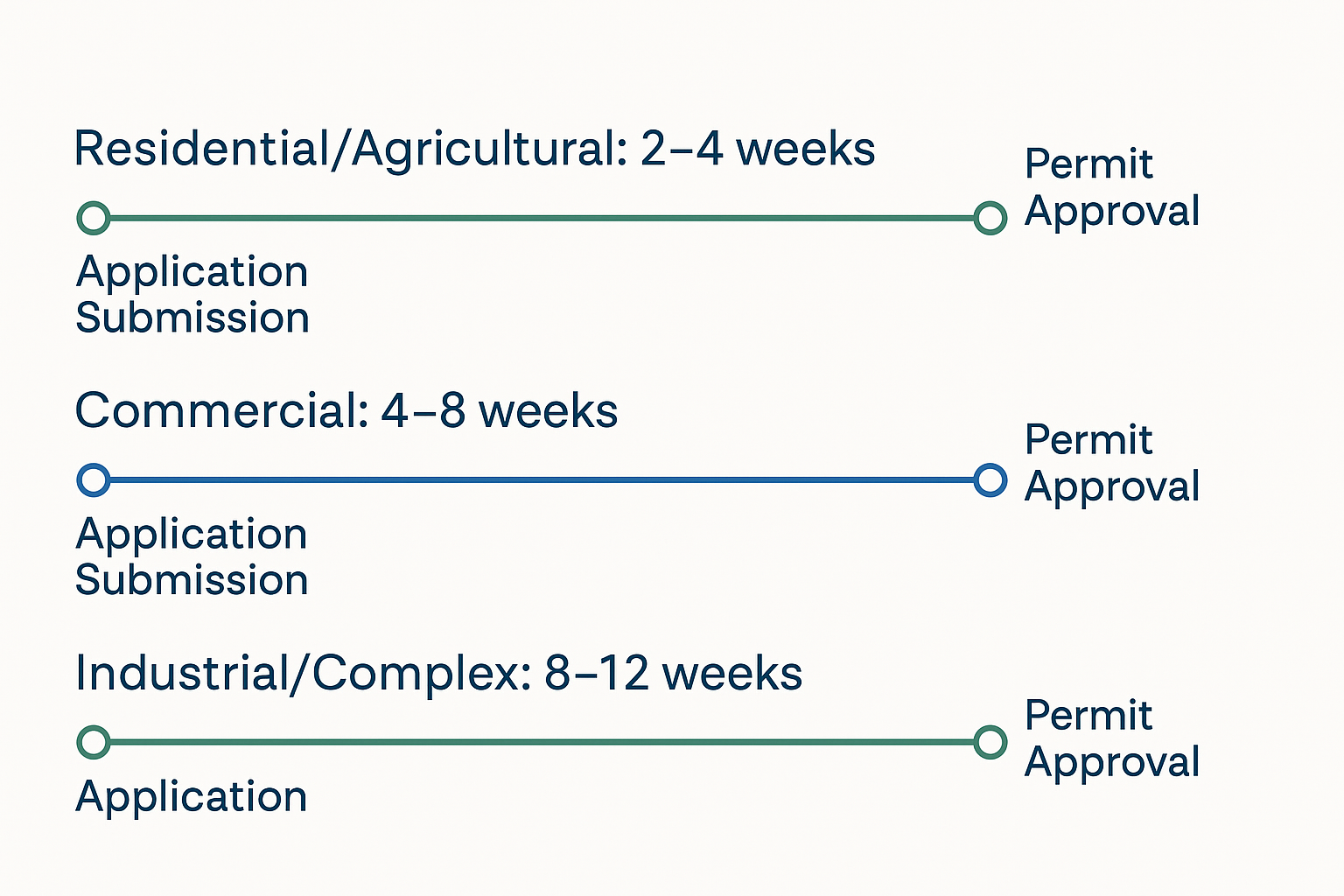
    How long do steel building permits take? In our experience, residential and agricultural applications typically require 2-4 weeks when submitted correctly. Commercial projects average 4-8 weeks, while complex industrial applications can extend 8-12 weeks or longer.

    These timelines assume complete, correct initial submissions. Incomplete applications reset the clock. Every correction request, every clarification needed, every missing document adds weeks to the process. This reality makes thorough preparation worth its weight in construction schedule preservation.

    Regional variations dramatically affect timeline expectations. California’s seismic requirements add engineering review time that doesn’t exist in Texas. Florida’s hurricane codes trigger wind load analyses that differ from those in Montana (wind vs. snow). Understanding your local jurisdiction’s priorities helps set realistic expectations and avoid deadline disappointment.

    The review process itself varies by building department size and staffing. Large municipalities often have dedicated commercial plan reviewers who understand steel construction. Small rural counties might contract reviews to third-party engineers, adding coordination delays that can’t be rushed regardless of project urgency.

    Winter submissions often face longer processing times as building departments handle increased workloads from contractors trying to secure permits before spring construction begins. Conversely, summer submissions might benefit from reduced application volumes and faster turnaround times.

    Steel building permits timeline comparing approval periods: residential 2-4 weeks, commercial 4-8 weeks, industrial 8-12 weeks

    Common Pitfalls That Derail Approvals

    Foundation plans that don’t match structural requirements represent the most frequent permit rejection we encounter. Steel buildings transfer loads differently than wood frame construction, creating concentrated forces at column bases that require specific foundation designs. Generic foundation details rarely accommodate these load requirements.

    Wind load calculations present another common stumbling block. Steel buildings often feature large clear spans and substantial wall heights that create unique wind load patterns. Standard residential wind load tables don’t address these configurations, requiring site-specific engineering calculations that many applicants overlook.

    Fire department access requirements catch commercial projects by surprise. Steel buildings housing business operations must accommodate emergency vehicle access, including adequate roadway widths, turning radii, and proximity to fire hydrants. These requirements affect site planning from day one but often get overlooked until fire department review.

    Zoning compliance represents a hidden complexity that surfaces during permit review. Agricultural zoning might allow steel buildings for farm use but prohibit commercial activities. Residential zoning could restrict building sizes or require setback modifications. Understanding zoning limitations before design prevents costly redesign during permit review.

    Electrical service capacity calculations frequently prove inadequate for steel building applications. Agricultural buildings might need grain drying equipment. Manufacturing facilities require substantial motor loads. Even simple storage buildings often house welding equipment or air compressors that exceed residential electrical assumptions.

    Navigating Local Building Department Relationships

    Building department relationships matter more than most people realize. Inspectors remember contractors who submit complete applications and work collaboratively to resolve issues. They also remember those who argue about code interpretations and submit sloppy paperwork repeatedly.

    Pre-application meetings offer invaluable opportunities to understand local expectations before investing in detailed plans. Many building departments encourage these meetings, especially for unusual projects like steel buildings that don’t fit standard residential patterns. A 30-minute conversation can prevent weeks of revision cycles.

    Research local requirements thoroughly before submission. Building department websites often contain helpful information about required documents, fee structures, and review processes. Some departments maintain lists of preferred engineers or approved foundation details that can streamline approval.

    Ask specific questions during initial contact. “What wind speed should we use for calculations?” “Do you have standard foundation details for steel buildings?” “Are there any local amendments to state building codes?” These questions demonstrate preparation and help inspectors provide useful guidance.

    Building inspector relationships extend beyond permit approval to construction inspections. Inspectors who trust your preparation and attention to detail often provide more flexibility during field inspections, potentially saving time and avoiding minor compliance issues that could delay project completion.

    Professional Help: When to Call in the Experts

    Certain red flags indicate that professional permit assistance will save time and money compared to DIY approaches. Complex building geometries, unusual site conditions, mixed-use occupancies, or aggressive construction schedules all suggest that experienced help pays dividends.

    Engineering support proves especially valuable when local building departments express unfamiliarity with steel construction. Engineers who regularly work with steel buildings understand code requirements and can communicate effectively with skeptical inspectors. Their credibility often expedites reviews that might otherwise bog down in extended back-and-forth exchanges.

    Cost comparisons between DIY delays and professional submission often favor professional help. A delayed project costs money in extended financing, weather exposure, and lost revenue from delayed occupancy. Professional assistance that reduces permit timeline by even one month typically justifies its cost through schedule acceleration alone.

    At MBMI, our in-house engineering team provides permit support services that leverage decades of nationwide steel building experience. We understand regional code variations, maintain current knowledge of local requirements, and provide stamped drawings that meet approval standards across all jurisdictions where we operate.

    Our engineers also coordinate permit submissions with manufacturing schedules, ensuring that permit approval aligns with component delivery timing. This coordination prevents situations where approved permits expire before construction can begin or where construction delays cause permit complications.

    Construction Phase Inspections: Staying on Track

    Permit approval represents just the beginning of the inspection process. Construction phase inspections ensure that actual building matches approved plans and meets code requirements throughout the construction process.

    Foundation inspections typically occur before concrete placement and verify that excavation dimensions, reinforcement placement, and anchor bolt positioning match approved plans. Steel building foundations often feature precise anchor bolt patterns that require careful verification before concrete placement.

    Structural inspections examine frame assembly, connection details, and bracing installation. Steel building inspectors look for specific details like bolt torque specifications, weld quality, and proper bracing installation that don’t apply to wood frame construction. Understanding these requirements helps contractors prepare for successful inspections.

    What inspections are required for steel buildings? Beyond foundation and structural inspections, most projects require electrical, mechanical, and final inspections. Commercial buildings often need additional fire safety inspections, accessibility compliance verification, and sometimes specialty inspections for unique building features.

    Final inspections verify that completed construction matches approved plans and all code requirements have been satisfied. Successful final inspection triggers certificate of occupancy issuance, allowing legal building occupancy for its intended use.

    Your Permit Success Strategy

    Start the permit process 8-12 weeks before you need approval. This timeline allows for potential delays, revision cycles, and coordination with construction schedules without creating project stress.

    Invest in complete documentation from the beginning. Engineering costs represent a small fraction of total project cost but prevent delays that cost far more than engineering fees. Complete applications process faster and create better relationships with building departments.

    Choose your engineering team carefully. Engineers familiar with steel construction and local building departments provide value that extends far beyond technical calculations. Their relationships and reputation often facilitate approvals that might otherwise face extended scrutiny.

    Maintain realistic timeline expectations while preparing for faster approvals. Some permits process quickly when everything aligns correctly, but planning for longer timelines prevents deadline pressure that can lead to rushed decisions or incomplete applications.

    Consider professional permit assistance for complex projects or tight timelines. The cost of professional help often proves minimal compared to delay costs, and the expertise can prevent problems that would otherwise cause major project disruptions.

    Ready to start your steel building project with confidence? MBMI’s engineering team provides comprehensive permit support services that leverage decades of steel building experience. We handle the technical details while you focus on your project goals.

    Our engineers understand local building department expectations, have extensive experience with inspectors nationwide, and provide documentation that meets approval requirements the first time. Don’t let permit delays derail your construction schedule.

    Contact MBMI today for expert guidance through the steel building permit process. Your project deserves professional support that ensures smooth approval and successful construction from start to finish.

  • Building Winter Preparation: 5 Signs You’re Not Ready (And How to Fix Them Fast)

    Building Winter Preparation: 5 Signs You’re Not Ready (And How to Fix Them Fast)

    Is your building ready for winter’s worst? With temperatures already dropping and forecasts calling for a harsh winter ahead, now’s the time to take an honest look at your facility. These five warning signs could mean the difference between a smooth winter and costly emergency repairs when it’s 20 below zero.

    Last winter caught many building owners off guard. Emergency repair calls spiked 300% during the polar vortex, and most could have been prevented with simple fall preparations. Don’t let your business become another winter casualty story.

    Here’s what to look for, and more importantly, what you can do about it before the snow flies.

    1. Drafts Around Doors and Windows

    The Warning Sign: You feel cold air rushing in around doors, windows, or overhead entrances, even when they’re closed. Your heating system runs constantly, and employees complain about cold spots near entrances.

    Why It’s Dangerous: Those seemingly minor drafts can increase heating costs by 25-40% and create serious comfort problems. Worse, they’re entry points for moisture that can freeze inside walls, causing structural damage and creating ice hazards around entrances.

    Quick DIY Assessment:

    • Hold a tissue near door and window frames on a windy day
    • Check for daylight visible around closed doors
    • Look for worn, cracked, or missing weatherstripping
    • Test door and window operation – sticking can indicate warping

    Professional Solutions Needed:

    Immediate fixes (This weekend):

    • Replace worn weatherstripping ($50-200 per door)
    • Adjust door thresholds and install door sweeps
    • Caulk gaps around window frames

    Professional upgrades (Before first freeze):

    • Install commercial-grade gasket systems ($300-800 per opening)
    • Replace single-pane windows with insulated units
    • Consider overhead door upgrades with thermal breaks

    Cost Reality Check: Investing $500-1,500 in door and window sealing typically saves $200-400 monthly in heating costs. The math works, especially when you avoid the emergency service calls.

    2. Ice Dams from Last Winter

    The Warning Sign: You had icicles, ice buildup along roof edges, or water damage inside the building during last winter’s thaw cycles. Even small ice dams are red flags for bigger problems.

    Why It’s Critical: Ice dams form when warm air heats your roof deck unevenly, melting snow that refreezes at cold edges. This creates water backup that finds its way inside, causing ceiling damage, equipment problems, and potential roof collapse from ice weight.

    What Causes Ice Dams:

    • Inadequate insulation allowing heat loss through the roof
    • Poor ventilation creating temperature imbalances
    • Air leaks that warm the roof deck
    • Clogged gutters that trap melting water

    Professional Solutions:

    Urgent (Next 30 days):

    • Professional insulation inspection and upgrades
    • Ventilation system evaluation and improvements
    • Gutter cleaning and heat cable installation where needed

    The Real Cost: Ice dam removal during winter runs $500-1,500 per incident. Interior water damage can easily hit $5,000-25,000. Proper insulation and ventilation upgrades ($2,000-8,000) prevent these problems entirely.

    MBMI Insight: Our cold weather steel building designs eliminate ice dam risk through proper roof pitch, continuous insulation, and integrated vapor barriers. If you’re experiencing recurring ice dam problems, it might be time to consider a building upgrade.

    3. Condensation or Moisture Stains

    The Warning Sign: You see water droplets forming on walls, ceilings, or windows during cold weather. Brown stains, musty odors, or visible mold growth anywhere inside the building. Metal surfaces showing rust or corrosion.

    Why It Matters: Condensation happens when warm, humid interior air hits cold surfaces – a sign that your building envelope isn’t controlling moisture properly. This leads to mold growth, equipment damage, and structural deterioration that gets exponentially worse in winter.

    Where to Look:

    • Around windows and doors during temperature swings
    • On metal surfaces like beams, panels, or equipment
    • In corners where walls meet ceilings
    • Near ventilation units or areas with high humidity

    Quick Assessment Tips:

    • Use a flashlight to check hidden corners and behind equipment
    • Look for discoloration, staining, or peeling paint
    • Check for musty smells, especially in storage areas
    • Monitor problem areas during the next cold snap

    Professional Solutions Required:

    Immediate (Before winter):

    • Vapor barrier inspection and repair
    • Ventilation system balancing
    • Air sealing of penetrations and transitions
    • Dehumidification if needed for high-humidity operations

    Moisture problems don’t fix themselves… they multiply. Professional moisture control upgrades ($1,500-5,000) prevent equipment damage, health issues, and structural problems that can cost tens of thousands to remediate.

    4. Skyrocketing Heating Bills

    The Warning Sign: Your heating costs increased significantly last winter, or they’re already climbing this fall despite similar weather conditions. Your heating system runs constantly but the building never feels truly warm.

    Why This Signals Trouble: Rising heating costs usually indicate your building envelope is failing, as heat is escaping through poor insulation, air leaks, or thermal bridging. Your heating system is working overtime to compensate for heat loss, driving up costs while failing to maintain comfort.

    Energy Audit Basics:

    • Compare heating costs from the last 2-3 winters
    • Check if bills spike during cold snaps vs. steady cold periods
    • Note if some areas are consistently colder than others
    • Monitor how long heating systems run during mild vs. extreme weather
    • Use the EPA’s Energy Star Portfolio Manager to benchmark your building’s energy performance against similar facilities

    Common Culprits:

    • Inadequate insulation: R-13 when you need R-19+ for your climate
    • Thermal bridging: Heat conducting through metal framing
    • Air leaks: Unsealed penetrations, gaps, poor weatherstripping
    • System inefficiency: Aging equipment or poor maintenance

    Professional Energy Solutions:

    Assessment phase:

    • Professional energy audit ($300-800)
    • Thermal imaging to identify heat loss areas
    • System efficiency evaluation

    Upgrade options:

    • Insulation improvements: $2-6 per square foot
    • Air sealing and weatherization: $1,500-4,000
    • System upgrades or maintenance: $2,000-15,000

    ROI Reality: Most building envelope improvements pay for themselves in 3-5 years through energy savings, with immediate comfort improvements and reduced maintenance needs.

    5. Foundation Cracks or Wall Movement

    The Warning Sign: New cracks in foundation walls, floor slabs, or building walls that appeared last winter or spring. Doors that suddenly don’t close properly. Windows that stick or have gaps that weren’t there before.

    Why It’s Serious: These signs often indicate frost heave – soil moisture freezing and expanding, creating tremendous upward pressure on foundations. Left unchecked, frost heave can cause major structural damage requiring expensive repairs.

    What to Look For:

    • Hairline cracks that grow during freeze-thaw cycles
    • Horizontal cracks in foundation walls
    • Floor cracks near exterior walls
    • Doors or windows that bind or won’t close properly
    • New gaps around building penetrations

    Immediate Assessment:

    • Photograph all cracks with a ruler for scale
    • Mark crack ends with pencil to monitor growth
    • Check building level using a smartphone app
    • Note if problems worsen during cold weather

    Professional Foundation Protection:

    Critical interventions:

    • Foundation insulation to prevent frost penetration
    • Drainage improvements to control soil moisture
    • Structural assessment if damage is already visible
    • Soil stabilization in severe cases

    Don’t wait on foundation issues. Minor cracks can become major structural problems over a single harsh winter. Professional foundation winterization ($2,000-8,000) prevents damage that can cost $25,000-100,000+ to repair.

    Your Winter Readiness Action Plan

    This Weekend:

    • Walk your building perimeter looking for these five warning signs
    • Test all doors and windows for drafts
    • Check gutters and downspouts for clogs or damage
    • Take photos of any concerning areas

    Next 30 Days:

    • Schedule professional inspections for any problem areas identified
    • Get quotes for weatherstripping, insulation, or ventilation improvements
    • Clean gutters and install heat cables if ice dam risk exists
    • Address any urgent safety issues before severe weather hits

    Before First Hard Freeze:

    • Complete all weather sealing and insulation upgrades
    • Ensure heating system is professionally serviced
    • Stock winter maintenance supplies (ice melt, snow removal tools)
    • Establish relationships with emergency contractors before you need them

    Don’t Wait Until Winter Wins

    These five warning signs don’t fix themselves; they get worse every winter until something fails catastrophically. The building owners who weather winter storms successfully aren’t the lucky ones; they’re the prepared ones.

    At MBMI Metal Buildings, we’ve seen too many businesses face costly winter emergencies that proper preparation could have prevented. Our engineering team has designed buildings across some of North America’s harshest climates, from Alaska to northern Maine, and we understand what it takes to create truly winter-ready facilities.

    Free Winter Readiness Consultation Available

    Don’t gamble with winter weather. Our experienced team can assess your building’s winter readiness and provide practical solutions that fit your budget and timeline. Whether you need simple weatherization or are considering a new building designed for extreme weather, we’re here to help.

    Contact MBMI Metal Buildings today for your free winter readiness consultation. We’ll help you identify problem areas, prioritize solutions, and create a plan that keeps your operations running smoothly all winter long.

    Remember: Emergency repairs in January cost 3-5 times more than preventive work in October. The choice is yours, but winter won’t wait.

  • Cold Weather Steel Building Design: What You Need to Know Before Winter Hits

    Cold Weather Steel Building Design: What You Need to Know Before Winter Hits

    Cold weather steel building design requires three critical considerations: engineered snow loads of 40-60 PSF, insulation packages with R-19+ values, and completely sealed building envelopes to prevent moisture infiltration. When these elements work together, steel buildings outperform traditional construction in harsh winter climates.

    Last February, Jake, who owns a mechanical repair shop in Duluth, Minnesota, called us after the polar vortex pushed temperatures to -28°F for over a week. Ice formed inside his building walls, condensation dripped onto expensive equipment, and heating bills tripled. “I never want to go through another winter like that,” he told us.

    Jake’s experience isn’t uncommon. Many building owners discover too late that standard construction fails when winter brings its full force. Steel buildings offer superior performance in freezing temperatures, heavy snow, and high winds, but only when designed with cold weather steel building design principles that address unique environmental stresses: snow loads exceeding 60 PSF, temperature swings of 100+ degrees, and heating demands that can make or break operational budgets.

    What Is Cold Weather Steel Building Design?

    Cold weather steel building design is an engineered approach specifically tailored for climates experiencing freezing temperatures, heavy snow loads exceeding 20 PSF, ice accumulation, and high wind conditions. This methodology differs significantly from standard building practices used in temperate regions.

    Key components include ASCE 7-16 compliant snow load calculations, enhanced wind load ratings for winter storms, thermal bridging prevention systems, vapor barrier integration, and foundation frost protection. These elements create buildings that survive harsh winters and perform efficiently year after year.

    What makes a steel building winter-ready? Engineering that accounts for forces most buildings never encounter. While standard commercial buildings might handle 20 PSF snow loads, cold climate steel buildings routinely manage 50-90 PSF loads. The structural frame must accommodate not just snow weight, but dynamic forces of wind-blown snow, uneven accumulation, and rapid temperature changes creating expansion and contraction cycles.

    According to ASCE 7-16 standards, cold climate buildings must address ground snow loads, roof snow loads, rain-on-snow scenarios, and sliding snow from adjacent structures. Steel buildings excel because their engineered frame systems distribute loads evenly across the entire structure, while clear span designs eliminate interior supports that could fail under extreme loads.

    Understanding Snow Loads and Roof Design

    Snow load requirements vary dramatically across regions. Minnesota typically requires 50+ PSF ground snow loads, mountainous Colorado regions demand 40+ PSF, and Maine’s coastal areas often exceed 60 PSF. These represent real-world forces that can collapse inadequately designed structures.

    Steel buildings provide advantages for high snow loads through clear span construction, engineered truss systems, and optimized roof pitch design. Minimum roof pitch for effective snow shedding is 1:12, though many cold climate applications benefit from steeper 2:12 or 3:12 pitches that shed snow more effectively.

    How does roof slope affect snow shedding and ice dams? Roof slope creates gravitational forces helping snow slide off before dangerous accumulations occur. However, slope alone isn’t sufficient; proper insulation and vapor barriers prevent temperature differentials that create ice dams. When warm interior air heats the roof deck, snow melts and refreezes at cold eaves, creating ice barriers trapping subsequent melt water.

    The ASCE 7 Hazard Tool provides site-specific snow load calculations based on geographic coordinates, elevation, and climate data, helping engineers determine exact requirements for your location.

    What snow load should my steel building handle? Most cold climate steel buildings should be designed for at least 40 PSF, with many requiring 60+ PSF capacity. Agricultural buildings storing heavy equipment might need additional capacity, while heated buildings may qualify for reduced loads due to melting effects.

    Choosing the Right Insulation Package

    Insulation selection requires careful analysis of R-values, thermal bridging, and vapor control. Minimum R-19 insulation serves moderate cold climates, while severe regions like Minnesota and Montana benefit from R-30+ systems. Alaska and extreme northern climates often require R-38+ values.

    Three primary approaches serve cold climate steel buildings: traditional fiberglass batts with vapor barriers, rigid foam board systems, and integrated insulated metal panels (IMPs). Each offers distinct advantages depending on building use, budget, and performance requirements.

    What R-value do I need for steel building insulation in cold climates? Most cold climates require minimum R-19 wall insulation, but R-25 to R-30 provides better comfort and efficiency. Roof insulation should typically be R-30 minimum, with R-38+ for extreme climates.

    Vapor barrier placement is critical for cold climate success. In cold climates, vapor barriers belong on the warm (interior) side of insulation to prevent moisture from entering the system where it condenses on cold surfaces. Incorrect placement can trap moisture, leading to insulation failure, mold growth, and structural damage. Investing in higher R-values typically pays for itself within 3-5 years through reduced heating costs.

    Foundation Protection and Moisture Control

    Foundation design must address frost heave, ground moisture migration, and thermal bridging through concrete floors. Foundation footings must extend below the local frost line: 36 inches in moderate climates to 60+ inches in northern regions. Perimeter insulation extending 4+ feet horizontally helps maintain stable soil temperatures.

    How do you keep a steel building dry and draft-free in winter? Beyond proper vapor barriers in the insulation system, create a continuous air barrier preventing moisture-laden air from reaching cold surfaces. This requires attention to all penetrations, connections, and transitions in the building envelope.

    Critical sealing locations include roof-to-wall transitions, door and window openings, service penetrations, and foundation connections. Weather-sealed doors designed for cold climates feature enhanced gasket systems, thermal breaks, and adjustable thresholds maintaining seals during temperature changes. Our high-gloss panel systems provide superior moisture resistance with advanced coating systems that maintain integrity under extreme temperature cycling.

    Steel Buildings vs. Wood Frame in Cold Weather

    Cold climate performance comparison reveals significant advantages for properly designed steel systems. Thermal bridging solutions differ significantly between systems; steel construction can virtually eliminate bridging through insulated metal panels or exterior continuous insulation.

    Moisture resistance strongly favors steel construction. Wood frame buildings face constant threats from moisture infiltration, condensation, and freeze-thaw cycling leading to rot, mold, and degradation. Steel buildings don’t rot or provide food sources for mold.

    Long-term cost analysis often favors steel despite higher initial costs. Energy efficiency advantages, reduced maintenance, and superior durability provide better life-cycle value. Steel buildings often qualify for lower insurance premiums due to superior fire and weather resistance.

    Mechanical Systems and Timeline Planning

    HVAC systems require careful sizing for extreme temperatures and high-bay spaces. Energy Recovery Ventilators work particularly well in cold climates, recovering 70-80% of heat from exhaust air while providing necessary fresh air, significantly reducing heating costs.

    When should you start your project? Most successful projects begin planning in early spring for completion before the first hard freeze. This allows proper permitting, engineering, manufacturing, and construction while avoiding weather delays.

    Permitting often takes longer in cold climates due to enhanced snow load, energy efficiency, and frost protection requirements. Allow 6-8 weeks minimum for permit approval.

    Real-World Examples

    Equipment Storage – Duluth, Minnesota

    Jake’s 80×120 facility demonstrates successful design in challenging climates with 90 PSF snow loads, -40°F temperatures, and 70+ mph winds. Design solutions included R-30 insulated metal panels eliminating thermal bridging, 2:12 roof pitch for snow shedding, and radiant heating integrated into concrete slabs.

    Farm Building – Billings, Montana

    This 100×200 agricultural facility handles 60 PSF snow loads and 80+ mph winds through clear span design eliminating interior supports, enhanced wind load engineering, and carefully detailed vapor barriers for rapid humidity changes during equipment washing.

    Winter Maintenance and MBMI’s Approach

    Proper maintenance ensures reliable performance while preventing costly problems. Pre-winter preparation includes comprehensive weather sealing inspection, gutter cleaning, door operation verification, and heating system maintenance.

    At MBMI Metal Buildings, our approach combines decades of engineering expertise with real-world experience across challenging climates. Our in-house engineering team designs successful projects from Alaska to Maine, understanding unique requirements each climate presents.

    Custom snow load calculations use site-specific data including elevation, terrain exposure, and climate history to determine precise requirements. Weather-sealed components feature enhanced gasket systems and thermal breaks maintaining integrity under extreme temperature cycling. Our hurricane-rated materials provide superior durability that translates directly to cold weather performance benefits.

    Frequently Asked Questions

    Q: What’s the difference between cold climate and standard steel building design?

    A: Cold climate design requires engineered snow loads (40-60+ PSF vs. 20 PSF standard), enhanced insulation (R-19+ vs. R-13), sealed envelopes preventing moisture infiltration, and foundation frost protection. These add 10-15% to initial cost but provide 20-30% energy savings.

    Q: Can steel buildings handle extreme cold temperatures?

    A: Yes, properly designed steel buildings perform excellently in extreme cold. Steel strength actually increases in cold temperatures, and modern thermal bridging solutions prevent condensation issues. Many buildings operate successfully where temperatures reach -40°F or lower.

    Q: What R-value insulation do I need for my climate zone?

    A: Minimum R-19 for moderate cold climates, R-25+ for severe regions like Minnesota and Montana, R-30+ for extreme climates like Alaska. Buildings with high heating costs often benefit from R-30+ systems regardless of minimum requirements.

    Q: How do I prevent ice dams on my steel building?

    A: Proper roof pitch (minimum 1:12), adequate insulation with continuous vapor barriers, sealed building envelope, and continuous ventilation prevent temperature differentials causing ice dams. The key is preventing warm interior air from heating the roof deck.

    Q: What maintenance does a cold climate steel building require?

    A: Minimal maintenance including annual seal and gasket inspection, periodic gutter cleaning, snow removal when accumulation exceeds 75% of design capacity, and standard heating system maintenance.

    Don’t Let Winter Catch You Unprepared

    Proper cold weather steel building design prevents structural failure from snow overload, energy waste from inadequate insulation, moisture damage from condensation, and operational disruptions from building envelope failure. The investment in proper design pays dividends through reliable performance, lower operating costs, and peace of mind during severe weather.

    Early consultation provides significant advantages through proper engineering analysis, optimized design solutions, coordination with local codes, and sufficient time for manufacturing and construction before winter weather arrives.

    Start planning your cold climate steel building project now to ensure completion before harsh weather arrives. Our engineering team provides site-specific analysis, custom design solutions, and project timeline planning accounting for your local climate and construction requirements. Learn more about our commercial metal buildings designed for extreme weather conditions.

    Contact MBMI Metal Buildings today for expert guidance on your cold climate steel building project. Don’t let another harsh winter catch you unprepared. Invest in professional design that ensures reliable performance for decades to come.

  • Steel Animal Shelter Design That Works in the Real World

    Steel Animal Shelter Design That Works in the Real World

    After three decades in the metal building industry, I’ve reviewed more facility plans than I can count. But few projects are as personally rewarding (or as complex) as animal shelters, clinics, and boarding facilities. These aren’t just structures. They’re places where scared animals find safety, injured pets receive treatment, and families trust someone else to care for their companions.

    What separates a functional shelter from one that truly works comes down to smart steel animal shelter design. These environments deal with stress-prone animals and high-volume care. Every layout choice has a ripple effect. One bad decision can turn daily operations into a struggle, increase stress levels for the animals, and drive up maintenance costs fast.

    That’s why I advocate for prefabricated steel buildings when it comes to animal care. I’ve partnered with veterinarians, shelter managers, and boarding facility owners who need durable, easy-to-clean buildings that actually make the job easier.

    Why Steel Works So Well for Animal Facilities

    I learned early in my career that traditional materials often fall short in these environments. I’ve seen wood-framed shelters break down within years. Scratches, odor buildup, mold from trapped moisture, you name it. These problems are common in structures not built to handle animals.

    Steel holds up in ways other materials don’t. I’ve walked into fifteen-year-old facilities that still look brand new. Dogs can’t destroy the walls. Cats can’t claw through them. Spills and accidents don’t lead to lasting damage or hidden bacteria.

    What truly won me over is how steel helps with hygiene. Disease prevention is a major concern in any animal care setting. Steel’s smooth, non-porous surfaces allow full sanitization. I’ve watched entire kennel bays get pressure-washed without damaging anything. Try doing that in a wood building without issues.

    There’s also the flexibility. With steel framing, I can work with clients to create quiet recovery spaces beside busy boarding zones. We can install specialty HVAC systems, floor drains, or even radiant floor heating where needed.

    And then there’s safety. Fire resistance and pest protection are critical. I’ve seen firsthand what happens when a rodent infestation or unexpected fire takes down a facility. Steel gives you peace of mind in ways most materials can’t.

    Creating Zones That Make Sense

    Too many animal care buildings treat the interior as one big open space. That almost never works. Animals don’t experience the world like humans do. They are highly sensitive to sound, smell, and visual cues. Good design starts by separating functions and reducing stress.

    The intake area is where everything begins. New arrivals might be injured or contagious. That space needs vehicle access, strong ventilation, and cleanable finishes. I always advise placing it far from long-term housing areas to limit disruption.

    Treatment zones need something different. You want strong lighting, solid climate control, and acoustic separation. If you’re designing isolation areas, ventilation should be entirely separate. Otherwise, airborne diseases can spread across your building without warning.

    Then there’s boarding. One-size-fits-all doesn’t work here. You have to consider species, temperament, and individual needs. I’ve worked on designs where anxious or reactive animals had private housing wings, while more social ones had space for play and interaction.

    All of this ties into traffic flow. Staff should be able to move between zones efficiently. Animals should transition from intake to treatment to boarding without being exposed to unnecessary stress. A layout that respects these needs makes the entire facility easier to manage.

    Steel Features That Improve Daily Life

    One of the biggest advantages of steel buildings is open interior space. Without load-bearing interior walls, the floor plan is flexible. I’ve had clients completely rework their kennel setups just by moving modular dividers. You can’t do that in a wood-framed structure without major changes.

    Insulated steel panels are another must-have. Temperature consistency isn’t just about comfort. It affects animal health and energy costs. A properly insulated building stays cooler in summer and warmer in winter without running your HVAC system into the ground.

    Doors deserve special attention. I recommend double-door vestibules in high-traffic zones to prevent escapes. You also need to think about overhead doors for large animals or equipment. Make sure they’re insulated and sealed. And always include enough exits in case of emergency.

    Drainage is often overlooked, and it shouldn’t be. Every animal housing or treatment area should slope toward well-placed drains. Skip this step, and you’ll spend years dealing with water damage, odors, and bacteria buildup.

    Even kennels have subtleties. Dogs benefit from privacy panels to reduce reactive behavior. But staff still need visibility. Cats need shelves and hiding spots, but those spaces must remain accessible for cleaning. It’s a careful balance, and steel construction makes it easier to get it right.

    Planning for the Future

    Most animal facilities end up needing more space than they originally planned. When care is done well, word spreads, and demand increases. That’s why I always encourage clients to think about long-term expansion from the start.

    With steel, expanding is relatively easy. We can pre-engineer attachment points for future wings or additional bays. More importantly, we can plan plumbing, HVAC, and electrical with future growth in mind.

    Seasonal changes also matter. Boarding fills up during holidays. Shelters get overwhelmed in spring and summer. If your building can flex to accommodate those surges, you’ll be able to serve more animals without compromising care.

    I’ve also worked on buildings with surge capacity for emergencies. Whether it’s natural disasters, hoarding situations, or shelter closures, you need space that can be reconfigured quickly. Steel makes it possible to convert storage rooms or event areas into overflow kennels within days.

    Examples from the Field

    No two projects are alike. I’ve helped design luxury boarding facilities with indoor playrooms and dog spas. I’ve worked with municipal shelters that needed maximum throughput and minimal maintenance. Steel allowed every one of them to meet their goals.

    One project stands out: a dual-purpose facility with a vet clinic on one side and a boarding facility on the other. The clinic had sterile surgery areas, recovery bays, and climate-controlled labs. The boarding side had large kennels, grooming areas, and outdoor access. With steel, we created distinct zones with different conditions inside one seamless building.

    Grooming areas require water-resistant finishes, great ventilation, and surfaces that won’t get slippery. Isolation rooms need negative-pressure airflow systems and separate access points. And play yards need fencing that’s integrated into the building without leaving gaps or weak points.

    That’s where steel makes the biggest impact. You can design secure indoor-outdoor spaces, add roof overhangs to protect animals from sun or rain, and still keep everything clean and code-compliant.

    The MBMI Approach

    At MBMI, we treat steel animal shelter design as both a technical challenge and a mission of care. Our engineering team ensures every design complies with local codes and animal welfare standards, but we go beyond that.

    Animals can’t speak up for themselves. So when we design ventilation, we’re not just pushing air around. We’re preventing respiratory disease. When we calculate load-bearing strength, we’re making sure your strongest dog can’t push through a kennel gate. When we finalize your drainage plans, we’re helping you maintain a healthy, odor-free space for years to come.

    Great shelter design helps animals thrive and helps people do their jobs better. The result is better outcomes for everyone: animals, happier staff, and more efficient operations.

    We also make sure each building is designed to be easy to maintain, affordable to operate, and adaptable to the future. Whether you’re dealing with strict budgets or changing needs, we aim to deliver the best value possible.

    Ready to Talk About Your Next Facility?

    Designing a new animal facility or upgrading an old one takes time, thought, and a real understanding of what animals and caregivers need. If you’re ready to start that process, let’s talk about how steel animal shelter design can make your next project a success.

    Whether you’re building a small clinic, a large shelter, or something in between, MBMI can help you create a building that supports your mission today and grows with you tomorrow.

  • How Steel Building Layout Impacts Workflow and Productivity

    How Steel Building Layout Impacts Workflow and Productivity

    After spending years helping businesses design and build steel facilities, I’ve learned that the most successful projects aren’t just about strong materials or fast construction. They’re about smart planning. The way you arrange your steel building layout can make or break your daily operations, affecting everything from employee productivity to long-term profitability.

    I’ve seen warehouse managers cut their picking times in half with better aisle placement. I’ve watched manufacturers boost output by 30 percent just by repositioning their equipment zones. And unfortunately, I’ve also seen businesses struggle with costly retrofits because they didn’t think through their layout during the initial design phase.

    At our steel building company, we’ve made it our mission to help clients get their layout right from day one. Whether you’re planning a distribution center, manufacturing facility, or service operation, the decisions you make about column placement, door positioning, and workflow zones will impact your business for decades. Let me share what I’ve learned about creating steel building layouts that actually work.


    Why Layout Matters in a Steel Building

    When I walk through a well-designed steel building, I can immediately see the difference. Workers move efficiently between stations. Equipment operates without interference. Materials flow logically from receiving to shipping. Everything feels intuitive and organized.

    Your steel building layout determines how people and materials move through your space, where natural light reaches, and how comfortable your environment feels. These factors directly impact your staffing requirements, equipment placement, and even your customer experience if your facility welcomes the public.

    I’ve seen too many operations where layout problems caused daily headaches. Workers had to take long detours to get from point A to point B. Forklifts couldn’t navigate key areas without tight turns. Bottlenecks formed during loading hours. What should have been a productivity asset became an operational burden.

    Steel buildings are incredibly flexible by design. But that flexibility only benefits you if you plan with intention. Every decision, from your bay spacing to your eave height, needs to support how your business actually runs.


    Clear Span vs. Multi-Span Design: How Structure Shapes Function

    One of the first choices I guide clients through is whether to use clear span or multi-span framing. It might sound technical, but it has a huge impact on your steel building layout.

    Clear span buildings use wide, column-free spaces. This gives you maximum flexibility to arrange your operations however you like. If you’re running a warehouse or large-scale manufacturing plant, this is usually the way to go. You’re free to set up wide aisles, equipment clusters, or modular workstations without structural limitations.

    On the other hand, multi-span buildings use interior columns to support the roof. These are useful when you’re dividing your facility into smaller zones or need extra support for heavy-duty machinery. In some cases, those interior columns can actually serve your needs by offering attachment points for cranes or power drops.

    I’ve helped design both types. The key is knowing what you need now… and what you’ll need five years from now. Some of our happiest clients are the ones who invested in layout flexibility early on.


    Bay Spacing and Column Placement: Small Choices, Big Impact

    Bay spacing refers to the distance between columns or frames. You might not think about it much, but it directly affects your racking systems, forklift movement, and equipment layout.

    In a warehouse, I often recommend 25 to 30 feet between bays to accommodate standard pallet racking and efficient aisles. For truck loading zones, 40-foot spacing usually offers the best balance between structural integrity and accessibility.

    One client of ours runs a dealership for agricultural equipment. We went with 50-foot bay spacing to make sure large tractors and combines could move easily between display zones. It turned out to be a great call. They use that space not just for customer walk-throughs, but also for hosting events and demos.

    Don’t underestimate how much smoother daily tasks become with proper bay spacing. It may feel like a structural detail, but it’s one of the strongest levers you have for operational efficiency.


    Framed Openings: Where and How You Access Your Space

    Doors and windows do more than just let people in and out. They shape how your workflow moves. I always start layout conversations by asking how traffic flows (both human and mechanical).

    Where do trucks arrive? Where do materials go next? Where do your employees need to be during peak hours?

    Your steel building layout should make it easy for goods to move from receiving to storage to shipping, with minimal backtracking. It should also support employee comfort and safety by placing entryways and emergency exits where they’re actually useful.

    I’ve seen businesses transform their operations by simply repositioning a loading door. One logistics client cut their average unload time by 40 percent because drivers no longer had to loop around the building.

    Get this right, and you’ll save time every single day.


    Eave Height and Interior Clearance: Think Vertically

    Eave height determines your usable vertical space. This is where you plan for growth.

    I often recommend going higher than your immediate needs require. A few extra feet can make a big difference later on if you want to install mezzanines, taller shelving, or large-scale HVAC systems. It also gives you more flexibility when planning lighting, ventilation, or fire suppression systems.

    Higher ceilings can also improve air circulation and overall comfort. I’ve had clients tell me their teams feel more productive and less fatigued in buildings with extra headroom.

    If your budget allows it, this is one area where I suggest not cutting corners.


    Blending Office and Operations Without Sacrificing Either

    A lot of commercial steel buildings include both work areas and office zones. Integrating the two takes careful thought.

    You want your office space to be accessible and professional. But you also need to protect it from the noise, dust, and temperature swings of your operational floor.

    I usually place offices near the main entrance, with direct visibility over the production area when possible. Soundproof partitions, separate HVAC systems, and smart lighting choices help maintain a clean separation between quiet and active zones.

    You can even incorporate raised office platforms for a better view of operations, which is great for supervisors or customer-facing roles. Just make sure the integration supports, not disrupts, your primary workflow.


    Common Layout Mistakes to Avoid

    Here are a few pitfalls I’ve seen too often:

    • Too little space for future growth: Companies often design for current needs without leaving room to scale. Plan with flexibility in mind.
    • Poorly placed doors or columns: These cause unnecessary walking or forklift travel, which adds up over time.
    • Insufficient egress or lighting: You don’t want to retrofit these later. It’s costly and disruptive.
    • Ignoring mechanical needs: Leave space for ducting, maintenance paths, and fire suppression access.

    Mistakes in your layout don’t just cost money; they slow down your operation every single day. And they’re much harder to fix once the building is up.


    How We Help You Get the Layout Right

    At MBMI, we don’t just give you a steel building. We help you design a layout that supports your goals, your workflow, and your people.

    Our engineering team has worked with hundreds of businesses across industries. We understand the structural, mechanical, and operational needs that drive success. When you work with us, you get more than a drawing. You get insight into what works in the real world.

    We ask the right questions upfront, help you think ahead, and customize every building to fit your process because a smart steel building layout doesn’t just support your work. It improves it.


    Conclusion: Plan for Productivity

    The layout of your steel building will shape your daily operations for years. Make decisions that save time, boost output, and adapt with your business.

    By thinking strategically about your layout and working with an experienced partner, you can avoid common pitfalls and create a facility that actually helps your business grow.

    Need help with your steel building layout? Reach out to MBMI for a free consultation. We’ll help you plan smart from day one.

  • Commercial Steel Buildings vs Tilt-Up Construction: Pros, Cons, and Use Cases

    Commercial Steel Buildings vs Tilt-Up Construction: Pros, Cons, and Use Cases

    When planning a commercial structure, one of the first critical decisions developers face is the construction method. The two most common systems in large-scale commercial construction are commercial steel buildings vs. tilt-up construction.

    Both methods are proven, but each has distinct strengths, challenges, and suitability depending on project requirements. Your choice affects not only upfront cost and construction speed but also long-term performance, flexibility, and total cost of ownership.


    What is Tilt-Up Construction?

    Tilt-up construction involves casting large concrete wall panels horizontally on the building site itself. Once cured, these panels are “tilted” upright using cranes and braced into position. The remaining structure (roof framing, interior framing, doors, and finishes) is then completed around these walls.

    This method is often favored for projects that require large, simple footprints with smooth concrete exterior walls, such as warehouses, distribution centers, and large retail stores.

    However, tilt-up relies heavily on weather conditions, site access, and precise sequencing. The panels must cure properly on-site, which can extend timelines during periods of rain, cold, or humidity. Additionally, tilt-up requires large work areas for laying out and casting panels and heavy equipment for lifting them into place.


    What is a Pre-Engineered Commercial Steel Building?

    Pre-engineered commercial steel buildings (PEMBs) are systems where the building’s frame, roof, and wall panels are fabricated in a factory before being shipped to the jobsite. These buildings arrive ready for efficient assembly by a trained erection crew, reducing on-site labor time and minimizing weather-related delays.

    PEMBs are incredibly versatile and are commonly used for warehouses, manufacturing facilities, service centers, agricultural structures, and flexible multi-use spaces. At MBMI, we design pre-engineered buildings that are highly customizable, allowing owners to tailor dimensions, framed openings, insulation packages, and finishes to their specific operational needs.


    Pros and Cons of Tilt-Up Construction

    Tilt-up construction has several clear advantages. The solid concrete walls provide inherent fire resistance and durability and are capable of supporting large clear spans for open interior spaces. The smooth concrete finish may appeal to developers seeking a minimalist, modern exterior aesthetic.

    However, there are drawbacks. The concrete panels require substantial, reinforced foundations to support their weight, which adds to cost and complexity. Tilt-up is also more labor-intensive on-site, with many steps dependent on perfect weather conditions. Any rain, excessive heat, or humidity can delay the curing process or complicate pours, pushing timelines out.

    Another limitation is flexibility: once complete, a tilt-up structure is difficult and expensive to modify or expand. Future renovations involving additional doors, windows, or changes to wall configurations often require specialized demolition and patchwork that detracts from the clean original design.


    Pros and Cons of Commercial Steel Buildings

    Pre-engineered commercial steel buildings deliver a compelling set of benefits for commercial owners and developers. One of the most important advantages is speed of construction. Since components are fabricated off-site in controlled conditions, erection can begin immediately upon delivery. Construction timelines are predictable and shorter, which reduces total labor costs.

    Steel buildings also require lighter foundations due to the material’s superior strength-to-weight ratio. This reduces excavation and concrete requirements, making steel a preferred option for sites with challenging soil conditions or where foundation costs could escalate.

    Design flexibility is another hallmark of steel buildings. Framed openings can be located almost anywhere in the structure, interior layouts can be reconfigured easily, and expansions are relatively simple. Many owners plan for future additions at the outset.

    That said, steel buildings do have some limitations. The exterior finish may require architectural cladding if a premium aesthetic is desired, adding to cost. And like all metal buildings, they must be properly sealed and maintained to prevent corrosion over the long term.

    Overall, when comparing commercial steel buildings vs tilt-up construction, steel buildings typically offer faster delivery, lower construction costs, and greater adaptability for changing business needs.


    Factors to Consider When Choosing

    Choosing between these two systems requires careful thought about your project’s specific needs.

    If your timeline is compressed, a steel building’s rapid fabrication and efficient assembly will help meet your schedule. If labor costs or weather variability are concerns, steel’s off-site prefabrication reduces exposure to those risks.

    If aesthetics demand smooth concrete finishes or local fire codes require certain wall assemblies, tilt-up may make sense. But if your project could benefit from future expansion or needs a building envelope that can adapt over time, steel is far superior.

    Cost is a critical consideration. Steel buildings often offer a lower total installed cost, not only because of shorter construction times but also due to savings on foundations and smaller on-site crews. Tilt-up can be more expensive upfront, especially when soil conditions or weather issues demand additional work.

    Finally, think about the building’s future. Can your structure serve your needs today and adapt as those needs change? In many cases, steel’s flexibility makes it the better investment over time.


    Why Steel is Often the Smarter Choice

    In many commercial applications, pre-engineered steel buildings deliver faster return on investment thanks to reduced construction times, lower labor costs, and adaptability for future growth.

    Where tilt-up construction excels in large-scale, permanent warehouses or distribution centers with strict fire-resistance requirements and no anticipated modifications, steel buildings dominate when speed, flexibility, and scalability matter.

    MBMI’s steel buildings can be tailored to meet both aesthetic and performance needs, incorporating high-quality trim and flashing, insulation packages, and architectural options that ensure lasting performance.


    Final Thought

    The decision between commercial steel buildings vs tilt-up construction is more than a cost comparison. It’s about selecting a system that fits your project’s timeline, budget, site conditions, and long-term business goals.

    For most commercial and industrial applications, steel buildings deliver a smarter, faster, and more flexible solution. When you need guidance on your next project, MBMI’s team is ready to help you design a structure that meets your needs today and can evolve with you tomorrow.

    Contact MBMI today to discuss your options and get expert advice tailored to your project requirements.

  • Why MBMI’s Trim and Flashing Options Improve More Than Just Looks

    Why MBMI’s Trim and Flashing Options Improve More Than Just Looks

    The overlooked details that protect your steel building investment

    When planning a commercial steel building, most decision-makers focus on big-ticket components: framing, roof panels, insulation. But the smaller details (especially trim and flashing) often make the biggest difference in how the building holds up over time.

    Trim and flashing options aren’t just about clean lines and sharp corners. They’re essential for keeping water, wind, and pests out while protecting vulnerable joints and edges from long-term wear. MBMI understands this, which is why our trim and flashing packages go beyond aesthetics to deliver genuine performance.

    What Are Trim and Flashing on a Steel Building?

    Trim refers to the metal elements that cap, seal, or finish edges and junctions, such as at corners or door frames. Flashing provides a watertight barrier where panels meet at angles or around openings.

    These components are strategically placed at:

    • Roof edges (eave and rake trim)
    • Base lines (base trim)
    • Corners (corner trim)
    • Framed openings (jamb and header covers)
    • Roof ridges (ridge caps)

    The Practical Benefits of High-Quality Trim and Flashing Options

    Weatherproofing and Moisture Management

    Trim and flashing seal critical points where water might otherwise infiltrate. Without them, even small openings can allow moisture to enter, leading to corrosion, mold growth, or insulation failure.

    Improved Structural Integrity Over Time

    Metal buildings expand and contract as temperatures fluctuate. Proper flashing accommodates this movement while protecting joints from stress and deterioration.

    Ease of Maintenance and Cleaning

    Tight, well-fitted trim prevents debris buildup and makes routine cleaning easier. It also reduces opportunities for pests to nest or burrow into gaps.

    Common Commercial Use Cases for Trim and Flashing

    The importance of quality trim and flashing becomes even clearer when you consider how commercial buildings operate day to day.

    In a warehouse, trim helps maintain a tight seal around large overhead doors, preventing water intrusion that could damage goods or shelving. In retail environments, clean, uniform flashing preserves a polished exterior, which contributes directly to curb appeal and customer experience. Office spaces and service centers rely on proper trim and flashing to ensure energy efficiency, minimizing drafts at doors and windows while keeping occupants comfortable.

    No matter the type of commercial steel building, well-designed trim and flashing contribute to both performance and aesthetics, reducing long-term costs and reinforcing the building’s professional appearance.

    How Trim and Flashing Affect Curb Appeal

    A building’s appearance matters, especially for retail spaces, offices, or customer-facing commercial facilities. Quality trim creates a finished, professional look by concealing edges, corners, and fasteners. It ensures consistent color match and clean architectural lines.

    MBMI’s Trim and Flashing Options: What Sets Them Apart

    At MBMI, our trim and flashing options improve more than just looks… they protect your investment.

    Features that differentiate MBMI’s trim and flashing include:

    • Base trim included as standard, sealing the wall-to-slab junction
    • Contoured eave trim for superior water runoff management
    • Jamb and header covers that finish and seal framed openings
    • Heavy-gauge metal for enhanced durability
    • Factory color match with roof and wall panels
    • Precision manufacturing that ensures tight, consistent fit

    Common Problems When Trim and Flashing Are Overlooked

    Buildings that cut corners on trim and flashing face a range of issues:

    • Water penetration at roof and wall junctions
    • Rust at exposed edges
    • Drafts and energy inefficiency from poor sealing
    • Increased maintenance from pest entry or debris buildup

    Even small leaks at unsealed joints can have outsized consequences over time. Insulation exposed to moisture can lose its effectiveness, driving up heating and cooling costs. Mold growth is another risk that can lead to costly remediation. In severe cases, water infiltration may compromise interior finishes, equipment, or inventory, turning what could have been a simple trim solution into a major repair project.

    By selecting quality trim and flashing at the design stage, you avoid these hidden risks and protect your structure for decades.

    Final Thought

    Trim and flashing are more than a finishing touch. They’re an integral part of a durable, efficient steel building envelope. MBMI’s commitment to quality extends to every component, ensuring that your commercial structure performs and looks its best for years.

    Ready to protect your next steel building from the start? Contact MBMI for a quote or consultation on the best trim and flashing package for your project.

  • How Fully Sealed Steel Buildings Reduce Long-Term Maintenance Costs

    How Fully Sealed Steel Buildings Reduce Long-Term Maintenance Costs

    Smart design choices that protect your investment year after year

    A brand-new steel building looks impressive on day one. But what really matters is how it holds up five, ten, or twenty years down the line. For commercial metal building owners, long-term maintenance costs can eat into profit margins and disrupt operations. One of the most effective ways to control those costs is to start with a better building envelope. That’s where sealed steel buildings come in.

    At MBMI Metal Buildings, we take a proactive approach to protection. Fully sealed steel buildings are engineered to prevent moisture, air infiltration, pests, and inefficiencies. They deliver lower maintenance needs and higher performance from the inside out.

    What Is a “Sealed” Steel Building?

    In simple terms, a sealed steel building uses properly integrated components to close every potential point of intrusion. This means controlling how air, water, heat, and even small animals move into and out of the structure. Unlike ad hoc caulking or patch jobs added after the fact, a well-sealed building is engineered that way from the start.

    Key sealing elements include:

    • Insulated walk doors with weatherstripping and steel jambs
    • Base trim and base angle that tightly seal the connection to the foundation
    • Closure strips and foam fillers for roof and wall panels
    • Eave closures and ridge caps designed to prevent wind-driven rain and snow
    • Neoprene gasketed fasteners that seal against leaks at every panel connection

    These features are often overlooked in low-cost packages, but they matter.

    The Enemies of Building Longevity

    Even high-quality steel buildings can suffer long-term damage without proper sealing. The main culprits are moisture, air leaks, and pests. Here’s how each impacts your investment:

    Moisture

    Water intrusion is the leading cause of maintenance calls for metal buildings. Leaks can rust structural elements, stain interiors, and lead to costly insulation or drywall replacements. Moisture can also create conditions for mold and mildew growth, especially dangerous in commercial facilities where air quality matters. This Building Science Corporation guide on vapor barriers emphasize how important it is to prevent condensation and water intrusion from the design phase forward.

    Even condensation from within the building, caused by temperature swings, can result in slow, silent corrosion. Moisture not only weakens the building but also creates long-term risks for health and safety compliance, particularly in buildings storing inventory or housing personnel.

    Drafts and Air Leaks

    Poor sealing leads to thermal inefficiency. Over time, gaps in the building envelope create conditions where your HVAC system constantly compensates, raising energy bills and reducing the lifespan of climate control systems. Drafts may also interfere with interior pressurization, which can be critical in clean rooms, laboratories, or manufacturing environments.

    Pests and Debris

    Rodents, birds, and insects are more than a nuisance. They bring droppings, damage, health hazards, and insurance complications. Sealing a building properly during the construction phase eliminates the small gaps they use to enter. It also protects sensitive storage areas from wind-blown dust, dirt, and debris, reducing janitorial costs and equipment downtime.

    MBMI’s Built-In Sealing Features

    What sets MBMI apart is that many of these protective elements are standard. We don’t treat weather-tightness as an upgrade. Instead, we engineer for longevity from the outset.

    Our sealing systems include:

    • Fully insulated walk doors that resist warping and keep air leakage to a minimum
    • Base angle and trim systems that prevent water ingress at the slab line
    • Pre-fitted closures for wall and roof panel gaps
    • Premium fasteners with lifetime rust protection and sealing washers
    • Custom-fit ridge caps and eave trim to eliminate wind-driven leaks

    Unlike many steel building kits that require on-site improvisation to seal vulnerable points, MBMI pre-engineers each closure and trim piece to fit tightly and consistently across your structure. This not only simplifies erection but also ensures every element works together as part of a complete building envelope system.

    Commercial Use Cases: Where Sealing Saves the Most

    Warehouses

    Temperature control and moisture protection are vital to avoid warped packaging, product spoilage, or mold. A sealed steel building helps maintain consistent internal conditions, protecting everything from food products to electronics.

    Auto Shops and Service Centers

    Tools, lifts, and diagnostic equipment require a clean, dry workspace to perform correctly. Sealing the structure prevents moisture damage, rust, and dust buildup, cutting down on maintenance and improving safety for mechanics.

    Retail and Office Buildings

    In climate-controlled spaces with foot traffic, proper sealing reduces HVAC strain, drafts near doors, and uneven heating or cooling. It also protects against sound intrusion, improving the customer or employee experience.

    Storage Facilities

    When your tenants rely on you to protect their belongings, even a small leak or pest problem can trigger liability. Fully sealed buildings add peace of mind and help retain occupancy rates by preventing issues before they start.

    The Financial Upside of Sealing It Right

    Short-Term Savings

    • Lower heating and cooling costs
    • Reduced risk of construction rework due to misfit trim or flashing
    • Less pest mitigation or cleaning needed

    Long-Term Gains

    • Preventative protection against mold, rust, and structural wear
    • Extended lifespan of building systems (HVAC, insulation, finishes)
    • Better insurance ratings and fewer damage claims

    When analyzed across the building’s lifecycle, sealing measures provide a high ROI. A modest investment during design and assembly saves exponentially more in reduced emergency repairs, downtime, and operational inefficiencies.

    Final Thought

    Great buildings aren’t just built; they’re protected. Sealed steel buildings represent a smarter investment for commercial owners who want predictable performance and fewer surprises. At MBMI, we build with those priorities in mind, using premium materials and time-tested sealing systems that work as hard as you do.

    Want to reduce maintenance costs before they start? Contact us to get the ball rolling on a sealed steel building package tailored to your site, function, and goals.

  • Top Design Priorities for Energy Efficient Commercial Steel Buildings

    Top Design Priorities for Energy Efficient Commercial Steel Buildings

    Smart strategies for lower operating costs and long-term building performance

    Energy efficient commercial steel buildings are no longer a luxury. They’re a necessity. As energy codes tighten and utility costs rise, businesses are looking for smarter ways to reduce operational expenses and environmental impact. That begins with the right design.

    At our prefabricated commercial metal building company, energy performance isn’t an afterthought. It’s built into our systems from the ground up, starting with structural planning and continuing through component selection. This guide outlines what matters most when designing a steel building that performs efficiently for decades.

    Why Energy Efficiency Starts with Steel Building Design

    Most energy-saving opportunities are won or lost in the planning phase. Once a building is up, retrofitting systems or upgrading materials becomes more expensive and disruptive. That’s why MBMI Metal Buildings prioritizes performance from the beginning.

    Energy efficient commercial steel buildings take advantage of design flexibility to minimize waste, maximize insulation, and reduce unnecessary heating or cooling needs. Choosing the right size, shape, and orientation can improve airflow and solar performance, all while supporting your business goals.

    Insulation Is the First Line of Defense

    No feature affects thermal performance more than insulation. The right insulation system will help regulate temperature, improve indoor air quality, and reduce HVAC costs across seasons.

    Popular commercial insulation options include:

    • Blanket insulation: Cost-effective and easy to install, ideal for roofs and walls
    • Rigid board: High R-value per inch, best for moisture-prone areas or walls
    • Spray foam: Seals gaps and penetrations, excellent for air tightness and irregular surfaces

    At MBMI, we offer tailored insulation packages based on regional climate and building use. Whether you’re building a warehouse, office, or showroom, we help you reach optimal R-values without overspending.

    Learn more about commercial insulation standards from the U.S. Department of Energy, and check out our guide to commercial steel building insulation.

    Roof Coatings and Wall Panels: Reflectivity and Durability Matter

    Cool roofing strategies can reduce the temperature inside your building by up to 30 degrees in warm climates. That translates to significant savings on air conditioning.

    MBMI offers Galvalume+ roof panels as a standard feature. These panels:

    • Reflect solar radiation
    • Offer a 25-year warranty against rust and degradation
    • Resist chalking and fading
    • Require minimal maintenance

    Combined with light-colored coatings or reflective membranes, they help your building maintain a stable internal temperature, especially important for large-span commercial spaces.

    Sealed Entries and Fully Insulated Walk Doors

    Doors are one of the most overlooked sources of energy loss. MBMI walk doors come fully insulated and weather-sealed as standard, not as a costly upgrade.

    Our doors feature:

    • Factory-installed insulation cores
    • High-quality weatherstripping
    • Pre-installed hardware and rust-resistant finishes

    This reduces thermal transfer, minimizes drafts, and helps maintain internal climate conditions without overworking your HVAC system.

    Ventilation, Natural Light, and Interior Climate Control

    Steel buildings that breathe well perform better. Ventilation and lighting choices impact not just energy use but occupant comfort and productivity.

    Energy-efficient ventilation strategies include:

    • Ridge vents to release rising heat
    • Wall louvers for passive airflow
    • Exhaust fans to manage indoor air quality

    When it comes to lighting, translucent wall panels and well-placed windows reduce the need for artificial light. MBMI can include these in your framing plans to optimize daylight without compromising insulation or security.

    Smart Site Orientation and Shading Strategies

    The position of your building relative to the sun makes a surprising difference. South-facing walls receive more solar exposure in North America, which can be beneficial or problematic depending on your climate.

    Strategies to consider:

    • Orient longer sides east-west to minimize solar gain
    • Use roof overhangs or sunshades to block heat during summer
    • Plant deciduous trees that provide seasonal shade

    These passive design elements are especially important for offices or retail spaces where human comfort is a top priority.

    The MBMI Advantage: Built-In Efficiency

    Energy efficient commercial steel buildings aren’t built by accident. They result from purposeful design, quality components, and an understanding of real-world performance. MBMI makes this easy by including many high-efficiency features as standard:

    • Galvalume+ reflective roof and wall panels
    • Fully insulated walk doors
    • Premium trim and weather seals
    • Insulation support and climate-specific recommendations
    • Ventilation accessories and daylighting options

    Our in-house engineering team also ensures that your building meets or exceeds local energy codes from day one.

    Final Thought

    Energy efficiency starts with smart design. From insulation and ventilation to site orientation and high-performance components, MBMI is committed to helping clients build structures that last longer and cost less to operate.

    Want help designing your next energy efficient commercial steel building? Contact MBMI to start the process with a partner who delivers more than just materials.